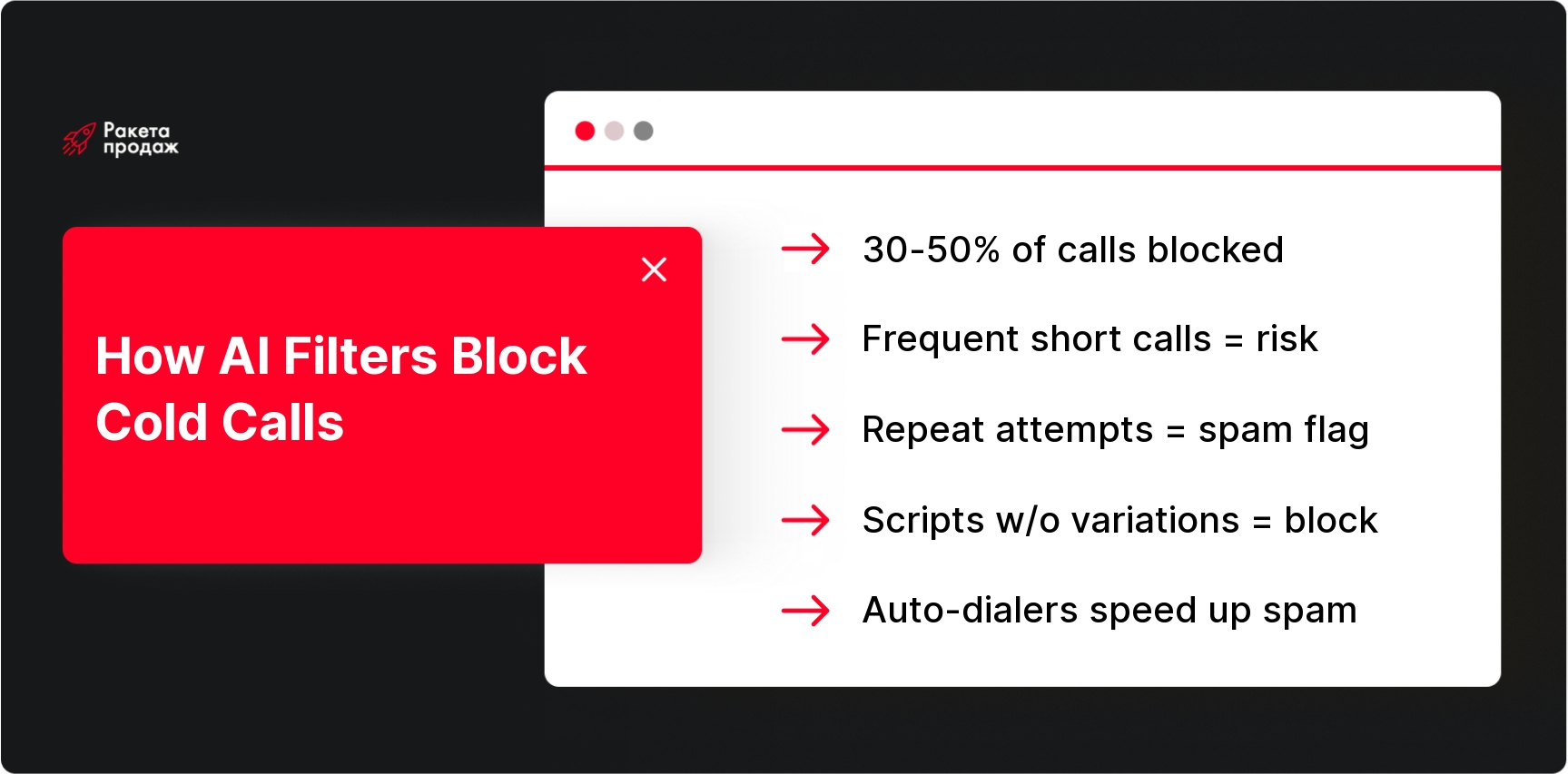
Artificial intelligence plays a dual role in transforming cold calls. On one hand, it creates serious barriers; on the other, it opens new horizons of effectiveness.
Let’s start with the threats. AI filters instantly classify calls based on dozens of parameters. They can identify commercial calls within seconds by analyzing speech rhythm, specific terms, and conversation patterns. The impact of AI on cold calling in this regard is difficult to overestimate – the technology has substantially changed their very perception.
AI assistants in users’ phones can automatically drop unknown calls. Features like “Silence Unknown Callers” in iOS or filtering systems in Android devices prevent your calls from even reaching the client.
Corporate voice IVR filters have become much smarter. In large companies, AI systems filter incoming commercial calls before they reach a live employee, cutting off “cold” sales attempts.
More and more users are enabling “contacts only” mode, and your calls simply don’t get through. This is especially relevant for high-level decision-makers who value their time and minimize distractions.
But there are also impressive opportunities! How AI affects cold calling in a positive way is remarkable. AI allows analysis of conversation recordings to identify which factors in the first 15 seconds increase or decrease the probability of success. This makes it possible to specifically improve scripts and approaches.
AI helps with pre-call personalization by analyzing information about the client’s company from open sources in seconds. Your manager can call already prepared and knowing the pain points of a specific business.
Advanced systems offer real-time prompts to managers. While the client is speaking, AI analyzes their speech and suggests optimal response options, product facts, or counterarguments to objections.
Generating hypotheses about client pain points based on analysis of their industry, company size, and current trends is another strength of AI. The manager receives a ready set of “pain points” that are likely to be relevant to the client.
Predictive analytics allows determining who to call and at what time for maximum conversion. AI analyzes historical data and identifies patterns when specific types of clients are most open to communication.
In the end, cold calls aren’t dying – they’re evolving, becoming more technological. And falling behind competitors will be determined by how effectively you integrate AI into your processes.


 Time to read: 10 min.
 26 December 2025