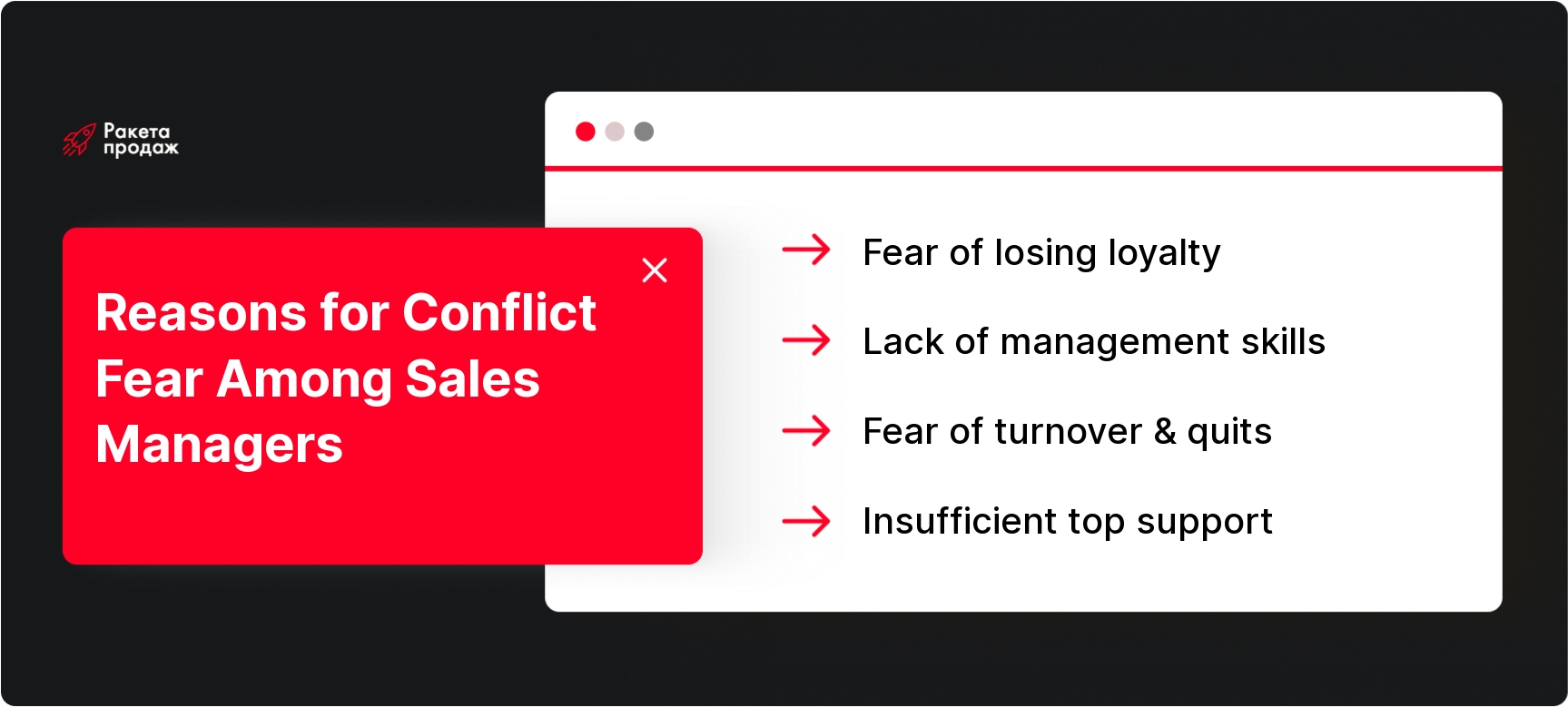
Overcoming fear of conflicts is an important step in professional development for any sales department head. Learning to see conflict not as a threat but as a resource for growth and development, sales managers can significantly improve their work efficiency and entire department results. Effective conflict management allows sales managers to maintain team control and channel tension into results.
Developing active listening skills and emotional stability is the foundation for conflict management. Managers need to learn to calmly listen to different viewpoints without interrupting or jumping to premature assessments. It’s also important to develop the ability to maintain emotional balance even in tense situations when employees express disagreement or criticize your decisions. Regular meditation practice, breathing exercises, and physical activity can help strengthen emotional stability.
Learning basic conflict resolution strategies is also critically important for sales managers. It’s worth studying main conflict resolution approaches: mediative approach (finding solutions satisfying everyone), win-win strategies (both sides should win), constructive discussion (focus on the problem, not personalities). These techniques help structure difficult conversations and keep them in a productive direction.
Creating transparent and understandable rules for team interaction reduces the likelihood of conflicts arising from misunderstanding. When employees know exactly what’s expected of them and understand evaluation criteria for their work, many potential conflicts simply don’t arise. It’s important to clearly communicate these rules and consistently apply them without making exceptions for “favorites.”
Using unambiguous result evaluation standards helps avoid competition “for personal influence.” When success criteria are transparent and measurable, employees understand they’re evaluated not by the manager’s personal sympathy but by real contribution to results. This reduces backstage intrigue levels and creates healthy competitive atmosphere in the team.
Ensuring regular feedback and open discussions also helps prevent tension accumulation. When the team has a culture of constant dialogue, problems are solved in early stages without growing into serious conflicts. It’s worth conducting both individual one-on-one meetings and team discussions where everyone can express their opinion.
Involving HR and external facilitators in complex cases can be useful, especially if sales managers feel they lack experience or skills to resolve conflicts. Sometimes an outside perspective helps see solutions not obvious to direct situation participants.
It’s also important to work with your own insecurity, understanding that conflict is not a personal threat but part of the work process. Supporting collective psychological safety, where employees aren’t afraid to express disagreement and know they won’t be punished for honesty, creates the foundation for healthy conflict culture in the department.


 Time to read: 10 min.
 13 May 2026