icon

Which Channels to Use in ABM: Email, LinkedIn, Calls, Events, Content

If your company just sends emails to a list of “target” accounts and calls it ABM, we’ve got news for you – that’s not a full-fledged account-based marketing strategy yet. Real ABM works like an orchestra: each instrument plays its own part, but together they create a melody that makes your potential customers stop and listen.

Want a high-performing sales team without the hassle?
We’ll build it for you.
Contact Us

Key Takeaways

  • One communication channel in ABM physically cannot cover all buying committee participants and all buyer journey stages – it’s like looking for a free parking spot on a Saturday evening.
  • Email without LinkedIn support, content, and retargeting loses most of its potential – mass outreach with just a name swapped in a template isn’t real ABM.
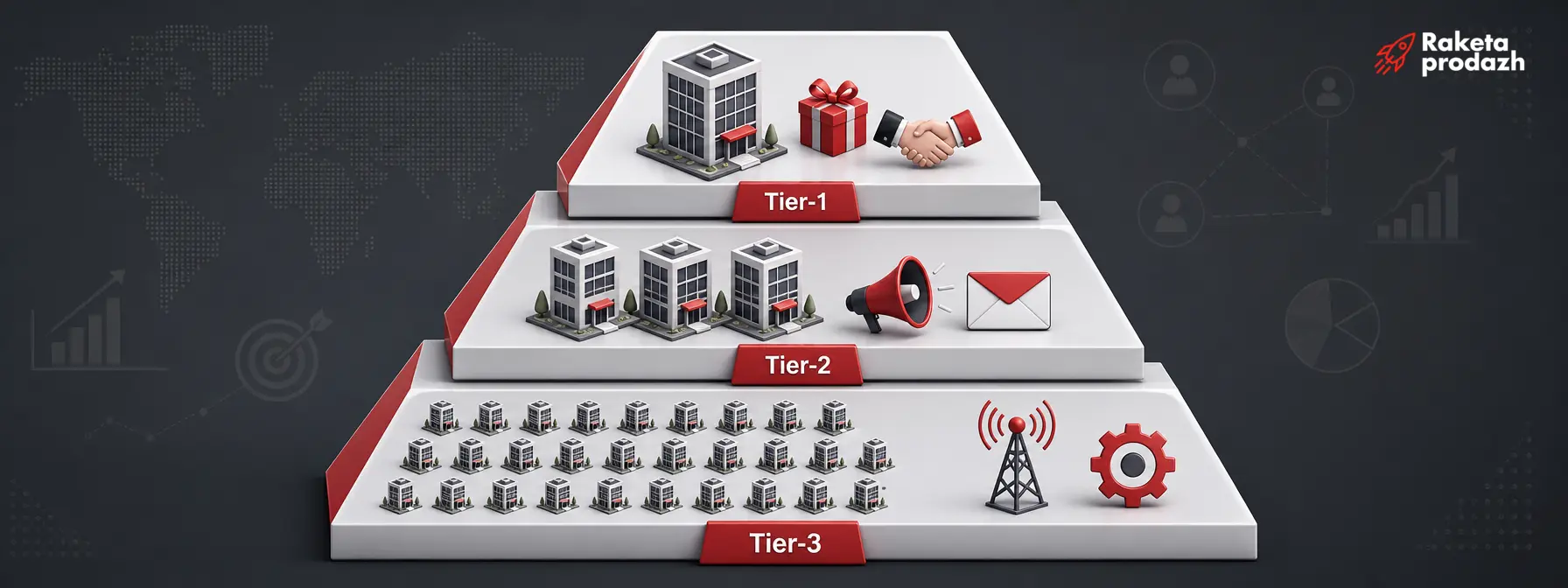
  • Tier-1 accounts require personalized creatives and direct mail, while Tier-3 accounts work through automated nurture campaigns and standard demos.
  • Every touchpoint should add value and build on previous interactions: if a contact opened an email about scaling, the follow-up call should develop that exact topic.
  • Content in ABM should be adapted to the role: CTOs need technical deep dives, CFOs care about ROI with clear numbers, and operations directors want to see implementation processes.

In the full article below, you’ll find specific touchpoint sequences, a table breaking down channels by tier and deal stage, and common mistakes that turn ABM into a collection of disjointed tactics 👇

In today’s information overload, a single touchpoint rarely gets results. B2B buying committees consist of multiple roles, each needing its own approach, its own message, and its own communication channel. ABM requires a systematic approach: researching target companies, crafting relevant messages, aligning marketing with sales, and – most importantly – getting the right combination of communication channels.

In this article, we’ll break down which channels actually work in ABM, how email, LinkedIn, calls, events, and content complement each other, and most importantly – how to link them into a single sequence that turns cold accounts into hot deals. Effective B2B Lead Generation starts with choosing and coordinating the right channels to reach target accounts.

Why You Can't Rely on Just One Channel in ABM

Imagine trying to book a meeting with the CEO of a large company by sending them one email. Chances of success? About as good as finding a free parking spot near a shopping mall on a Saturday evening. In B2B sales, decisions aren’t made by one person but by an entire committee – from technical specialists to the CFO. Each of them gets dozens of inbound messages daily, and the decision-making cycle can stretch on for months.

One communication channel simply can’t physically reach everyone involved in the process and cover every stage of the buyer journey. Email is great for delivering detailed information, but it can get lost in the inbox. LinkedIn builds social context and trust, but it’s limited by message format. Calls provide quick personal contact, but require the right timing. Content warms up the audience, but needs distribution channels.

ABM works on the principle of reinforcement: each next touchpoint builds on the previous one and sets the stage for the next. When a potential customer sees your ad on LinkedIn, then receives a relevant email with a case study, and then gets a call from a manager who already knows the context – it doesn’t feel like spam, it feels like a logical sequence of interaction. This is exactly the approach that turns ABM from a set of tactics into a strategic advantage. Understanding which channels should be used for B2B sales becomes the foundation of a successful customer acquisition strategy.

Does this sound familiar – your ABM campaign is up and running, channels are set up, but the results aren’t matching expectations? You’re spending resources on LinkedIn, email, content, and calls, but your pipeline isn’t growing and accounts remain cold. The problem is often not the choice of channels, but the lack of a systematic approach to coordinating and personalizing them for specific roles within the buying committee. At Sales Rocket, over 8+ years of work, we’ve developed a comprehensive methodology for building ABM processes that turns scattered touchpoints into a single sequence for warming up target accounts. Our experts set up CRM systems to track all interactions, build personalized funnels for each account tier, and train teams to coordinate marketing with sales. Our clients include companies like Mitsubishi, Naftogaz, and Yamaha, who saw an average revenue increase of +35% thanks to a systematic approach to ABM.

Turn chaotic touchpoints into a predictable pipeline - get a free audit of your ABM strategy!

Core ABM Channels: How to Choose and Combine Them

ABM requires using not just one, but several coordinated communication channels at once. Which channels are available on ABM? The core options include LinkedIn, email, phone calls, personalized advertising, direct mail, and events – each contributing a unique strength to the overall approach. This combination boosts brand awareness, builds trust, and speeds up account movement through the funnel. Which channels should be used in ABM? The right channel selection depends on your target audience, budget, internal resources, and product specifics. But there are proven combinations that work for most B2B companies. Successful B2B customer acquisition requires understanding which channels to use in ABM to achieve maximum effectiveness.

LinkedIn

For B2B ABM, LinkedIn remains the primary channel thanks to its targeting capabilities and professional interaction format. This platform lets you run ads for individual decision-makers as well as entire buying committees, build organic presence through expert content, work with outbound messaging, and engage micro-influencers. LinkedIn gives you access to intent signals – signs that help you understand when a company is ready for a conversation.

LinkedIn’s strength in ABM lies in its ability to work at multiple levels simultaneously. Sales Navigator lets you build account lists and track changes within companies, LinkedIn Ads warms up your target audience with content, and InMail and connection requests let you make personal contact. The key is not to use these tools in isolation, but to sync them with your overall ABM strategy. LinkedIn for B2B Sales works especially well combined with quality LinkedIn Lead Generation, which helps identify interested prospects even before the first contact.

You can learn more about ABM and its impact on modern B2B strategies in a separate article.

Email Marketing

Personalized emails serve as the primary information carrier when you need deep contact and engagement with key account owners. Email scales well when combined with data on actions taken across other channels – you can set up triggered emails based on account behavior on LinkedIn or on your website. Important point: automating sequences and relying on behavioral data multiplies conversion rates.

Email for ABM isn’t a mass mailing with just the name swapped in a template. It’s personalized communication that takes into account the industry, the recipient’s role, company size, and buyer journey stage. A technical director should receive emails about the technical capabilities of the solution, a financial director about ROI and cost reduction, and an operations manager about implementation processes. This approach requires more preparation time, but delivers a fundamentally different level of engagement. Properly configured Email for ABM becomes a bridge between different communication channels and helps maintain ongoing dialogue with target accounts.

Sales personalization deserves special attention: personalized emails boost engagement, and process automation – for example, through CRM integration – allows you to build dynamic communication scenarios.

Phone Calls and Social Selling

Targeted calls based on collected data improve the quality of meetings and the depth of the conversation. It’s recommended to activate outbound calls after digital interaction – for example, after viewing content or responding to an email – and use warm calling scenarios. Social selling on LinkedIn amplifies this effect through genuine conversations and maintaining an up-to-date profile.

Modern calls in ABM aren’t cold calling from a database. They’re warm calls, where the manager calls with an understanding of context: they know the company recently raised funding, is expanding its team, or is launching a new product. Such calls come across not as pushy sales pitches, but as expert consultations. Social selling adds an element of trust to this – when a manager has relevant content and an active LinkedIn presence, their call feels more justified. This channel is especially important when building an ABM outreach strategy, as it allows you to quickly move from digital interaction to live dialogue. Check out these effective cold calling techniques to boost the effectiveness of phone communications within your ABM approach.

Technologically advanced teams use CRM and telephony automation to sync data across all channels and improve control over call quality and touchpoint tracking.

Personalized Advertising and Retargeting

ABM advertising on LinkedIn, Google Ads, Facebook, and other digital platforms lets you reach target companies with creatives tailored to industry, role, and even the account’s logo. The strongest results come from a mix: a unified creative idea, multi-channel delivery, and A/B testing of audiences. Personalized advertising creates the feeling that your solution was built specifically for that particular company.

An example of effective use: you run an ad campaign for a buying committee while tracking engagement from each member of the decision-making group. The CTO sees creatives about technical capabilities, the CFO sees ones about financial efficiency, and the CEO sees ones about strategic advantages. When everyone involved in the process sees relevant information at the same time, it speeds up internal alignment on the client’s side.

This approach forms a multichannel implementation strategy – using online and offline channels together with a unified creative message noticeably increases the return from ABM campaigns.

Direct Mail and Offline Tactics

Personalized packages, cards, memorable gifts, or physical materials can surprise recipients and leave a lasting impression. Direct mail works effectively against the backdrop of digital noise, especially at the differentiation and deal-closing stages. Creative ABM campaigns with a wow-effect deserve special attention for strategic client accounts.

In an age of digital communication, physical contact stands out. When a potential customer receives a package at their address with a personalized gift and relevant information about your solution, it gets remembered. Direct mail is especially effective for large deals, where the cost of customer acquisition justifies the expense of personalization. The key is not to turn this into cheap promotional junk, but to create genuinely useful and memorable materials.

Webinars, Online Events, and In-Person Meetings

Organizing closed online sessions, workshops, or offline events lets you engage in direct dialogue with decision-makers and demonstrate expertise, while also filtering out the most interested prospects. This is especially relevant for sales enablement and promoting complex B2B solutions. Events create a natural reason to continue the conversation and help build deeper relationships.

Closed events for target accounts aren’t just a presentation format – they’re a qualification tool. When a CTO spends an hour of their time at your data architecture workshop, that’s a signal of serious intent. And the live-interaction format lets you better understand needs and objections that aren’t always voiced in emails or calls.

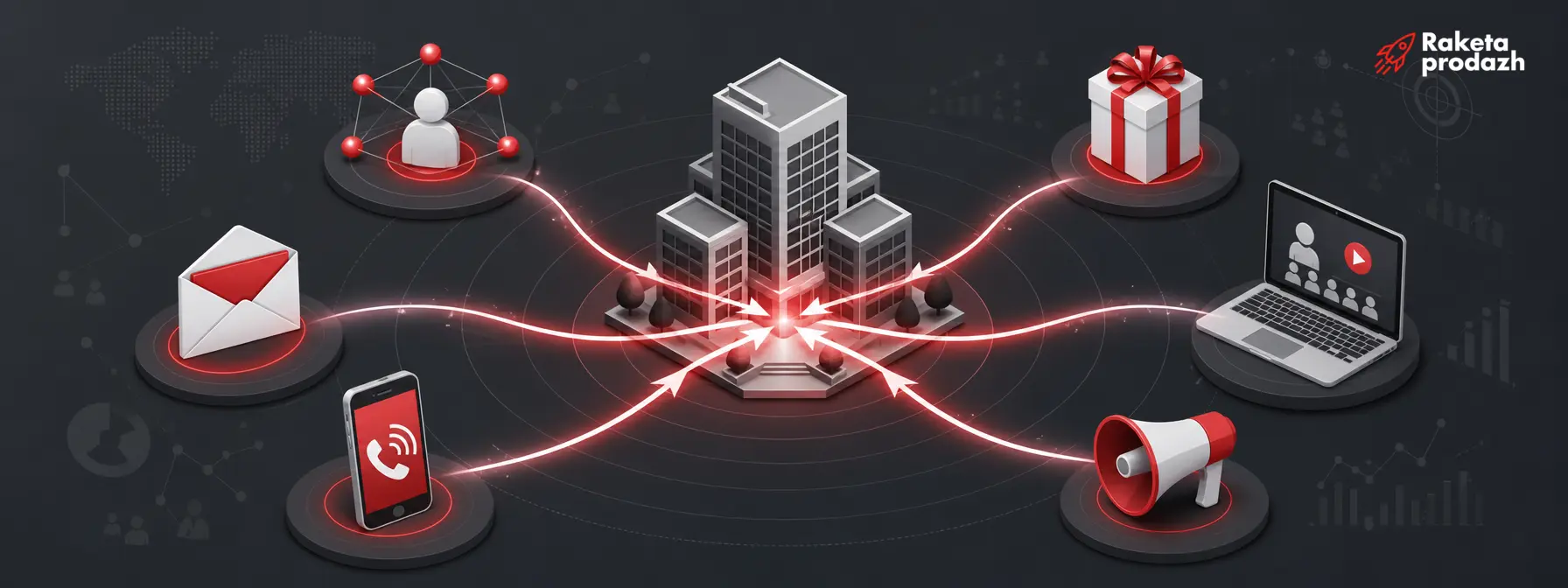
ABM channels — Illustration of ABM channels converging toward a target account

Content in ABM: How to Warm Up Target Accounts

Content in ABM isn’t just lead bait – it’s a strategic tool for warming up specific accounts. It helps explain the problem, demonstrate expertise, showcase relevant case studies, provide industry insights, and reduce purchase risk. The right content addresses objections and helps with internal alignment within the buying company.

Content for ABM should be tailored to the segment, role, or even the specific account. Industry case studies show how your solution works in similar companies. Checklists and executive summaries help structure information for decision-makers. Approach comparisons and ROI calculators give rational arguments for finance people. Webinars and research position your team as experts. Presentations for decision-makers focus on strategic issues, while materials for technical specialists focus on implementation details.

An effective content strategy in ABM creates a journey map for each role in the buying committee. The CTO needs technical deep dives and architecture diagrams. The CFO is interested in business cases with clear ROI numbers. The operations director wants to understand implementation and change management processes. When everyone involved in the process gets relevant content at the right stage, it speeds up decision-making and reduces internal resistance.

Choosing Channels for Different Types of ABM and Deal Stages

ABM is flexible in scale: from hyper-personalized 1:1 campaigns for large clients to more mass-market 1:few and 1:many activities. The top approach is to segment your database, build different channel combinations, and personalize not just the content but also the communication path. Account size and potential determine the intensity and cost of touchpoints.

At the early awareness and interest stages, the focus is on LinkedIn, social media, digital ads, and educational content. These channels build awareness without being overly pushy. At the engagement stage, email sequences, direct messages, and personal calls come into play. To turn an account into a deal, you need in-person meetings, product demos, and support through digital and offline scenarios.

Stage 1:1 (Tier-1) 1:Few (Tier-2) 1:Many (Tier-3)
Awareness Personal creatives on LinkedIn, direct mail Targeted ads, expert content Retargeting, industry materials
Consideration InMail, personal emails, calls Email sequences, webinars Automated nurture campaigns
Decision In-person meetings, custom demos Group presentations, trials Standard demos, self-service trials

This model helps optimally allocate resources and ensure the right level of personalization for each account tier. That said, it’s important to remember that the boundaries between tiers aren’t rigid – an account can move between levels depending on the interest it shows.

ABM channel selection by account tier — Pyramid diagram of ABM channel distribution across Tier-1, Tier-2, Tier-3 accounts

How to Link ABM Channels into a Single Touchpoint Sequence

Channels in ABM should work as a single system, where each touchpoint logically follows from the previous one and sets the stage for the next. A typical sequence might look like this: account and decision-maker research – profile view and soft touch on LinkedIn – personal email with a value hypothesis – retargeting with topic-related content – follow-up email – call tied to the previous touchpoint – invitation to a webinar or closed event – repeat follow-up with a case study – offer for a short meeting.

The key principle is that every touchpoint adds value and builds on previous interactions. If a contact opened an email about scaling challenges, the next call should develop that exact topic. If people from the company attended your webinar on process digitalization, an email with an implementation case study from a similar company will be received as a logical continuation of the conversation.

The sequence should be adapted to the account tier, the contact’s role, and their level of engagement. Tier-1 accounts require a more personalized approach with more research and customization. Tier-3 accounts can go through more standardized, but still relevant, sequences. Role matters too: technical specialists need more detailed materials, while executive roles need brief summaries focused on business outcomes.

Touchpoint timing plays a critical role. Too-frequent contact feels like spam, too-infrequent contact loses momentum. The optimal frequency depends on your industry’s sales cycle length, but the general rule is 8-12 touchpoints over 90 days, with increasing intensity as interest grows.

Common Mistakes When Choosing Channels for ABM

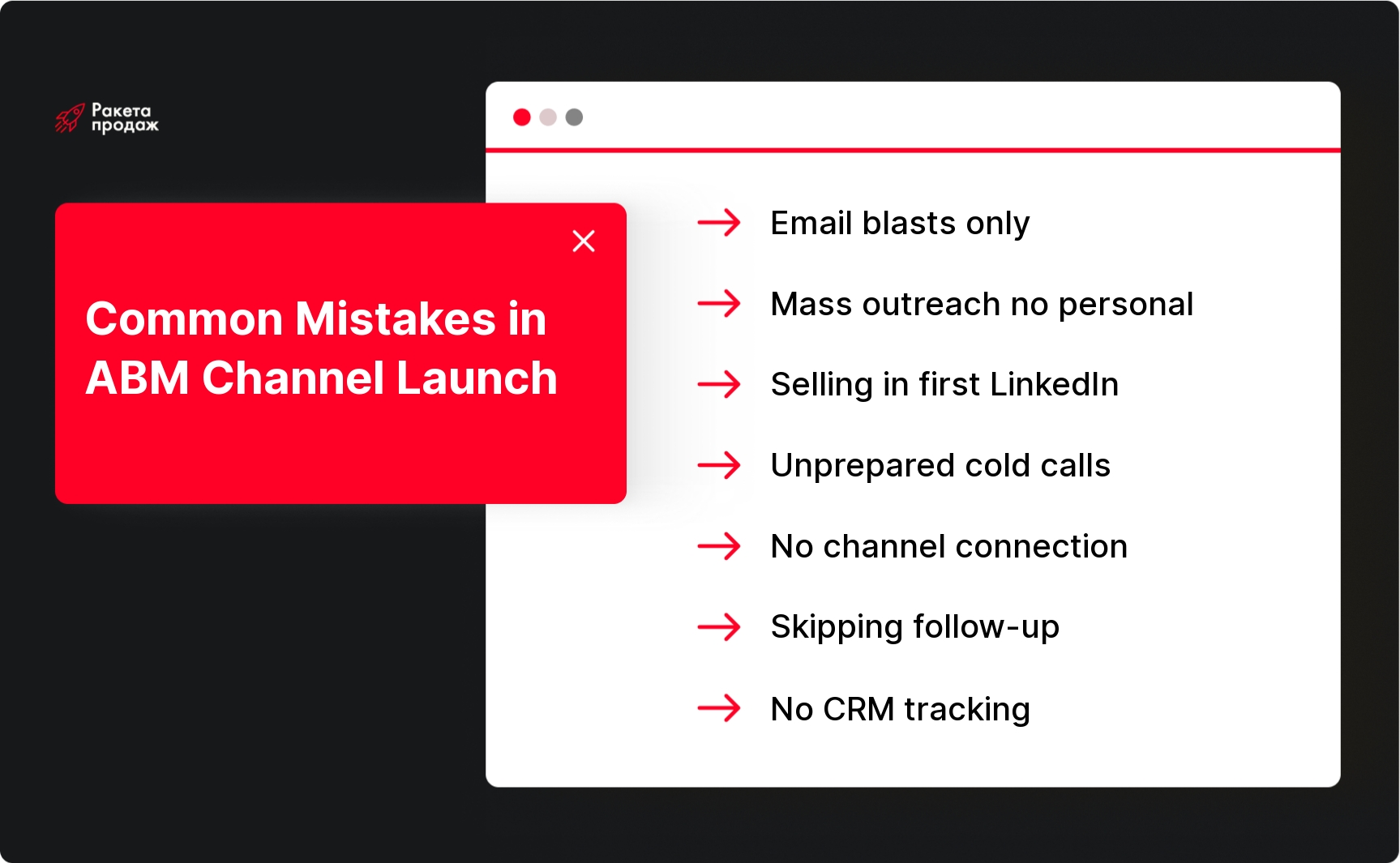
The first and most common mistake is relying only on email. Many teams think ABM is just more personalized email marketing. As a result, they send quality emails but don’t use other channels to reinforce the effect. Email without LinkedIn support, content, and retargeting loses a significant portion of its potential.

The second mistake is doing mass outreach without real personalization. When only the name and company name change in the template while the message itself stays generic, that’s not ABM. Real personalization requires researching the client’s business, understanding their challenges, and adapting the value proposition to their specific situation.

The third mistake is selling too quickly on LinkedIn. Many managers connect with target contacts and propose a meeting in the very first message. This approach comes across as spam and lowers response rates. LinkedIn Lead Generation works better for building relationships, demonstrating expertise, and creating context for later sales communication.

Other critical mistakes include: calls without context or preparation, lack of connection between channels, ignoring adaptation for account tier, misunderstanding the roles of decision-makers and influencers, lack of nurturing content, skipping follow-up after events, evaluating ABM only by lead count instead of pipeline quality, and, most importantly, failing to log all touchpoints in the CRM. Without a unified system for tracking interactions, ABM turns into a collection of disjointed tactics instead of a coordinated strategy.

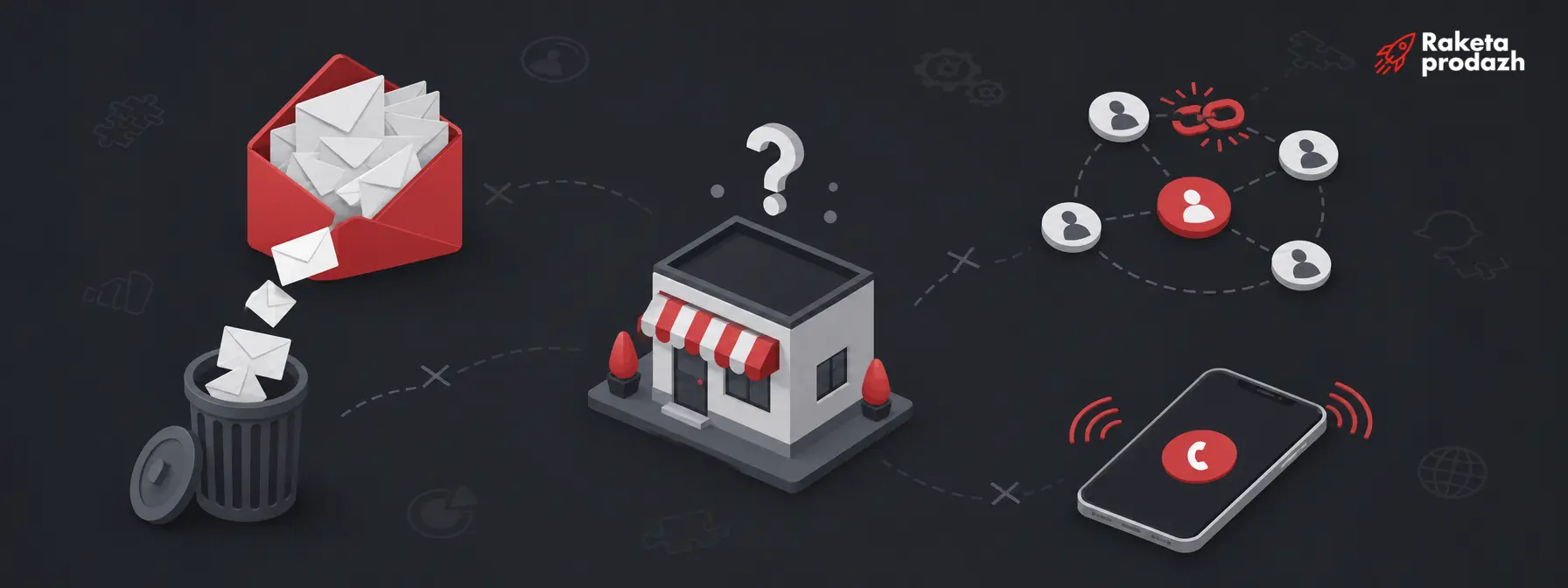
ABM channel mistakes — Illustration of typical mistakes with disconnected uncoordinated ABM channels

Choosing and coordinating the right channels in ABM isn’t just a tactical question – it’s a strategic advantage that determines the success of the entire campaign. But building a working ABM system requires a deep understanding of buyer roles, setting up the tech stack, and continuously optimizing processes to fit your business specifics. Sales Rocket specializes in building comprehensive, turnkey sales systems: we don’t just consult on ABM – we fully build out processes for working with target accounts, implement CRM to track all touchpoints, create personalized content for every role, and train your team to work as a single, unified mechanism. Our methodology includes target account analysis, building a buyer journey for each role, setting up multichannel sequences, and a performance-tracking system through KPI dashboards. As a result of implementation, our clients see conversion increases of up to 86% and monthly revenue growth of up to +$10,907,403 in just 4 months of work. Don’t waste months experimenting with unpredictable results – trust ABM to professionals who know how to turn cold accounts into hot deals.

Build an ABM system that reliably warms up target accounts and generates quality pipeline!

Conclusion

image

ABM channels shouldn’t be chosen in isolation, but as parts of an overall strategy for working with target accounts. Email creates personal contact, LinkedIn provides social context, calls deliver quick interaction, content warms up and educates, and events help build deeper relationships. But the real power of ABM only comes through when all these channels work in sync, reinforcing each other and creating a consistent customer experience. If your company wants to make B2B customer acquisition more precise and effective, simply sending messages isn’t enough – you need to build a thoughtful sequence of relevant touchpoints that turns cold accounts into hot deals.

In this article:
See more
Book a FREE sales funnel audit
CONTACT US
FAQ
How do you use LinkedIn for B2B sales?

LinkedIn works best combined with other channels: use Sales Navigator to research accounts, targeted ads to warm up prospects, and InMail and connection requests for personal contact after prior interaction with your content.

Which channels work best in ABM?

There’s no universally “best” channel – effectiveness depends on your audience and product. Most often, a combination of LinkedIn + email + content + retargeting works well, supplemented by calls and events at the decision-making stage.

How does ABM outreach differ from regular B2B lead generation?

ABM focuses on specific accounts and roles, uses deep personalization, coordinates marketing and sales, engages the entire buying committee, and measures success by pipeline quality rather than lead quantity.

How do you measure the effectiveness of ABM channels?

Key metrics: account engagement, meetings per account, funnel stage progression, influenced pipeline, and multichannel attribution. It’s important to look at overall account movement rather than isolated metrics for individual channels.

SUBSCRIBE TO MY TELEGRAM CHANNEL
The most valuable sales information right on your phone!
icon

LOTS OF USEFUL INFORMATION, FREE TEMPLATES, AND CHECKLISTS ON MY INSTAGRAM

Materials and practical advice on sales growth in our blog: