icon

Key Sales Training Topics: Communication, Time Management, Critical Thinking

The modern market has changed significantly. If previously a sales manager could work successfully by simply knowing the product and basic sales techniques, today this is not enough. Clients have become much more informed and demanding. Now they aren’t just buying a product or service – they’re looking for a consultant, assistant, and even strategist. That’s why sales manager training must go beyond standard scripts and presentations.

Key Takeaways

  • Managers lose results not because they don’t know the product, but due to weak communication skills, chaotic schedules, and inability to analyze clients.
  • Your manager should listen to clients more actively than they speak. Weak employees interrupt and present, strong ones ask clarifying questions and catch hidden needs.
  • Prioritizing clients using ABC-analysis and time blocking eliminates chaos and frees up to 30% of the workday for promising deals.
  • Critical thinking allows managers to dig deeper into objections. When a client says “too expensive,” it’s not because they lack money, but because they don’t see the value.
  • One-time trainings have an effect for a week. Real growth begins when a manager reviews calls weekly, provides feedback, and reinforces skills in practice.

In the article below, you’ll find specific training methods, practice formats, and team development tools that will help your managers sell systematically, not by chance 👇

Why Soft Skills Development Has Become a Key Success Factor in Sales

The times when clients came to companies with minimal information and completely relied on manager recommendations are long gone. Today, buyers have already researched the product, compared it with competitors, and formed their own opinion before the first contact with a salesperson. Therefore, classic sales techniques based on informational advantage no longer work as effectively.

The modern sales manager is a strategist who analyzes client needs, a consultant who helps make the right decision, and a communicator who builds long-term relationships. Without developed communication skills, time management, and analytical thinking, it’s impossible to achieve high results in modern sales.

Soft skills allow managers to adapt to changing market conditions, find an individual approach to each client, and effectively solve non-standard tasks. That’s why companies that invest in developing these skills in their employees gain a significant competitive advantage. Let’s look at how each of these areas affects sales performance.

Communication as the Foundation of Effective Sales

Communication skills are the foundation of a sales manager’s work. But it’s important to understand that effective communication is much more than just the ability to speak eloquently. It’s a complex set of skills including active listening, asking the right questions, the ability to sense the emotional state of the other person, and manage one’s own emotions.

A good communicator can not only persuasively present their product but also build a dialogue where the client feels heard and understood. This approach creates trust, which is the basis of long-term client relationships. Communication skills help managers accurately determine client needs and offer solutions that truly address their requests. This significantly increases the likelihood of successfully closing deals.

Communication training should be a continuous process that includes both theoretical preparation and regular practice. Now let’s consider the key elements of communication training for sales managers. The most in-demand sales training topics include: sales and negotiation techniques, handling objections, building client relationships, managing the sales funnel, time management for sales managers, and developing presentation and persuasion skills. For effective manager training, it’s important to select topics for training sales managers based on the specific needs and goals of the team.

Active Listening and Empathy Skills

Active listening is one of the most undervalued skills in sales. Many managers are so focused on what they want to tell the client that they forget about the need to listen. But the ability to listen allows you to capture not only the client’s explicit needs but also those they may not directly express.

When teaching active listening, it’s important to train managers to focus on the client’s words, not interrupt them, and ask clarifying questions. This provides a complete picture of needs and expectations. Additionally, the client feels their opinion matters, which creates the foundation for a trusting relationship.

Empathy—the ability to understand and share another person’s feelings—is closely linked to active listening. Managers with this skill can better understand a client’s emotional motives and adapt their communication accordingly. For example, if a client is anxious about risks associated with a purchase, an empathetic manager can focus on guarantees and safety measures to reduce their concern. Sales department training on developing empathy typically includes role-playing and analysis of real client communication situations.

Training Influence and Argumentation Skills

The ability to persuade and argue one’s position is a key skill for sales managers. However, the modern approach to persuasion differs significantly from the traditional notion of “pushing” a product. Today, effective persuasion is based on logic and facts, not pressure or manipulation.

Training in influence skills should include work on argumentation structure. Managers need to know how to build logical chains connecting product features with benefits for the client. It’s important to teach them to adapt their argumentation for different client types: some value numbers and facts, while others better respond to stories and practical examples.

In B2B sales, the ability to present complex information simply and clearly is particularly important. For example, a manager working with corporate clients should be able to explain how implementing new software will affect the company’s operational efficiency, what the return on investment will be, and how this relates to the client’s business goals. Training these skills can include real-world company cases and modeling various negotiation situations.

What do all successful sales departments have in common? A systematic approach to employee training in key areas. Our clients often tell us they tried to improve team skills independently, but results were unstable and quickly lost. At “Rocket Sales,” we’ve developed a comprehensive manager development system that combines training in communication skills, time management, and critical thinking – precisely the competencies that make a modern manager truly effective.

Our methodology includes not only practical training and thematic courses but also a quality control system (QCS) that guarantees skill reinforcement in real work. Over 7+ years, we’ve systematized 158 sales departments in 14+ different niches, and our clients’ average revenue growth is +35%. We don’t just train – we create systemic changes that continue to deliver results long after the project is completed.

Transform your managers into true sales experts - order a free consultation on department development!

If objection handling is a particularly acute issue for your team, it’s useful to pay attention to modern techniques for handling objections – they’ll help you not push products, but find arguments relevant to specific clients.

Communication in Conflict and Stressful Situations

A sales manager’s work doesn’t always go smoothly. Objections, client dissatisfaction, difficult negotiations – all these can create stressful situations where it’s important to maintain calm and professionalism. The ability to communicate effectively in such conditions can be a decisive factor in deal success.

When training for work in stressful situations, it’s important to teach managers to control their emotions. Breathing techniques, attention-switching methods, the ability to pause before responding – all these help maintain clarity of thought even in tense situations. In addition, managers should master specific techniques for handling objections and restoring contact with irritated clients.

One of the most effective training methods in this area is simulations and role-playing that model complex client communication situations. During such training, managers can practice various approaches to conflict resolution in a safe environment, receive feedback, and improve their skills. It’s important that these scenarios be as close as possible to real situations that company employees face.

Practical Communication Training Methods

Theoretical knowledge about communication means little without constant practice. Therefore, communication skills training should be as practice-oriented and regular as possible. One-time training sessions provide a short-term effect that quickly disappears without further skill reinforcement.

Effective communication training methods include analysis of company case studies, video analysis of real negotiations, and peer-to-peer feedback. Video recording and subsequent analysis of client negotiations allow managers to see themselves from the outside and recognize both the strengths of their communication and areas for improvement.

In particular, for developing call skills, training on effective cold calling has proven effective, including multi-step scenarios and working with various types of objections.

Interactive training formats, such as role-playing and group discussions, help practice skills in a dynamic environment similar to real working conditions. It’s important that after each practical session, participants receive constructive feedback that will help them improve their skills. Regular communication skills training should become part of the company’s corporate culture so that skills are not only acquired but also maintained at a high level.

Time Management for Sales Managers

Time is the most valuable and irreplaceable resource for a sales manager. Even the most valuable sales techniques can’t tame the boring routine of sales department processes. But how effectively an employee manages their working time directly affects the number of completed deals and overall work results. Time management for sales managers becomes a critical skill that determines the success not only of individual employees but of the entire sales department.

Lack of time management skills leads to serious consequences: managers fail to process all incoming requests qualitatively, forget to call back clients, lose important information, and ultimately experience constant stress and burnout. This negatively impacts not only sales results but also the general team atmosphere.

Time management training should help managers recognize the value of time and learn to plan their day to focus on the most important and profitable tasks, while also managing to complete possibly non-urgent but small tasks that affect deal success. This will increase not only productivity but also employee confidence in their abilities, which positively affects their interaction with clients.

How Managers Waste Time and What to Do About It

Before starting time management training, it’s important to understand what sales managers usually spend their time on. Analysis of a working day often shows that a significant part of it goes to actions that don’t bring real business benefits or could be performed more efficiently.

Typical “time wasters” include unfocused calls without clear goals, working with non-priority clients who are unlikely to make purchases, endless email correspondence without communication management, ineffective meetings, constant interruptions, and switching between tasks. All this creates the illusion of busyness but actually reduces productivity.

In time management training, the first step is awareness of the problem. Managers need to analyze how they actually spend their workday. For this, you can use the time-tracking method: for several days, record all your actions and the time spent on them. Such analysis often becomes a revelation and motivates change. The next stage is learning methods of task prioritization and more effective organization of working time.

Studying modern time management techniques in sales, such as applying time blocks for key tasks, helps managers minimize distractions and work more focused.

Principles of Effective Workday Planning

Planning is the foundation of effective time management. A sales manager who starts the day with a clear plan has a much better chance of achieving high results. However, it’s important not just to make a to-do list, but to correctly prioritize and allocate time for the most important tasks.

One effective planning technique is the Pomodoro Method, where work is broken into intervals (usually 25 minutes) separated by short breaks. This helps maintain a high level of concentration and avoid burnout. For sales managers, this method can be adapted by allocating time blocks for calls, meetings, document work, etc.

The Eisenhower Matrix is another useful tool that helps classify tasks according to their importance and urgency. It’s especially valuable to teach managers to allocate time for tasks that are important but not urgent, such as working with prospective clients, learning, and self-development. ABC-analysis of clients, where all clients are divided into categories according to their potential value to the company, helps determine who deserves more time and attention. Training in these techniques should include not only theoretical parts but also practical exercises for planning a manager’s actual working day.

For a comprehensive understanding of the sales process, it’s important to familiarize employees with the fundamentals and stages of sales; this helps properly plan their time at each stage of client interaction.

Digital Time Management Tools

In the modern world, there are many digital tools that can help sales managers manage their time more effectively. Using CRM systems allows structuring client information, tracking interaction history, and automating routine tasks such as sending emails or reminders.

Training in CRM usage not only increases process transparency but also saves significant time through automation and quick information retrieval. Such digital tool implementation creates a foundation for revenue growth and increased client satisfaction.

Task trackers like Asana or ClickUp help plan tasks, set deadlines, and track progress. These tools are especially useful for teamwork when several managers interact with one client or work on a common project. Automating routine processes, for example, using email templates or integrating various systems, allows saving significant time.

Training in using digital tools should be practical and oriented to managers’ real tasks. It’s not enough to just show a program’s functionality – it’s important to teach employees to integrate these tools into their work process and use them to solve specific tasks. Regular workshops and experience exchange between employees help the entire team increase the effectiveness of digital tool usage.

Time Management as an Element of Corporate Culture

Effective time management cannot be the result of only individual managers’ efforts. It should become part of the company’s corporate culture. When time management principles are supported at the organizational level, it creates synergy and helps all employees work more productively.

Conducting sales meetings with a clear agenda contributes to effective time distribution and forms the team’s habit of regulated meetings where priorities are discussed and goals are set.

Regular planning sessions and retrospectives help the sales team synchronize, discuss current priorities, and learn from past experiences. It’s important that these meetings themselves are organized efficiently, with a clear agenda and time frames. A culture of respect for each other’s time is manifested in punctuality, clear definition of meeting goals, and following established rules.

Leaders play a key role in forming a time management culture. They should not only train their subordinates in effective work methods but also demonstrate these principles in practice themselves. When a manager sees their leader valuing time and organizing their work efficiently, it becomes additional motivation for developing their own time management skills.

Critical Thinking and Analytics as a Competitive Advantage in Sales

The modern market demands from sales managers not just the ability to speak eloquently and persuade, but also the ability to analyze information, make informed conclusions, and make data-based decisions. Critical thinking becomes an important competitive advantage, allowing finding non-obvious opportunities and offering clients truly valuable solutions.

In the era of information overload, managers face a huge amount of data about the market, products, competitors, and clients. The ability to filter this information, separate facts from opinions, and see patterns helps make better decisions at all stages of the sale – from finding potential clients to closing deals.

Developing critical thinking in sales managers allows moving from a reactive approach (simple reaction to client requests) to a proactive one, where the manager can anticipate client needs and offer a solution that truly addresses their business challenges. This significantly increases the manager’s value in the client’s eyes and helps build long-term partnership relationships.

What Is Critical Thinking and Why a Manager Needs It

Critical thinking is the ability to analyze information objectively, build cause-and-effect relationships, evaluate different points of view, and arrive at well-founded conclusions. In the sales context, this means the ability to see the client’s situation as a whole, understand their business tasks, and not just sell a product or service.

A manager with developed critical thinking doesn’t take information at face value but asks clarifying questions to understand the client’s true needs. They know how to work with objections not by template, but by analyzing their causes. For example, when a client says a product is too expensive, a critically thinking manager doesn’t immediately offer a discount, but finds out what’s behind this objection – whether the client really has a limited budget or doesn’t see the value of the offer.

This approach allows the manager to negotiate at a deeper level, focusing not on price but on creating value for the client. They can adapt their offer to specific client needs and propose a truly optimal solution, which significantly increases the probability of a successful deal.

Training for an Analytical Approach to Clients

An analytical approach to working with clients is based on systematic data collection and analysis. Modern CRM systems provide rich opportunities for such analysis, but many managers don’t use them to their full extent, limiting themselves to basic entry of contact and deal information.

Training for an analytical approach includes working with CRM data: analyzing the history of interaction with the client, identifying patterns in purchasing behavior, forecasting the probability of closing deals based on previous experience. Managers should be able to use this data to make more informed decisions about which clients to devote more time to and which sales strategies will be most effective in each specific case.

An important aspect of the analytical approach is also the ability to evaluate the effectiveness of one’s own work: analyzing successful and unsuccessful deals, identifying factors that influenced the result, and adjusting one’s approach based on this analysis. Training in these skills can include practical sessions on analyzing real data from the company’s CRM, examining specific cases, and group discussions of analysis results.

Practices for Developing Critical Thinking

Critical thinking, like any other skill, requires systematic development. There are various training formats that can help sales managers develop this skill.

Case analysis is one of the most effective methods. By analyzing real situations from company practice, managers learn to identify key factors influencing client decision-making and develop sales strategies based on this analysis. Debates and discussions, where managers argue different points of view on one situation, help develop the ability to see the situation from different angles and formulate convincing arguments.

The “Five Whys” technique is a simple but effective Japanese method for deepening problem understanding. By consistently asking “why?”, you can get to the root of a client’s problem or objection. “What if?” questions help develop flexibility of thinking and the ability to anticipate various scenario developments.

Exercises on finding logical errors in argumentation (one’s own and clients’) help managers become more attentive to the quality of information on which they base decisions. It’s important to emphasize that the goal of these practices is to develop flexibility of thinking and the ability to find non-standard solutions, not just memorize a set of templates. Regular training in these skills will help managers become more effective in solving complex sales tasks.

How to Combine Communication, Time Management, and Critical Thinking Training in One Program

image

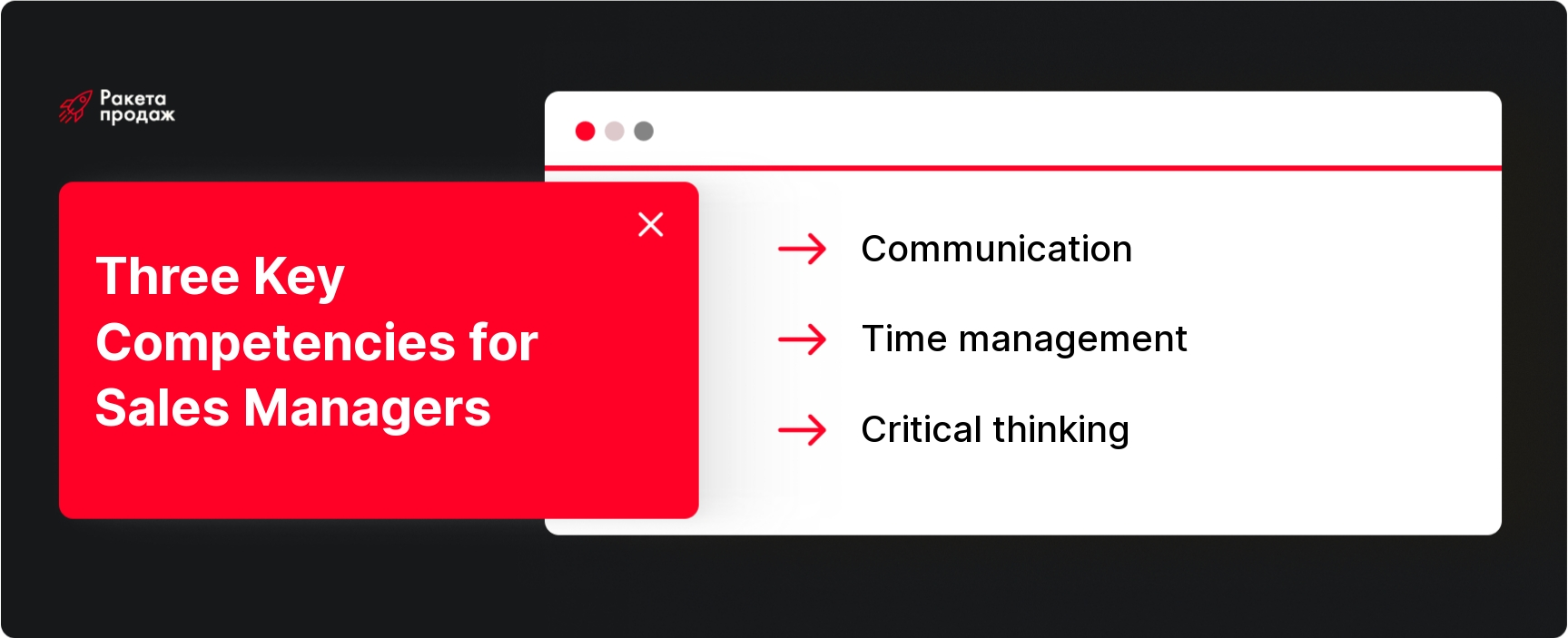
The three key development areas – communication, time management, and critical thinking – don’t exist in isolation from each other. They are interconnected and reinforce each other. For example, active listening skills (communication) help better understand client needs, which is the basis for an analytical approach (critical thinking). Effective time planning (time management) allows allocating enough resources for quality preparation for negotiations and results analysis.

A comprehensive training program that combines all three areas provides a synergistic effect. Managers see the interconnection between various aspects of their work and can apply the knowledge gained more effectively. This approach also promotes sustainable behavior change, as new skills are reinforced from different angles.

Integrating various training areas requires a strategic approach to program design. It’s important to alternate theoretical modules with practical sessions and ensure enough time to reinforce skills in practice. Let’s consider how such a comprehensive training program can be organized.

Modular Approach in Corporate Training

A modular approach allows structuring training and ensuring sequential skill development. Each module focuses on a specific topic or skill, but is connected to previous and subsequent modules, creating a holistic picture.

A logical sequence of modules might look like this: first communication (ability to listen, ask questions, argue), then self-organization (planning, prioritization, using tools), and finally, analytics (working with data, critical thinking, decision making). This sequence provides a transition from basic client interaction skills to more complex analytical competencies.

Each module should include a theoretical part, practical exercises, and assignments for independent work between sessions. It’s also important to provide time for feedback and reflection so participants can comprehend the experience gained and understand how to apply new knowledge in their work. The modular approach also allows adapting the program to different levels of participant preparation, giving some the opportunity to skip basic modules if they already possess the corresponding skills.

Training Formats: Online, Offline, and Hybrid

The choice of training format depends on many factors: team geography, available resources, material specifics, and participant preferences. In modern conditions, hybrid formats that combine the advantages of online and offline learning are gaining increasing popularity.

Offline training is especially effective for developing communication skills, as it allows participants to practice in real interaction, receive immediate feedback, and learn from each other. Simulations, role-playing, and group exercises create a dynamic learning environment where participants can safely experiment with new approaches.

Online learning, in turn, provides flexible access to materials, which is especially important for sales managers whose schedules can be unpredictable. Video lectures, interactive tasks, and online tests allow participants to learn at a convenient time and at their own pace. Additionally, the online format facilitates access to experts from different cities and countries.

A hybrid approach, combining elements of online and offline learning, is often the optimal solution. For example, theoretical material can be presented in the form of an online course that participants complete independently, and then practice skills under a trainer’s guidance in face-to-face sessions. This approach increases participant engagement and ensures more effective material absorption.

The Leader's Role in Skill Development

Even the best training program won’t yield results if the skills acquired aren’t applied in daily work. Here, the key role is played by the leader, who can either support and strengthen new skills or, conversely, create an environment where their application is difficult or impossible.

The leader should be involved in the training process from the very beginning: understanding program goals, supporting participants, and taking an interest in their progress. After the formal training is completed, it is the leader who ensures skill reinforcement in practice through regular feedback, coaching, and creating opportunities to apply new approaches.

For example, after communication skills training, the leader can organize a joint review of recorded calls or client meetings to help managers see how they apply (or don’t apply) new techniques. After time management training, the leader can conduct individual conversations about workday planning and help employees determine their priorities. It’s important that the leader not only require the application of new skills but also create an environment where this is possible and encouraged.

Conclusions

Sales manager training is a strategic investment in the company’s future. A comprehensive approach, including the development of communication skills, time management, and critical thinking, gives the best results. These three areas mutually reinforce each other, creating synergy that allows managers to achieve outstanding results.

Effective training is not limited to one-time sessions but becomes a continuous process integrated into daily work. The leader’s role in this process cannot be overestimated – it is they who create an environment where new skills can be successfully applied and developed. A modular approach, combining various training formats, allows adapting the program to the specific needs of the team and ensures sustainable behavior change.

Regardless of the current level of employees, implementing regular and well-thought-out training on key topics helps create a strong and competitive sales team. Topics for training sales managers should cover not only technical aspects but also the development of salespeople’s personal qualities. Sales training is most effective when adapted to the specific needs of the team and takes into account business specifics. When developing training topics for the sales department, it’s important to focus on specific pain points and areas for improvement.

The results of such training are expressed not only in increased sales volume but also in increased client satisfaction, reduced staff turnover, and improved general atmosphere in the team. Investments in people’s development always pay off, especially in sales, where the human factor plays a decisive role. When planning sales training topics and topics for sales training, it’s important to consider the team’s individual characteristics and the level of employee professionalism.

Sales department development is a complex process, and as practice shows, most companies cannot independently build an effective training and control system. “Rocket Sales” offers a solution to this problem through a comprehensive approach to your team’s development. We don’t just conduct one-time training, but create a holistic ecosystem that includes diagnostics of current processes, development of individual training programs, implementation of control tools, and regular support.

Our flagship service “Sales Department Systematization” (SDS) is a complete transformation of your department: from auditing and optimizing processes to developing training materials and KPI systems. We work with real scenarios and cases from your business, adapting the program to the company’s specific needs. Additionally, we offer the advantages of a quality control system (QCS LUX) – detailed audit of managers’ work, individual training, and regular monitoring of results.

Among our clients are companies such as Mitsubishi, Yamaha, and Naftogaz, and our best result leads to revenue growth of +$1.6 million in 4 months. Our methods work in a wide variety of industries, helping companies not only increase sales but also create a culture of continuous development in the team.

Create a sales department where every manager achieves 150% of the plan every month - order a comprehensive solution right now!
In this article:
See more
Book a FREE sales funnel audit
CONTACT US
FAQ
Is it possible to develop critical thinking in adult employees?

Yes, critical thinking can be developed at any age. Key methods include regular discussions, case analysis, practice in asking open questions, and analysis of decisions made. It’s important to create an environment where reasoned opinion is valued and constructive criticism is encouraged, rather than blind following of authorities or templates.

Why is time management important for a sales manager?

Time management is critically important for a sales manager because it directly affects performance. Effective time management allows focusing on the most promising clients, preparing thoroughly for each meeting, and processing more potential deals. Additionally, good time management reduces stress and prevents burnout.

How to develop communication skills in sales managers?

Developing communication skills requires regular practice and feedback. Effective methods include role-playing, video analysis of real negotiations, working with cases, and modeling complex situations. It’s also important to develop active listening through special exercises and empathy practice. Training should be a continuous process, integrated into daily work.

SUBSCRIBE TO MY TELEGRAM CHANNEL
The most valuable sales information right on your phone!
icon

LOTS OF USEFUL INFORMATION, FREE TEMPLATES, AND CHECKLISTS ON MY INSTAGRAM

Materials and practical advice on sales growth in our blog: