What Are Sales Scripts, Why Are They Important, and How Do They Work
A sales representative without a script is like a pilot flying without navigation — they can move forward but have no idea where their destination lies. Similarly, a salesperson might understand their goal but, without clear instructions, starts to panic the moment the client answers the phone. They lose focus, stumble over words, and fail to make an impression. Worse yet, if your product is familiar to the audience and one of your salespeople, while calling a repeat client, improvises inaccurate information about the product, it can lead to lost trust and a dropped call.
Want a high-performing sales team without the hassle?
A sales script is a structured conversation scenario that helps managers guide discussions and offloads the salesperson’s working memory.
An effective script contains five key elements: establishing contact, identifying needs, presenting benefits, handling objections, and closing the deal.
Using scripts increases sales conversion by 5 35% through structured communication and prepared responses to customer objections.
In complex niches with long sales cycles, flexible communication maps work better than rigid scripts.
A script is not a static document but a tool requiring continuous analysis, testing, and improvement according to market changes.
In the full article, you’ll find detailed instructions for creating effective sales scripts that will transform uncertain conversations into successful deals 👇
To help reps maintain confidence, control the conversation, and showcase professionalism, even seasoned salespeople rely on sales scripts. These scripts are an essential piece of the larger puzzle that leads to a successfully closed deal.
Are Sales Scripts Just Call Scenarios? Why Do You Need Them? What types of sales scripts exist, and how can you turn them into a secret weapon for successful deals? Let’s dive in.
To see how cold calls work in practice, watch the video “Як створити скрипт холодного дзвінка, що реально працює?”. It shows how to make the call structured, keep the client engaged, and increase the chances of getting a result.
What Is a Sales Script
A sales script is a structured conversation guide that helps salespeople navigate their discussions smoothly, ensuring they stay on track without unnecessary improvisation. Simply put, a sales script is a cheat sheet that makes life easier for sales representatives, team leaders, and businesses.
With a script, every rep knows what to say, when to say it, and how to handle client questions or objections effectively.
However, it’s a mistake to think of a sales script as a rigid set of rules, written once and set in stone. A script is a framework or foundation with a clear structure and stages for dialogue. It’s also a flexible tool that salespeople, alongside their department leaders, can modify and adapt to fit the unique needs of their clients.
“Sales scripts are designed to free up your salesperson’s ‘working memory’ so they don’t have to reinvent the wheel every time.”
Kateryna Chabanova, CEO and founder of "Raketa prodazh"
A Quick History of Sales Scripts: How and Why They Were Created
The history of sales scripts began with the rise of telemarketing as a cornerstone of business operations. Early sales scripts emerged as a solution to inconsistency, providing standardized conversations that ensured uniform service quality and simplified onboarding for new employees. Imagine how much easier it became for rookies to start selling when they were handed a pre-designed conversation flow instead of scrambling to figure out “what to say to the client.”
Over time, sales scripts evolved into more dynamic tools. Today, they are a critical standard for ensuring predictable and effective communication between businesses and clients. They also act as a safeguard against reputational risks.
Are you familiar with the situation where managers work by trial and error, get lost during objections, and sound uncertain on the phone? Do you feel that the lack of clear scripts turns sales into a lottery, where the result depends on mood and luck rather than a systematic approach? According to statistics, 60% of customers don’t buy due to poor communication quality, and 57% of salespeople give up after the first rejection. At “Sales Rocket,” over 6+ years, we’ve created a systematic methodology for developing sales scripts that includes deep call analysis and identification of typical manager mistakes, creating personalized scenarios for each stage of the sales funnel, developing ready-made responses to popular objections and establishing contact with clients, practical trainings with role-playing games and real case practice, implementing quality control systems through checklists and regular call monitoring. Our experts create not just texts, but ready-made “Sales Books” with detailed communication algorithms, email templates, and instructions for quick onboarding of new employees. Over 6+ years, we’ve developed scripts for 158 projects across 14+ industries, our clients achieve conversion growth from 5% to 86%, and properly created scripts deliver revenue increases of +35% in the first weeks of use.
Turn uncertain conversations into confident sales — get professional sales scripts from "Sales Rocket"!
Sales scripts provide a structured approach, enabling consistency and professionalism in every interaction. They help salespeople avoid common pitfalls, stay confident, and achieve better outcomes. In the ever-competitive world of sales, a well-designed script can be the difference between a “no” and a “yes.”
Why Are Sales Scripts Important
Sales scripts aren’t just about simplifying a salesperson’s job. They help businesses achieve steady growth, enhance the customer experience, boost conversion rates, and increase average transaction value. Let’s break down why sales scripts are essential and the benefits they offer across several critical areas.
Process Standardization
Sales scripts create a unified standard for customer interactions across all sales team members. Regardless of their experience, every salesperson follows the same structure, ensuring consistent service quality. Additionally, standardized business processes, a well-structured sales department, and sales scripts contribute to:
Consistency: Customers receive the same high level of service, no matter which salesperson they engage with.
Ease of onboarding: New hires adapt to their roles more quickly since they have ready-made tools (scripts) for different stages of the sales process.
Improving Sales Efficiency
Sales scripts allow salespeople to focus on the core of their work—building relationships with clients and closing deals. Beyond that, a well-designed sales script minimizes the risk of forgetting key details during conversations. Our team has observed that effective scripts:
Boost conversion rates by 5% to 35% by providing clear structures that guide conversations toward successful deal closures.
Reduce stress levels, as salespeople know exactly what to say—even in challenging situations like handling objections or addressing tricky questions.
Time Savings
Pre-written sales scripts significantly reduce the time required to prepare for calls. Salespeople have access to all necessary phrasing and scenarios, allowing them to focus on the client’s needs rather than script creation. Additionally, having scripts readily available accelerates the onboarding process for new team members.
How Do Sales Scripts Work
Sales scripts function as step-by-step guides, helping salespeople navigate conversations from introductions to closing deals successfully. They cover all critical stages of the sales process, providing confidence and effectiveness at every step:
Greeting and Establishing Contact Opening the conversation and setting a positive tone for interaction.
Identifying Needs, Pain Points, and Expectations Asking questions to uncover what the client truly needs and values.
Presenting the Product or Service Highlighting benefits tailored to the client’s specific concerns and goals.
Handling Objections Addressing doubts or hesitations with thoughtful and persuasive responses while offering alternative solutions.
Closing the Deal Guiding the client toward finalizing the purchase and ensuring a smooth agreement.
By following these structured steps, sales scripts help salespeople stay focused, confident, and effective, transforming more conversations into successful deals.
Benefits of Using Sales Scripts for Businesses
Implementing sales scripts offers a range of benefits for both sales representatives and the company as a whole. Scripts improve operational efficiency, ensure stability, boost performance, and establish a predictable sales system. Here are some key advantages of using sales scripts:
Enhancing Work Efficiency
Sales scripts reduce the workload for reps by providing a pre-defined plan, eliminating the need to invent conversation strategies for every call. This saves time and energy, enabling reps to:
Focus on clients rather than call preparation.
Accelerate the sales process by covering all critical steps efficiently.
However, it’s crucial for salespeople to maintain flexibility and adaptability during conversations. Scripts should serve as a “support system” or foundational framework, guiding the salesperson while allowing room for creativity and situational awareness.
A good salesperson isn’t a “robot” mechanically reading lines but someone who can confidently improvise, respond to unexpected questions or objections, and create natural, engaging dialogue.
Increasing Conversion Rates and Deal Success
Clients appreciate structured and professional communication, which sales scripts are designed to deliver. Scripts help salespeople avoid errors and ensure no key points are overlooked during conversations. Additionally, scripts contribute to:
Predictable outcomes – following a structured plan increases the likelihood of closing deals.
More successful deals through tailored responses to objections and client concerns.
Reducing Training Time
For new hires, sales scripts are an indispensable tool that accelerates their adaptation to the job. Scripts teach representatives effective sales approaches, simplifying and reducing the cost of the training process for the company.
Enhancing the Client Experience
Sales scripts ensure consistent professionalism, leaving a positive impression on clients. Customers receive clear answers, feel understood, and appreciate the attention to their specific needs.
Types of Sales Scripts
Sales scripts are not one-size-fits-all tools suitable for every industry or business. Their effectiveness depends on your business’s specifics, the length of the sales cycle, and the skill level of your sales team. However, Raketa Prodazh emphasizes that in 80% of cases, communication maps are more effective than rigid scripts due to their flexibility.
Based on 16 years of experience building high-performing sales departments, we’ve found that scripts are indispensable for short sales cycles and new salespeople. However, in complex niches where deals may take more than 10 days, communication maps are more effective. They provide guidance without limiting flexibility, allowing reps to focus on core objectives while catering to individual client needs.
Let’s explore the primary types of sales scripts and their applications:
Cold Call Scripts
Cold call scripts are carefully structured scenarios designed to help sales representatives quickly capture a client’s interest and determine whether further engagement is worthwhile. In cold sales, strictly following the plan is crucial, as the first few seconds of the call often determine whether the client will continue listening.
“According to a study, 57% of salespeople use cold calling as their main sales method.”
HubSpot
Negotiation Scripts
Negotiation is a stage where understanding each client’s needs and demonstrating flexibility is essential. In such cases, a communication map often proves more effective than a rigid script. This approach allows sales reps to follow a general strategy while tailoring their approach to fit the unique preferences and requirements of individual clients.
Scripts for Repeat Sales and Client Retention
Repeat sales and client retention focus on building long-term relationships. Scripts for this type of sale tend to be less formal but still include key elements to ensure that no critical details are overlooked. For example, in B2B services, after completing a successful project, sales representatives can use scripts to propose additional services tailored to the client’s evolving needs.
Objection Handling Scripts
Handling objections is one of the most challenging yet vital parts of the sales process. It requires clear and persuasive responses to address client concerns and keep the conversation moving forward. Objection-handling scripts are particularly useful in short sales cycles or for new salespeople who need extra support during difficult interactions.
Example objection: “It’s too expensive.” Script response: “I understand your concern. However, when viewed as a long-term investment, our product can save up to 30% on employee training costs.”
Example objection: “I need more time to think.” Script response: “That’s completely understandable. May I ask what specific aspects you’d like to consider? I’d be happy to provide any additional information to help with your decision-making.”
“60% of clients will say ‘no’ four times before saying ‘yes,’ yet 48% of salespeople never even attempt to follow up.”
HubSpot
Key Elements of a Successful Sales Script
A successful sales script is more than just a text for reps to read during calls. It’s a structured tool that incorporates the sales stages and nuances of client interaction. A good script clearly outlines the objectives of each stage, anticipates possible conversation scenarios, and adapts to the specific needs of the client. Let’s dive into the core elements of an effective script.
1. Establishing Contact
Establishing contact is the first and most crucial stage, repeated at every interaction with the client. Its goal is to create a comfortable atmosphere and set the client up for an open dialogue. Key elements of the initial call script include:
Friendly Introduction: “Hello, my name is Elena, and I’m calling from Raketa Prodazh. Is this a good time to talk?”
Building Trust: Highlight the client’s importance, e.g., “We work with many companies in your industry, so we understand what truly matters to you.”
Confirming Readiness: If the client is busy, agree on a convenient time for a follow-up conversation.
This stage sets the tone for the entire interaction, and a well-constructed script helps the representative leave a positive first impression.
2. Qualification and Identifying Needs
Client qualification involves determining their current needs, budget, and potential for collaboration. An effective script includes questions that gather information without applying undue pressure:
“What is most important to you when choosing this product or service?”
“Have you used similar services before? What did you like or dislike about them?”
3. Value-Based Presentation
Presenting a product or service should emphasize the benefits specific to the client. The script should help the representative not only describe the product but also tie it to the client’s identified needs. Key elements include:
Highlighting Uniqueness: “Our product reduces costs by 20% through the implementation of sales team metrics.”
Connecting to Client Needs: “You mentioned scalability is crucial for you. Our solution is designed specifically for rapid scaling.”
Reiterating Key Benefits: Even if previously discussed, it’s essential to reinforce the client’s trust in your offering.
Such typical objections—namely, common objections in sales—occur in most sales departments regardless of niche or company size. It’s important not only to know ready-made answers but also to understand the customer’s psychology—what exactly lies behind their doubts. Often, “too expensive” hides a fear of risk, while “I’ll think about it” signals a lack of trust or information. That’s why systematic preparation for typical objections and training the team to practice response scripts help increase conversion and shorten the sales cycle.
4. Handling Objections
Client objections are not roadblocks but opportunities to understand their concerns better and further emphasize the advantages of your offering. Common objections and responses include:
“It’s too expensive.” “I understand. However, in the long run, using our product can save up to 30% on training costs for your employees.”
“I need time to think about it.” “That’s great—you’re making a thoughtful decision. May I ask which aspects you’d like to consider further? Perhaps I can provide additional information.”
“When a client realizes your product can solve their problem or meet their need, they feel a greater sense of urgency to purchase.”
Kateryna Chabanova, CEO and founder of "Raketa prodazh"
5. Closing the Deal
Closing the deal is a crucial part of every interaction, whether it’s a cold call or final negotiations. A well-structured script guides the rep in confidently leading the client toward a successful conclusion. The key stages of closing include:
Summarizing the Conversation: “We’ve discussed how our product addresses your needs. Shall we move forward, perhaps to a demonstration of our service?”
Offering Options: “Would you prefer building a sales department from scratch or starting with training your sales team?”
Call to Action: “We can process your order today, and you’ll gain access to the product within 24 hours.”
The primary goal of a sales script is to facilitate a successful transaction—not to “push” the client but to make the closing process natural and comfortable for them.
How to Develop and Implement Sales Scripts in Your Business
Creating and implementing sales scripts is a process that requires thorough planning, consideration of your business specifics, and continuous refinement. A script is not merely a text; it’s a functional tool designed to help reps succeed in every interaction. To develop an effective sales script:
Analyze Your Target Audience: Understand your clients’ key needs and pain points.
Review Successful Deals: Identify what worked best and which phrases influenced client decisions.
Identify Common Objections: Determine the main barriers that prevent clients from purchasing.
Structure the Script: Cover all critical interaction stages and create mini-scenarios for each stage to help representatives transition seamlessly between conversation parts.
Test and Adapt: Test the script and refine it based on performance.
Gather Feedback: Collect input from reps and clients to understand what works and what needs adjustment.
Continuously Improve: Adapt the script to market changes and evolving client needs.
Now you understand that effective sales scripts aren’t just memorized phrases, but a comprehensive communication system requiring deep development of every stage of client interaction, objection analysis, and constant adaptation to business specifics. By applying the described principles independently, you can achieve certain improvements, but creating truly working scripts requires expertise and proven methodologies. “Sales Rocket” specializes in creating effective turnkey sales systems: we don’t just write texts, but conduct detailed call analysis and identify “pain points” in communications, create personalized scenarios for each client type and funnel stage, develop ready responses to popular objections with psychological persuasion techniques, conduct practical trainings with role-playing games to reinforce script usage skills, implement quality control systems with checklists and regular call monitoring, create comprehensive “Sales Books” with communication algorithms and templates for all scenarios, provide ongoing support and script adjustments based on usage results. Our methodology includes using psychological triggers, mathematical efficiency modeling, and creating flexible communication maps for complex negotiations. Over 6+ years, we’ve developed scripts for 158 projects across various industries, our clients achieve conversion growth from 5% to 86%, and the best result — revenue increase up to +$1.6 million in 4 months through systematic use of professional scripts. Among our clients are companies from IT, manufacturing, and services that received ready tools for scaling sales. Don’t let chaotic conversations ruin potential deals.
Create a script system that will turn every call into a successful deal and ensure stable sales growth!
Expert Tips from Raketa Prodazh for Effective Use of Sales Scripts
Raketa Prodazh has 16 years of experience building sales departments and implementing scripts that boost conversion rates while ensuring smooth team performance. Here are some expert recommendations from our team:
Consider Your Niche: Not all businesses benefit equally from rigid scripts. For example, detailed scripts with precise phrasing work well in short sales cycles, such as cold calls. In contrast, in complex niches with lengthy negotiations, communication maps are more effective. These allow representatives to stay on track while maintaining flexibility.
Train and Motivate Your Team: No script will work if the team doesn’t understand its importance. Conduct training sessions, workshops, and continuous education for your salespeople.
Leverage Modern Tools: Technology can automate script usage. Integrate scripts into your CRM system to give reps quick access to scenarios in just a few clicks.
Analyze Calls: Regularly review recorded calls to see how representatives adhere to scripts, which techniques are effective, and what needs improvement.
Continuously Enhance the Process: Scripts are dynamic tools that require regular updates. Gather data on their effectiveness, monitor market trends, and incorporate new scenarios and responses to current objections.
By following these steps and recommendations, you can ensure your sales scripts evolve into powerful assets, driving efficiency and helping your business achieve long-term success.
Below are sales script examples designed to move a first touch into a real conversation quickly.
[Client], good afternoon! Briefly: I’d like to align on the most convenient way to discuss sales systematization. This is [Manager] from Raketa Prodazh. I called earlier regarding structuring your sales department. I know you’re busy, so here’s an easier option 😉 Would you prefer to chat here or schedule a quick 10–15 min call? What works better for you: early in the week, or are Thursday–Friday more comfortable?
Why Sales Scripts Work
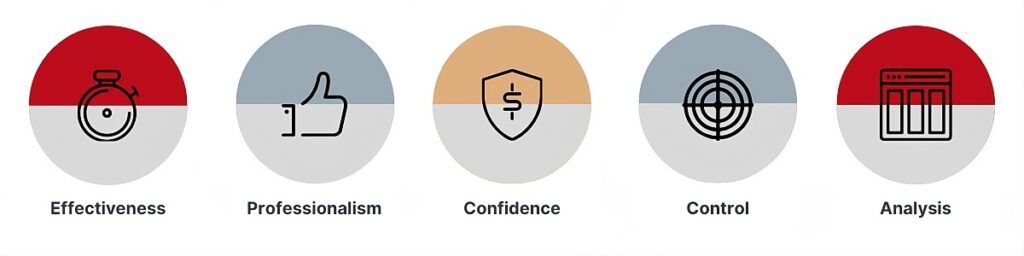
From my experience, sales scripts have consistently proven to be 100% effective across various industries. They provide sales reps with a clear plan of action and improve the overall organization of the sales process. Here’s why I can confidently say that scripts work:
Efficiency: Scripts help convey the offer quickly and clearly.
Professionalism: Scripts showcase the salesperson’s knowledge and readiness for serious conversations.
Confidence: Scripts act as a support system, especially for new salespeople, boosting their confidence.
Control: Scripts enable salespeople to steer the conversation and maintain focus on their goals.
Analysis: Scripts facilitate the analysis of call results, helping refine and improve future interactions.
Why Sales Scripts May Fail
Despite their many advantages, sales scripts don’t always yield the desired results. Failures can occur due to poor implementation, lack of adaptation to the specific business niche, or salespeople not understanding the purpose of scripts or how to use them effectively. Additionally, scripts may fail when:
They rely on outdated templates.
They lack personalization and aren’t tailored to the niche.
The sales team doesn’t understand their importance or know how to use them correctly.
They are not regularly updated or improved in response to market changes or client needs.
Conclusion
Sales scripts are a powerful tool for organizing the sales process, enhancing team efficiency, and ensuring operational stability. They standardize client interactions, reduce preparation time, and increase the likelihood of closing deals. When implemented correctly, scripts become more than just instructions—they serve as a foundation for long-term business success.
The key lies in adaptation, training, and constant improvement. Remember, an effective sales script is your secret weapon for achieving consistent, successful outcomes.
A sales script is not just a text—it’s a structured algorithm designed to close deals effectively. When used correctly, a script provides a sales rep with a solid framework for communication. The key principles:
Follow the structure – from greeting to closing the deal.
Use pre-prepared responses to objections – don’t improvise where you don’t have to.
Analyze and refine – track what works and adjust the script accordingly.
A sales script is a system, not a magic formula that instantly boosts sales.
How to Write a Sales Script?
For a sales script to be truly effective, it must be tailored to the specific business. Here’s how to create one:
Analyze your customers – identify their pain points, needs, and objections.
Define a structure – greeting, needs assessment, presentation, objection handling, and deal closing.
Ensure logical flow – the script should smoothly guide the customer toward a purchase.
Test and refine – eliminate ineffective sections and optimize successful ones.
Who Creates Sales Scripts?
Sales scripts are typically developed by industry experts, including:
Sales team leaders – they understand what their reps need in the field.
Business consultants – professionals who build structured sales systems.
Raketa Prodazh – a company specializing in high-performing sales scripts.
How Much Does It Cost to Develop a Sales Script?
The cost of creating a sales script depends on its complexity and industry specifics:
Basic scripts (for cold calls) – start at $200–$500.
Advanced scripts (with in-depth customization) – start at $1,000+.
Comprehensive sales systems (including scripts, analytics, and training) – pricing is determined individually.
SUBSCRIBE TO MY TELEGRAM CHANNEL
The most valuable sales information right on your phone!


 Time to read: 13 min.
 02 January 2025
 From my experience, sales scripts have consistently proven to be 100% effective across various industries. They provide sales reps with a clear plan of action and improve the overall organization of the sales process. Here’s why I can confidently say that scripts work:


