Customer-Centric Sales: What It Is and How to Leverage It
What sets a successful business apart? I can confidently say that customer-centricity is the key factor. In a world where consumers have endless choices, businesses that prioritize customer needs gain a true competitive advantage.
Want a high-performing sales team without the hassle?
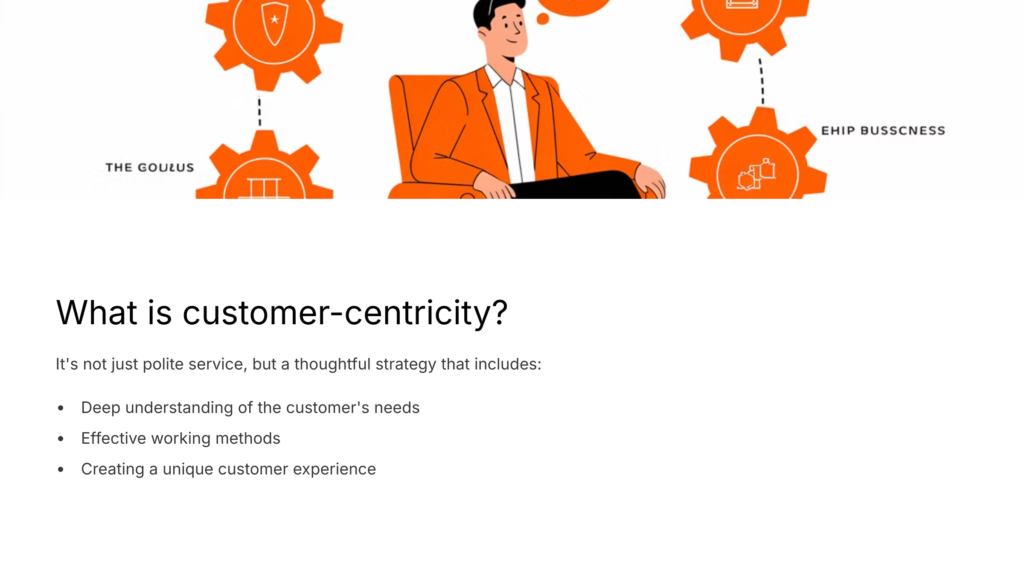
Customer centricity is not just polite service but a comprehensive strategy that includes deep understanding of customer needs at every interaction stage.
Successful customer centric approach requires personalized communication, proactive service, and continuous collection of customer feedback.
Companies with developed customer centricity gain 60% more profit and 5 times higher customer loyalty levels.
Implementing customer centricity requires team training, unified interaction standards, motivational programs, and CRM system utilization.
The most common implementation mistakes include ignoring feedback, lack of unified standards, and focusing only on one time sales.
In the full article, you’ll find detailed strategies for implementing a customer centric approach and specific tools for building long term customer relationships 👇
What sets a successful business apart? I can confidently say that customer-centricity is the key factor. In a world where consumers have endless choices, businesses that prioritize customer needs gain a true competitive advantage. For companies looking to increase average order value and build long-term customer loyalty, adopting a customer-centric sales strategy is not just beneficial—it’s essential.
Do you want to stand out in your industry rather than struggle to keep up with competitors? Let’s dive into what customer-centricity really means, the core principles behind it, and the strategies and techniques that can enhance your customer service and strengthen your business position.
What Is Customer-Centricity?
Customer orientation in sales is a strategic approach to building business and sales processes where all decisions, actions, and communications are driven by the real needs, goals, and expectations of the customer. It involves a systematic analysis of the customer journey, adaptation of products and services to customer demands, personalized communication, and accountability of sales managers for delivering meaningful customer experience at every stage of interaction.
So, what does customer-centric sales management look like in practice? Customer-centricity is more than just polite service. It’s a well-thought-out strategy that involves:
Deeply understanding customer needs at every stage of the interaction
Implementing effective sales techniques that prioritize value over transactions
Delivering a seamless, personalized experience
Training sales teams to identify and respond to customer pain points
Proactively improving customer service based on feedback
A truly customer-centric sales strategy does more than just increase average order value—it builds trust and credibility with your audience.
Here’s a little secret: in highly successful companies, sales teams focus not only on closing more deals but also on delivering personalized experiences, tracking customer behavior, and quickly adapting to evolving needs.
Are you struggling to retain customers despite having a quality product? Do you feel your managers are working old-school, not understanding real customer needs, and deals are “slipping away” due to inability to build trusting relationships? Statistics show that companies with developed customer-centricity get 60% more profit and 5 times higher customer loyalty levels. At “Rocket Sales” we’ve created a unique customer-centric approach implementation methodology over 6+ years that includes detailed customer journey analysis and identifying all interaction pain points, developing personalized customer strategies tailored to each niche’s specifics, creating service standards and scripts focused on buyer needs, training teams in international BANT, MEDDIC, SPIN methodologies for deep customer understanding, implementing CRM systems with analytics for service personalization and quality control, developing motivation systems for customer-centric behavior and long-term customer relationships. Our experts use best European practices adapted for the Ukrainian market, ensure constant communication quality control, and create a customer care culture within companies. Over 6+ years we’ve built 158 customer-centric sales departments across 14+ industries, our clients achieve conversion growth from 5% to 86%, average revenue increase +35%, with the best result being +$1.6M in 4 months of work.
Turn ordinary service into a tool for customer retention and base growth — get professional customer-centricity implementation from "Rocket Sales"!
Why Is a Customer-Centric Approach Crucial for Business Success?
Let’s do a quick thought experiment. Imagine you’re a sales director tasked with evaluating the performance of your team. Which type of company would you rather work with?
A) A company that tailors its evaluation approach to your specific industry, needs, and goals. B) A company that applies the same rigid evaluation criteria across the board, regardless of your niche.
My answer? Option A. A business that values its customers and takes a personalized approach always wins.
This is why customer-centricity in sales is such a powerful strategy. It enables businesses to:
Ensure long-term stability and sustainable growth
Receive positive customer feedback, which fuels referrals and brand credibility
Retain and expand their loyal customer base
Differentiate themselves in a competitive market
By prioritizing the customer experience, businesses can increase revenue, improve brand perception, and build long-lasting relationships—all of which are key to sustained success.
Core Principles of a Customer-Centric Sales Approach
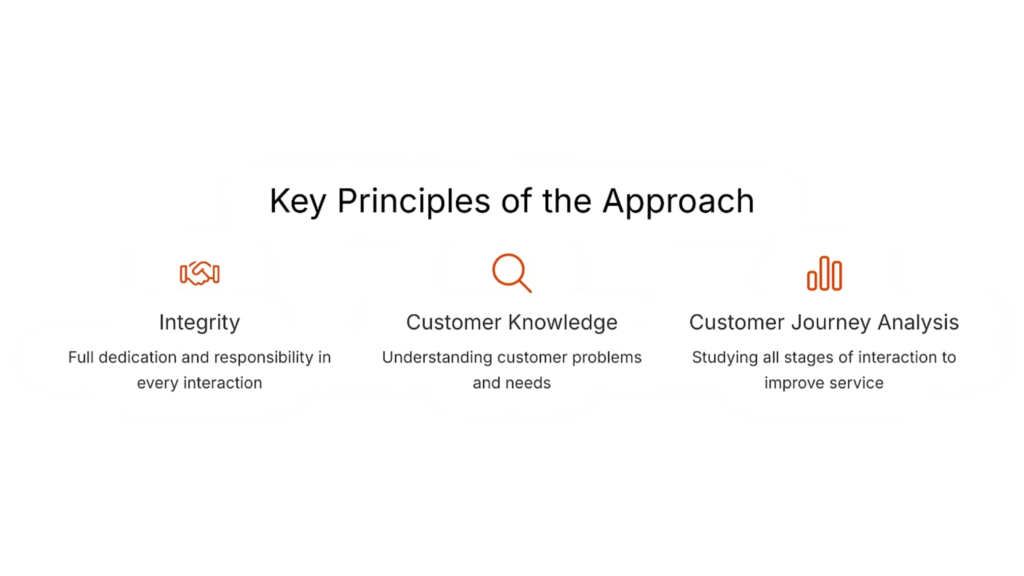
Customer orientation principles are a set of fundamental rules and practices that define how a company interacts with customers throughout all stages of sales and service. These principles are based on a deep understanding of customer needs and expectations, accountability for every customer touchpoint, personalized solutions, proactive engagement, and systematic management of customer experience. Adhering to these principles helps businesses build trust, increase customer loyalty, and develop long-term partnerships.
Let’s break down the fundamental principles that enhance customer experience and make interactions with your business more positive and valuable.
Commitment to Excellence
Delivering exceptional service means taking full ownership of every customer interaction. Every employee, regardless of their role, should complete tasks on time, align with customer values, and respond quickly to inquiries.
These small yet crucial elements build trust, strengthen customer loyalty, and encourage repeat business.
Understanding Customer Needs and Pain Points
A truly customer-centric sales professional goes beyond selling a product—they understand the customer’s pain points and real needs.
This deep understanding allows sales reps to:
Tailor their approach to each client
Offer relevant solutions rather than just pushing a product
Position themselves as problem-solvers, not just sellers.
“Sell solutions, not just products or services.”
Embedding Customer-Centricity into Company Culture
A customer-first approach should be woven into the very DNA of your company culture—not just a checklist item for sales teams.
Companies must invest in training programs that equip sales professionals with the skills to:
Adopt a customer-first mindset
Personalize sales conversations
Improve customer satisfaction and retention
Encouraging this mindset at every level ensures that customer-centricity becomes a core business philosophy, not just a strategy.
Mapping the Customer Journey
To successfully implement a customer-centric approach, businesses need a clear understanding of their entire sales funnel.
By mapping out the customer journey, companies can:
Identify friction points that may cause drop-offs
Optimize each stage to enhance the experience
Adapt the sales process to match customer needs at every step
The more seamless and intuitive the journey, the higher the likelihood of turning prospects into long-term customers.
Anticipating Customer Needs
One of the highest levels of customer-centricity is the ability to anticipate customer needs before they arise.
This means not just reacting to customer inquiries but proactively offering solutions that improve their experience.
When companies master predictive customer engagement, they:
Enhance customer satisfaction
Build emotional connections with their audience
Increase repeat purchases and long-term loyalty
When customers feel genuinely valued, they don’t just return—they become brand advocates. And that’s the ultimate goal of a customer-centric business.
Key Elements of a Customer-Centric Sales Approach
Customer orientation elements are a set of core components that enable a systematic implementation of a customer-oriented approach in sales and service. They include personalized customer interaction, proactive service, continuous collection and analysis of feedback, ongoing process improvement, and adherence to high service standards. Together, these elements help businesses create a consistent customer experience, anticipate customer needs, and build trust and loyalty.
Personalized Approach
Personalization is the foundation of a customer-centric sales strategy. The better your sales team tailors their approach to individual customers, the higher the chances of closing a deal.
Examples of a personalized approach in action:
Using the customer’s name: “Irina, we’ve prepared a special offer just for you.”
Referencing previous interactions to show attention to detail: “Alexander, last time you were interested in discounts on our accessories. Today, we have a special offer for you!”
These small yet impactful gestures make customers feel valued and understood, which significantly increases engagement and conversion rates.
Proactive Customer Service
A proactive approach means staying ahead of customer needs rather than simply responding to them. Sales teams should anticipate customer concerns and provide support even after a sale is closed.
This can include:
Subscription renewal reminders
Personalized product recommendations
Providing useful insights on how to get the most out of the product/service
By proactively offering value, companies build trust and long-term relationships that go beyond a single transaction.
Collecting and Analyzing Customer Feedback
A strong customer-centric sales strategy includes a continuous feedback loop. Collecting and analyzing customer feedback helps businesses:
Refine their products and services to better meet customer expectations
Identify pain points before they escalate into major issues
Improve the overall buying experience based on real customer insights
Ignoring customer feedback is a major mistake. Companies that actively listen and adapt can dramatically improve customer satisfaction and retention.
Continuous Process Improvement
Customer needs evolve, and so should your sales processes. Regularly refining business operations, optimizing customer interactions, and upskilling sales teams is essential for staying ahead.
A well-structured approach to continuous improvement allows companies to:
Maintain a high level of customer service
Adapt quickly to changing customer demands
Solve new challenges as they arise
A rigid, outdated sales process will eventually drive customers away. Instead, companies should focus on agility and adaptability.
Maintaining High Service Standards
Delivering consistently high-quality products and services is only part of the equation. A customer-centric company ensures that:
Interactions between customers and sales teams remain smooth and professional
Customer service standards are unified and well-defined
Every client receives the same level of care, regardless of deal size
When customers trust that they’ll receive exceptional service every time, they’re more likely to remain loyal and recommend your brand to others.
By integrating these customer-centric elements, companies can differentiate themselves, increase customer retention, and drive long-term success.
Customer-Centric Sales Strategies
Developing a customer-centric strategy is a holistic approach that not only helps businesses increase sales volume but also builds long-term relationships with customers. The foundation of a strong customer-centric strategy includes:
Establishing long-term relationships
Adapting processes to fit customer needs
Implementing customer engagement and retention principles
Let’s take a deeper look at each of these essential elements.
Building Long-Term Customer Relationships
A customer-centric strategy focuses on long-term engagement rather than one-off transactions. This is achieved through:
Personalized communication that makes customers feel valued
Consistent attention to customer needs
Ongoing support at every stage of the buying process
The goal is to create trust and loyalty, ensuring customers come back—not just for another purchase, but for an ongoing relationship with your brand.
Adapting Sales Processes to Customer Needs
A customer-first approach means adapting sales processes to meet each client’s unique needs. This shows that the company isn’t just trying to sell something—it’s helping the customer find the best solution.
Examples of adaptive selling include:
Flexible communication schedules tailored to the client’s availability
Customized solutions that match specific business or personal requirements
Ongoing adjustments based on customer feedback and evolving needs
A rigid, one-size-fits-all sales strategy is outdated. Companies that prioritize agility and personalization gain a significant competitive edge.
Customer Engagement & Retention Strategies
Engagement and customer retention are core pillars of a customer-centric approach. Instead of just focusing on acquiring new customers, businesses should:
Actively interact with existing customers through personalized updates
Keep clients informed about new products, services, or improvements
Create an environment where customers see the long-term value of staying loyal to the company
The more a customer feels valued and involved, the more likely they are to continue doing business with the company.
Techniques for Embedding a Customer-Centric Approach in Sales Teams
Implementing a customer-first mindset within a sales team requires:
Strategic planning
Sales team motivation
Continuous improvement and training
To successfully integrate customer-centricity into your sales department, you should leverage proven techniques that help sales professionals grasp the importance of this approach and develop the necessary skills to execute it effectively.
Here’s how to do it:
Customer-Centric Sales Training
Workshops on understanding customer needs
Training on handling objections effectively
Practical exercises on adapting to buyer preferences
Case studies showcasing how a customer-first approach led to increased sales
Standardized Customer Interaction Protocols
Clear guidelines on communication etiquette
Defined response times for customer inquiries
Consistent tone and messaging to reflect the company’s values
Accountability measures for service quality and efficiency
Leadership Support & Guidance
Sales leaders should actively mentor their teams, offering insights on best practices
Regular performance reviews should identify strengths and areas for improvement in customer-centric selling
Incentive Programs for Customer-Centric Behavior
Bonuses for acquiring and retaining customers
Recognition and rewards for outstanding customer service
Company-wide acknowledgment of employees who go the extra mile for customers
Leveraging CRM & Automation Tools
CRM systems help track every customer interaction
Automated analytics tools provide insights into customer behavior
Feedback collection tools allow businesses to make data-driven improvements
A well-integrated CRM system ensures that customer data is always accessible, allowing sales teams to personalize outreach and build lasting relationships.
Common Mistakes in Implementing a Customer-Centric Sales Approach
Even the best customer-centric strategies can fail if their implementation is flawed. Many business leaders unknowingly make mistakes that hinder growth and weaken customer loyalty.
To ensure your customer-first approach truly delivers results, avoid these common pitfalls:
Ignoring or undervaluing customer feedback as a tool for improving products and services.
Lack of standardized communication protocols, which creates inconsistency and reduces customer trust.
Focusing only on short-term sales instead of nurturing long-term customer relationships.
Failure to instill a customer-first mindset within the sales team, leading to inconsistent execution.
Neglecting innovation and modern technologies, which are essential for maintaining high service standards.
A truly customer-oriented business continuously refines its approach, ensures every customer touchpoint is seamless, and adapts to changing customer expectations.
Technology & Tools for Managing the Customer Experience
A genuinely customer-centric approach in sales is impossible without technology-driven solutions that help businesses better understand and manage the customer journey. Modern tools, including CRM systems and automation, allow for personalized, efficient, and seamless interactions.
CRM Systems: The Backbone of Customer-Centric Sales
A CRM system is the foundation of any successful sales operation, enabling both sales teams and reps to:
Organize, automate, and synchronize customer interactions
Store and track customer data, purchase history, and communication records
Build stronger, more personalized relationships with customers
A well-integrated CRM ensures that every interaction is meaningful and that no customer concern falls through the cracks.
Process Automation: Enhancing Efficiency & Focus
Automation significantly reduces manual workloads, allowing sales teams to focus on customer interactions rather than administrative tasks. This is especially critical for large sales teams managing high volumes of leads and customer inquiries daily.
Automated reminders for follow-ups and renewals
Pre-built email templates for standard responses
Instant access to customer data for better personalization
By eliminating repetitive tasks, automation helps free up valuable time, ensuring that sales teams can dedicate more energy to engaging with customers in a meaningful way.
Data Analytics: Understanding & Predicting Customer Needs
Modern analytics tools allow businesses to gain deep insights into customer behavior, preferences, and pain points. With data-driven decision-making, companies can:
Refine sales strategies based on real customer interactions
Adapt products and services to match evolving customer needs
Identify weak points in the sales funnel and improve conversion rates
By leveraging data and analytics, businesses can proactively address customer concerns and create a seamless, highly personalized customer experience at every touchpoint.
The Business Benefits of a Customer-Centric Approach
At its core, customer-centricity helps businesses stand out from the competition, strengthen their market position, and increase competitiveness. However, the advantages don’t stop there. A customer-focused strategy also contributes to:
Stronger customer relationships
Long-term client retention
Higher customer loyalty
Increased sales volume
Expanding the customer base
By prioritizing customer needs and delivering exceptional experiences, companies can drive sustainable growth while maintaining a competitive edge.
Now you understand that customer-centricity isn’t just polite service, but a comprehensive strategy for building long-term customer relationships requiring a systematic approach to every interaction stage, from first contact to after-sales support. Applying the described principles independently, you can achieve certain improvements, but creating a truly customer-centric culture requires deep expertise and proven methodologies. “Rocket Sales” specializes in comprehensive “turnkey” customer-centric approach implementation: we don’t just consult, but conduct full customer journey diagnostics identifying all interaction pain points, create personalized customer strategies considering niche specifics, develop service standards, scripts and checklists focused on customer needs, train teams in international BANT, MEDDIC, SPIN methodologies for deep customer understanding, implement modern CRM systems with analytics tools for service personalization, create motivation systems for customer-centric behavior and long-term relationship building, ensure constant communication quality control with regular reports and recommendations, form corporate customer care culture at all organizational levels. Our methodology includes using best European customer-centricity practices, creating detailed customer journey maps, implementing proactive service approaches and feedback collection systems. Over 6+ years we’ve helped 158 companies become truly customer-centric, our clients achieve conversion growth from 5% to 86%, average order value increase up to 30%, average revenue growth from +35%, with the best result being +$1.6M in 4 months. Among our clients are companies like Mitsubishi, Naftogaz, Crowne Plaza, who received world-class customer service systems. Don’t let outdated service approaches lose valuable customers.
Create a customer-centric culture that turns every buyer into a loyal partner of your business!
Customer-Centric Sales: Expert Recommendations from Raketa Prodazh
The experts at Raketa Prodazh have over 12 years of experience in sales, with more than 158 successful cases under their belt. They understand better than anyone how customer-centricity helps businesses build solid, long-term relationships with their clients.
If you’ve read this far, here are a few pro tips from industry professionals:
Personalize your communication—align your approach with customer needs and offer solutions that truly address their challenges.
Maintain transparency and honesty—authentic communication builds trust and a strong brand reputation.
Prioritize post-sale support—customer loyalty grows when they receive ongoing value beyond the initial purchase.
Invest in sales team training—continuous skill development ensures your team is prepared for any challenge.
Leverage technology to optimize processes—free up your sales team’s time so they can focus on meaningful customer interactions instead of administrative tasks.
Final Thoughts
Customer-centricity is a foundational strategy that helps businesses grow, enhance customer loyalty, and differentiate themselves in a crowded market.
So, how do you build a truly customer-first organization?
It all comes down to:
A team that prioritizes customer needs
Personalized and meaningful interactions
Smart implementation of innovative tools
When these elements align, businesses create strong, long-lasting customer relationships while remaining highly competitive—even in the most saturated industries.
Customer-centric selling is not just about polite service—it’s a strategic approach where the customer’s needs are at the core of all business processes. A truly customer-focused sales strategy includes:
Personalized offers instead of generic sales pitches.
Solving real customer needs, not just pushing a product or service.
Building long-term relationships, rather than focusing on one-time deals.
What Are the Three Levels of Customer-Centricity?
There are three levels of customer-centricity:
Basic – Providing quality service, quick responses, and friendly communication.
Advanced – Personalization, in-depth customer needs analysis, and proactive support.
Elite – Anticipating customer desires and offering solutions before they even recognize a need.
Examples of Customer-Centric Companies
Apple – Their support team knows more about the user’s device than the user themselves and can solve issues within minutes.
Amazon – Their recommendation system is so precise that customers often buy products before realizing they need them.
Raketa Prodazh – We don’t just consult; we build sales departments that actually deliver results.
How to Build a Customer-Centric Sales Approach?
To enhance customer-centricity in your company, you need three key elements:
Automation – CRM systems, standardized communication protocols, and high-quality service.
Experienced professionals – A trained team that understands how to engage effectively with customers.
Analytics – Collecting feedback and adapting based on customer needs.
SUBSCRIBE TO MY TELEGRAM CHANNEL
The most valuable sales information right on your phone!


 Time to read: 15 min.
 06 February 2025