Key Takeaways
- Speed of first contact matters more than a beautiful presentation-a customer waiting more than 15-20 minutes for a callback is already messaging a competitor.
- Weak qualification turns a visit into an empty meeting; strong managers clarify budget, trade-in, and timeline before inviting the client to the dealership.
- A test drive only works when followed immediately by a price calculation, otherwise the emotions cool down and the customer goes off to compare offers with competitors.
- A fragmented offer (price from the salesperson, trade-in value from the appraiser, financing from the bank) creates chaos instead of a clear deal.
- Low conversion at transition points reveals the bottleneck: car dealership conversion rate from visit to offer drops not because of customers, but because of slow loan and trade-in calculations.
In the article below, you’ll find specific metrics for each stage, common CRM mistakes, and a step-by-step framework for building a car dealership sales funnel 👇
The automotive sales funnel isn’t just for pretty CRM reports. It shows dealership managers exactly at which stage customers are lost and why, given the same volume of leads, one manager closes far more deals than another.
What Is an Automotive Sales Funnel and Why Do You Need One?
A sales funnel is a model of the customer’s journey from the first touchpoint with the dealership to the moment they pick up their car. Picture an ordinary kitchen funnel for oil: you pour a lot of liquid in at the top, and less comes out at the bottom because some of it sticks to the sides. The same thing happens with customers: lots of inquiries come in, but only a handful make it to payment. The purpose of the automotive sales funnel is to show exactly where along this path most people “get stuck.”
The number and names of stages can vary from dealership to dealership, which is why adapting and customizing the sales funnel to your specific business matters. Some dealerships treat trade-in as a separate step, while others fold it into the overall offer calculation. But the principle of managing customer flow is the same everywhere: the clearer the movement from lead to deal, the easier it is to forecast sales, plan manager workload, and spot weak points before they start eating into profit. That’s exactly why it’s worth carrying out step-by-step sales funnel construction, documenting the car sales process not just in words but capturing it in concrete stages and numbers-turning the sales process at a car dealership into a predictable system rather than a collection of one-off arrangements.
Sound familiar? Your dealership gets a ton of leads, but only a handful turn into purchases? It feels like leads just “dissolve” somewhere between the first call and handing over the keys? Analysis of the automotive sales funnel shows that 70% of customer loss happens due to a lack of systematic processes. At “Rocket Sales,” over 8+ years we’ve specialized in creating transparent sales funnels for dealerships-from lead processing to the final delivery of the car. Our experts conduct a comprehensive audit of every stage: analyzing response speed to inquiries, the quality of customer qualification, test drive effectiveness, and offer-to-deal conversion. Over 8 years, we’ve built 208 sales departments across various niches, including major dealers of Mitsubishi, Audi, and Ford. Our clients’ average revenue growth is +35%, with the best result reaching +$10,907,403 in 4 months.
Turn your stream of leads into a stable automotive sales pipeline-get a free efficiency audit of your sales funnel!
Six Main Stages of the Automotive Sales Funnel
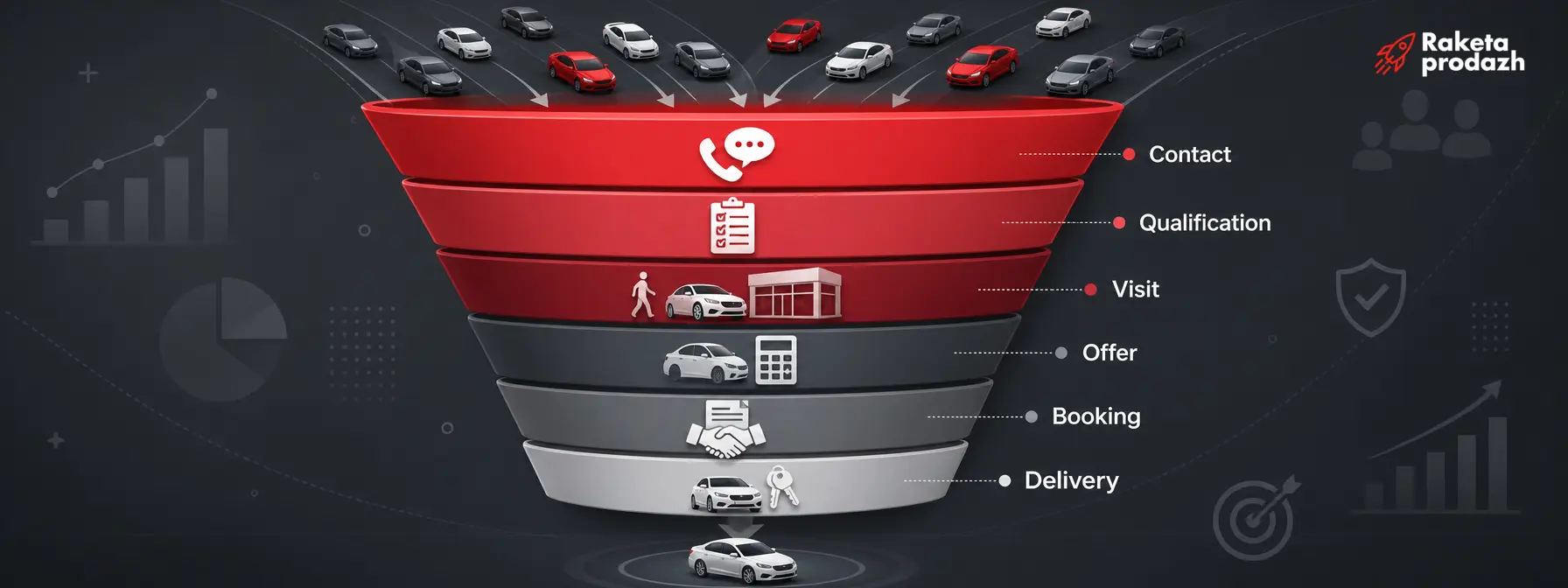
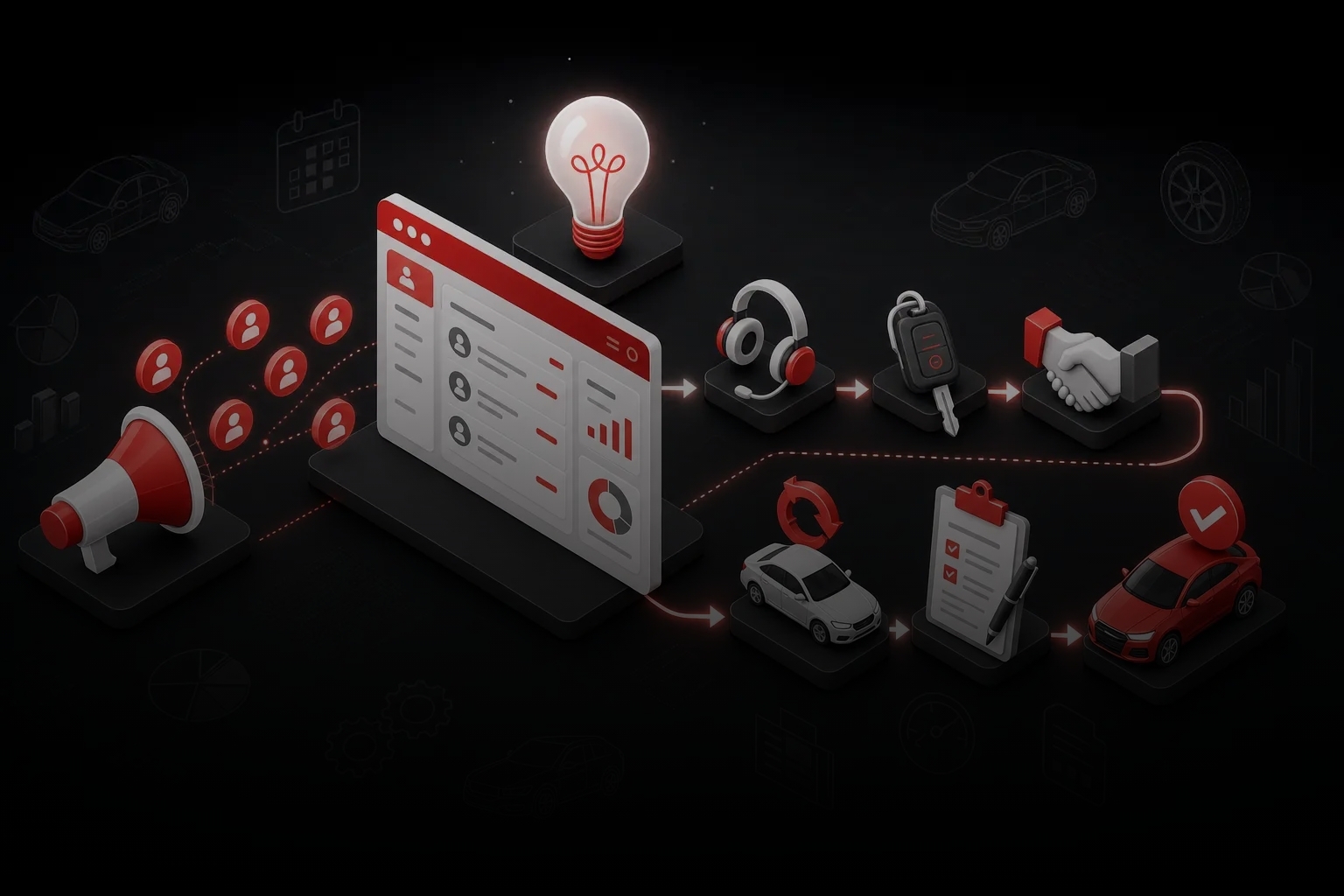
To avoid turning your CRM into an endless list of statuses, it’s convenient to consolidate the stages of the car sales process into six major blocks. Each one may contain several calls, clarifications, and intermediate actions, but for a management-level view, a simplified framework is enough.
Here are the six stages:
- new lead and first contact;
- qualification and scheduling a visit;
- dealership visit and test drive;
- offer calculation: car, trade-in, financing;
- negotiation, reservation, and deal paperwork;
- payment, preparation, and car delivery.
You don’t need to break every action within a stage into a separate status. A reminder call about a visit or a question about paint color remain tasks within the stage, not a new step in the deal. Next, we’ll break down each of the six stages in detail, starting with the very first customer touchpoint.
Stage 1. New Lead and First Contact
Everything begins with the customer’s inquiry, and what matters here isn’t where it came from but how quickly it was responded to. The lead might come from the website, a phone call, a specific car’s listing on a classifieds platform, an ad, a messaging app, or social media-or the person might simply walk into the dealership without an appointment. A separate category of inquiries comes from repeat customers who’ve already bought a car and returned for a new one or brought a friend.
Next comes the technical part of processing leads at a car dealership. The inquiry lands in the CRM, the system or a manager identifies the traffic source, a responsible employee is assigned, and they reach out to the customer. Effective lead processing at a car dealership starts with a clear protocol: who handles the inquiry, how quickly the manager must contact the customer, what data needs to be logged in the CRM, and what the next step should be after the first contact. If this process isn’t standardized, even a large volume of incoming inquiries won’t guarantee sales growth, because some potential buyers are lost before a real conversation with a manager even happens. If the call doesn’t connect on the first try, a follow-up attempt is scheduled-not silence until next Monday. The outcome of the first contact is always logged in the customer’s record, whether it’s a successful conversation, a request to call back later, or a disconnected number.
In real dealership practice, inquiry sources typically include:
- website and lead forms for specific models;
- inbound calls;
- car listings on classifieds platforms and marketplaces;
- search and social media advertising;
- messaging apps;
- repeat customers, referrals, and walk-ins without an appointment.
Response speed matters here more than the quality of the presentation. If a customer waits longer than 15-20 minutes for a callback, there’s a high chance they’re already messaging a competitor. That’s why it’s important for managers to regularly review the report on leads no one has contacted yet, rather than putting it off. The key conversion metric at this stage is simple: a new lead turns into an established contact, and it determines how many inquiries even make it into further work.
Stage 2. Customer Qualification and Scheduling a Visit
Once contact is established, the manager needs to figure out what the customer is actually looking for and how close they are to making a purchase. This is the qualification stage, and how thoroughly it’s carried out determines whether it’s even worth inviting the person to the dealership or whether it’s better to keep nurturing them with content and offers for now. A vague conversation along the lines of “I just want to take a look at cars” doesn’t help either the manager or the customer, because there’s no concrete next step to act on.
Good qualification covers several groups of questions: what model and price range interests them, what timeline they have for buying, and how they plan to pay. It’s also worth finding out separately whether they have a car for trade-in and whether they’re considering alternative brands, because this significantly changes both the offer and the negotiating position. The more thoroughly the manager covers these questions upfront, the fewer surprises will show up at the calculation stage.
In practice, it’s worth clarifying the following points:
- model and trim level;
- budget and payment method, including interest in financing or leasing;
- new car or used;
- purchase timeline;
- availability of a car for trade-in;
- alternatives and the main selection criterion.
After qualification, it’s time to get specific and schedule the visit. There’s a huge difference between “come by sometime this week” and a proper agreement. In the latter case, the customer has an exact date, time, and clear purpose for the visit-for example, a test drive of a specific model or viewing a used car the manager has already picked out. It’s this second approach that turns the conversation into an actual visit rather than a polite “okay, I’ll think about it.” Two key conversion metrics apply here: contact turns into a qualified customer, and a qualified customer turns into a scheduled visit.
Stage 3. Dealership Visit and Test Drive
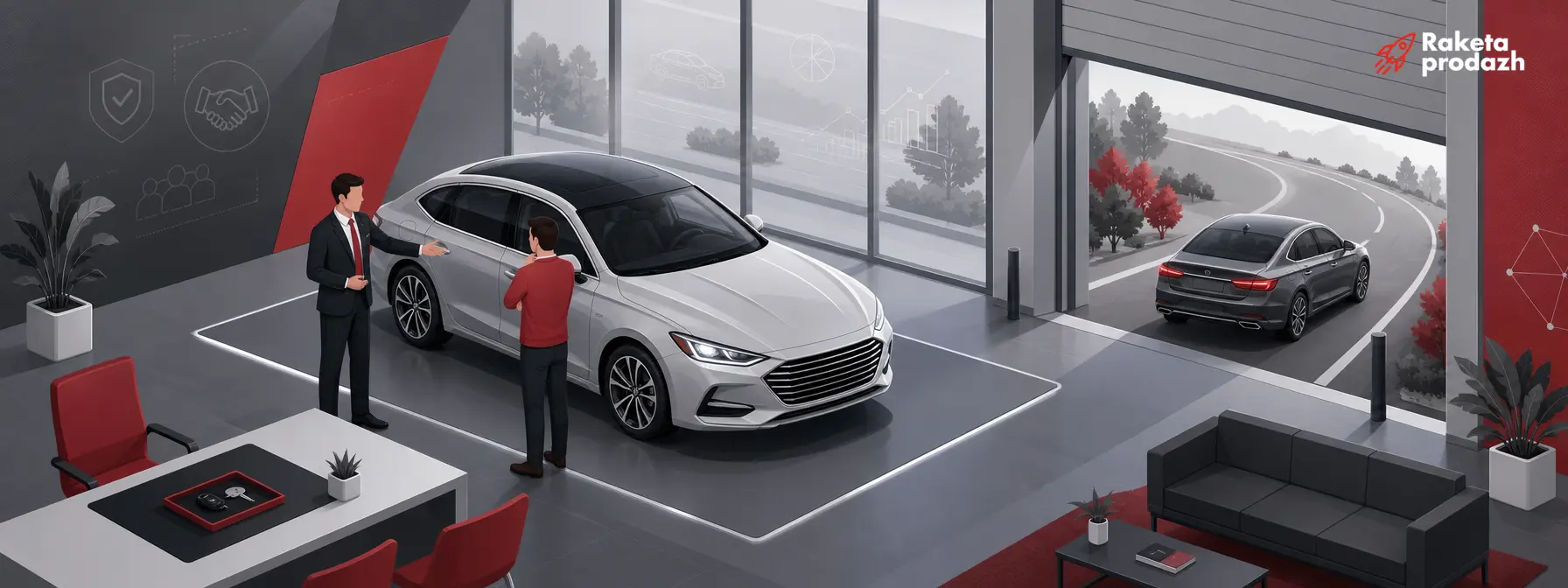
The offline part of the car sales funnel starts with preparation for the visit and ends with the impression the customer takes home. Before the meeting, the manager needs to confirm the customer is actually coming, prepare the right car, verify it’s available on the lot, and, if needed, arrange the test drive in advance rather than at the last minute.
During the visit itself, it’s important not to start the conversation from scratch. The manager picks up the context from previous communication, checks whether the customer’s needs have changed (maybe something shifted over the past week), shows suitable cars, and presents the trim options. Alternatives are then discussed, a test drive takes place, and at the end of the conversation the manager gets a read on the customer’s impressions and concerns, rather than simply saying goodbye with “so, how’d you like it, give us a call.”
The test drive isn’t the finish line of the visit-it’s a bridge to the next step. It only works when the manager moves straight into calculating a specific offer right after the drive, rather than letting the customer leave with a vague “think it over.” Otherwise, the excitement from the drive fades quickly, and the customer goes off to compare options with competitors.
It’s also worth tracking show rate-the share of customers who actually showed up among those who scheduled a visit. If this number is low, the issue isn’t the test drive but the quality of the commitment made at the previous stage. Two conversions are counted here: a scheduled visit turns into an actual visit, and an actual visit turns into moving forward to the offer calculation. Once the customer has seen the car in person and taken it for a spin, it’s time for the actual numbers.
Stage 4. Offer Calculation: Car, Trade-In, and Financing
After the visit and test drive comes the moment when general impressions need to turn into concrete numbers. The manager puts together an offer that factors in the car and trim, final price, possible discount, trade-in appraisal (if applicable), loan or lease terms, down payment amount, additional equipment, insurance, and delivery or pickup timeline.
If the customer has a car to trade in, it gets appraised, and that number gets folded into the overall calculation right away-not left floating separately “somewhere with the appraiser.” The same goes for financing: the loan calculation needs to show up in the full picture immediately, not two days after a call from the bank.
This is a point where it’s easy to lose the customer due to scattered information. If they get the price from the salesperson separately, the trade-in valuation from the appraiser separately, and the loan terms from the finance manager separately, it creates a sense of chaos rather than a clear deal. The customer should see one single purchase scenario: how much they pay now, how much remains on the loan, what happens to the old car, and when they get the new one.
Special terms, seasonal discounts, or trade-in bonuses should be discussed right away as part of this unified calculation, not sprung as a surprise at the next meeting. The key conversion metric at this stage is the transition from visit or test drive to a formed offer, and this number reveals how well the dealership has aligned sales, trade-in appraisal, and the finance department.
Stage 5. Negotiation, Reservation, and Closing the Deal
At this stage, the customer already has concrete numbers in hand and is comparing them with what other dealers are offering. Here, objections about price come up, questions about discounts, discussion of trim options, delivery timelines, trade-in terms, loan parameters, and additional products like insurance or accessories. Sometimes it’s necessary to bring in the sales manager if the customer is requesting special terms beyond what the salesperson is authorized to offer.
A separate category is customers who say “I’ll think about it.” That’s not a reason to leave the deal sitting in “pending” status indefinitely. The manager needs to figure out exactly what’s still unresolved: price, timeline, financing concerns, or a desire to compare with another brand. From there, it’s worth setting up a specific next contact right away-for example, a call in two days, after the customer discusses the purchase with their family.
Once terms are agreed upon, the more technical part begins: the car is reserved for the customer, the final terms are put in writing, paperwork is prepared, the contract is signed, and the payment schedule is agreed on. This is where discipline matters: if a reservation sits untouched for weeks, it turns into dead weight in the CRM and makes it hard to objectively assess actual manager workload.
Two key conversion metrics apply here: the offer turns into a reservation, and the reservation turns into a signed contract or confirmed deal. The gap between these numbers usually shows exactly where almost-closed customers are being lost. A signed contract doesn’t mean the sale is done-there’s still a path to the actual sale that’s easy to lose track of.
Stage 6. Payment, Preparation, and Car Delivery
The final stage of the automotive sales funnel covers everything that happens after the deal terms are agreed on paper. This includes receiving payment, finalizing financing if a loan was used, processing the trade-in, verifying documents, pre-sale car preparation, installing additional equipment, and scheduling the actual delivery time.
A sale shouldn’t be considered closed just because the customer said “I’ll take it” and signed the contract. The CRM needs a clear, unambiguous criterion for a completed deal, and that’s usually the actual handover of the car to the customer, not an earlier status. Otherwise, sales reports will look better than the dealership’s actual cash flow.
The handover itself is also part of the process: the customer is walked through the car’s key features, necessary documents are completed, and a first scheduled service visit is arranged. This is a good moment to establish post-sale contact right away: ask for feedback, remind them about the maintenance schedule, and leave the door open for referrals. The key conversion metric at this stage is the transition from contract or reservation to actual delivery, and it’s this step that closes the automotive sales funnel. Once all six stages are mapped out, the next question comes up: how do you know the funnel is actually working well, rather than just looking good in the CRM?
Analytics and Key Metrics: How to Measure Sales Funnel Performance
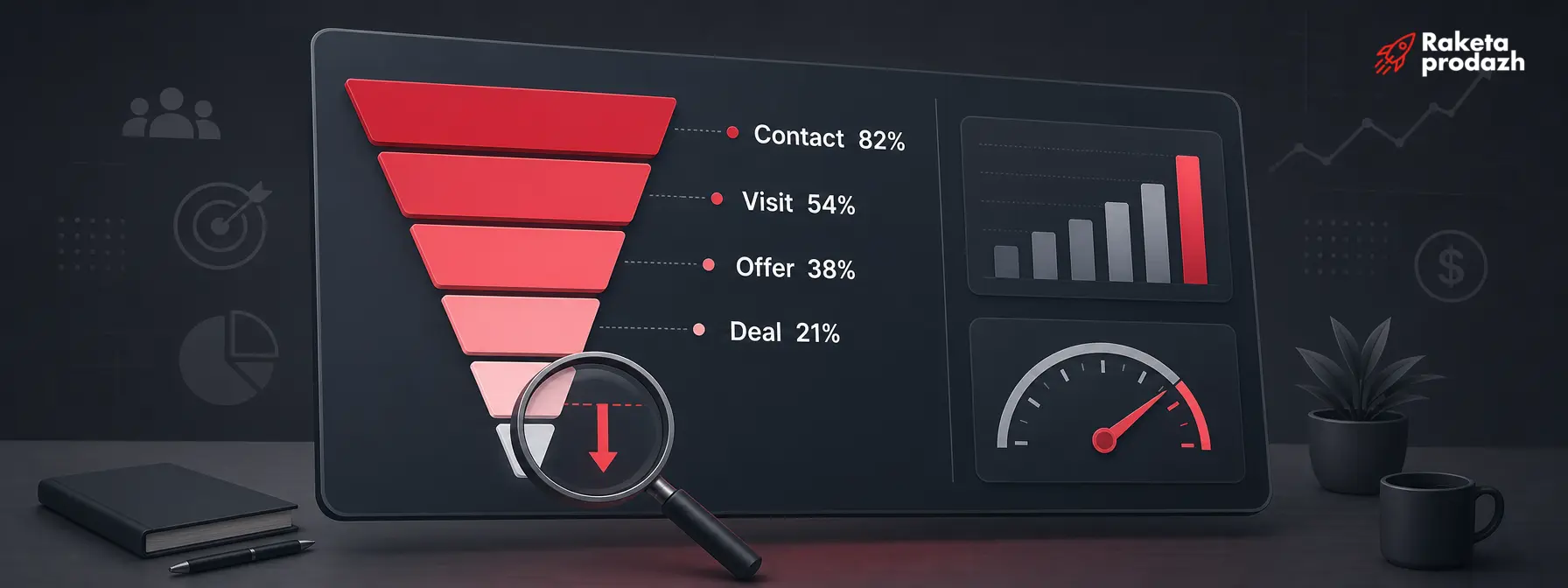
A dealership sales funnel without numbers behind it is just a pretty diagram. To make it useful, you need to regularly analyze the sales funnel, looking at conversion between stages rather than just the total number of cars sold per month. Each stage has its own set of indicators: traffic volume and its sources, the share of leads with established contact, show rate, visit-to-offer conversion, and the overall deal cycle length from inquiry to delivery.
This data isn’t for a “check-the-box” report-it’s for finding the bottleneck. If a dealership’s inquiry-to-contact conversion is low, the issue is response speed. If the problem is in the transition from visit to offer, chances are it’s the quality of the presentation or the speed of loan and trade-in calculations that’s suffering. Comparing numbers across different managers often shows that, given the same volume of leads, one employee simply works faster and more persistently than another.
Even detailed analytics won’t save a funnel if the structure itself has systemic flaws built into it.
Common Mistakes When Building an Automotive Sales Funnel and How to Avoid Them
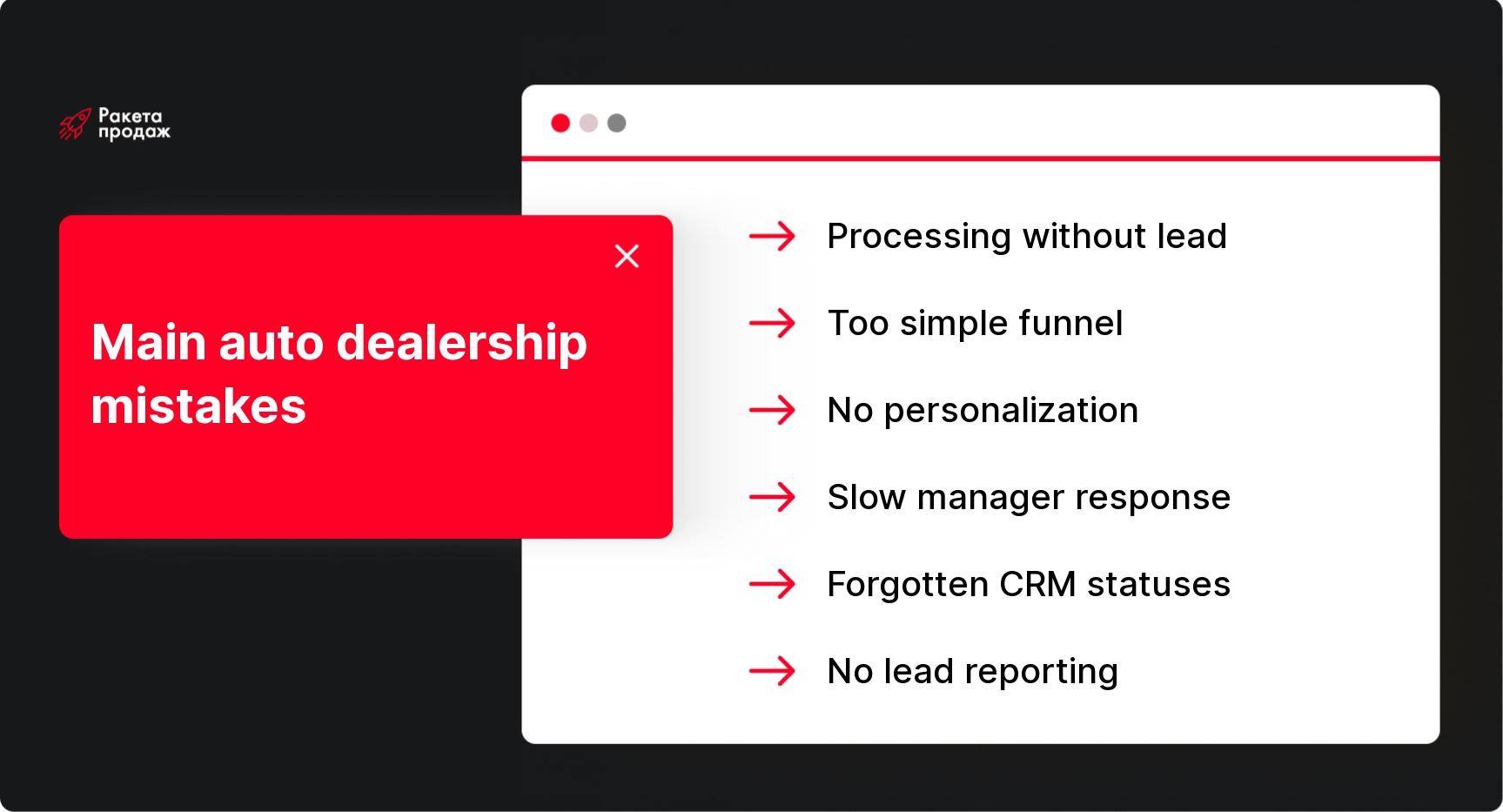
Even with a good CRM, dealerships keep making the same mistakes, which is why it’s worth understanding in advance how to avoid sales mistakes. The first mistake is closing a deal without a preceding lead record, when some calls and visits bypass the system entirely and never make it into the CRM. In that case, the manager sees a great-looking conversion rate but doesn’t realize the actual volume of inquiries was far higher, with some of them lost before the first contact even happened.
The second common problem is an overly simplified funnel, where all actions are squeezed into two or three statuses like “new” and “closed.” From such a picture, it’s impossible to tell exactly which step causes customers to drop off: whether they never get a callback, never show up for the visit, or go off to think after the loan calculation and never come back. A lack of personalization in communication, slow manager response times, and clunky website navigation only make this problem worse right at the entrance to the funnel.
The third mistake is undisciplined CRM management: managers forget to update statuses, don’t leave notes on calls, and deals sit “stuck” in the “thinking it over” stage for weeks. Good practice is simple: every deal should have a deadline for the next action, and every employee should have a regular report on stalled leads. Dealerships that implement these rules usually see conversion rates improve within the first month, simply because they stop losing customers over avoidable gaps. All these stages and metrics only matter when they’re brought together into one clear system, rather than scattered across individual managers’ heads.
Building an effective automotive sales funnel isn’t just a nice-looking diagram in the CRM-it’s a working system that turns every lead into maximum profit. But implementing all the principles described here requires deep expertise and an understanding of the specifics of the automotive business. “Rocket Sales” builds turnkey systematic sales departments for dealerships: we don’t just analyze current processes, we fully build out the funnel from first contact to car delivery, implement CRM systems with proper analytics, and train the team to work by unified standards. Our methodology covers configuring all the key stages: from lead response speed to optimizing trade-in and financing processes. Over 8 years, we’ve helped 208 companies, including dealers of brands like Mitsubishi, Audi, Ford, and Mazda, build sales departments that consistently exceed their targets. Our clients’ average conversion growth ranges from 5% to 86%, with average revenue growth of +35%. Don’t spend months experimenting with uncertain results.
Build a sales funnel that turns every lead into a profitable deal-order a systematic sales department build for your dealership!
The purpose of the automotive sales funnel isn’t to describe every single manager action in maximum detail-it’s to show the customer’s movement toward the deal. If you keep six clear stages in the CRM and track test drives, trade-ins, loan calculations, calls, and follow-ups as actions within those stages, the system becomes simpler for managers and more useful for management. That balance between simplicity and detail is exactly what separates a dealership sales funnel that actually works from a nice-looking but useless diagram in a presentation.


 Time to read: 9 min.
 11 September 2026