Key Takeaways
- A car dealership loses customers at the seams between the call center, showroom, trade-in, financing, and inventory whenever even one link operates without unified rules.
- Speed-to-lead (how fast you respond to a first inquiry) and the conversion from visit to test drive matter more than raw call counts – they show the real quality of the work, not just an imitation of activity.
- Strong salespeople from real estate, insurance, or finance often reach results faster than “car people,” because they already know how to guide a customer through the decision-making cycle.
- Your CRM should capture not just contact details, but the visit date, whether a test drive happened, the discount that was mentioned, the reason for a lost deal, and the next step – otherwise a manager only sees the final sales number without understanding where the funnel is failing.
- Scaling an unpolished process is risky: adding more leads and more staff will only multiply existing problems if the funnel, scripts, and quality control aren’t yet running consistently.
In the article below, you’ll find a step-by-step algorithm for building a car dealership sales system, specific KPIs for monitoring the funnel, and a 90-day plan for launching the department 👇
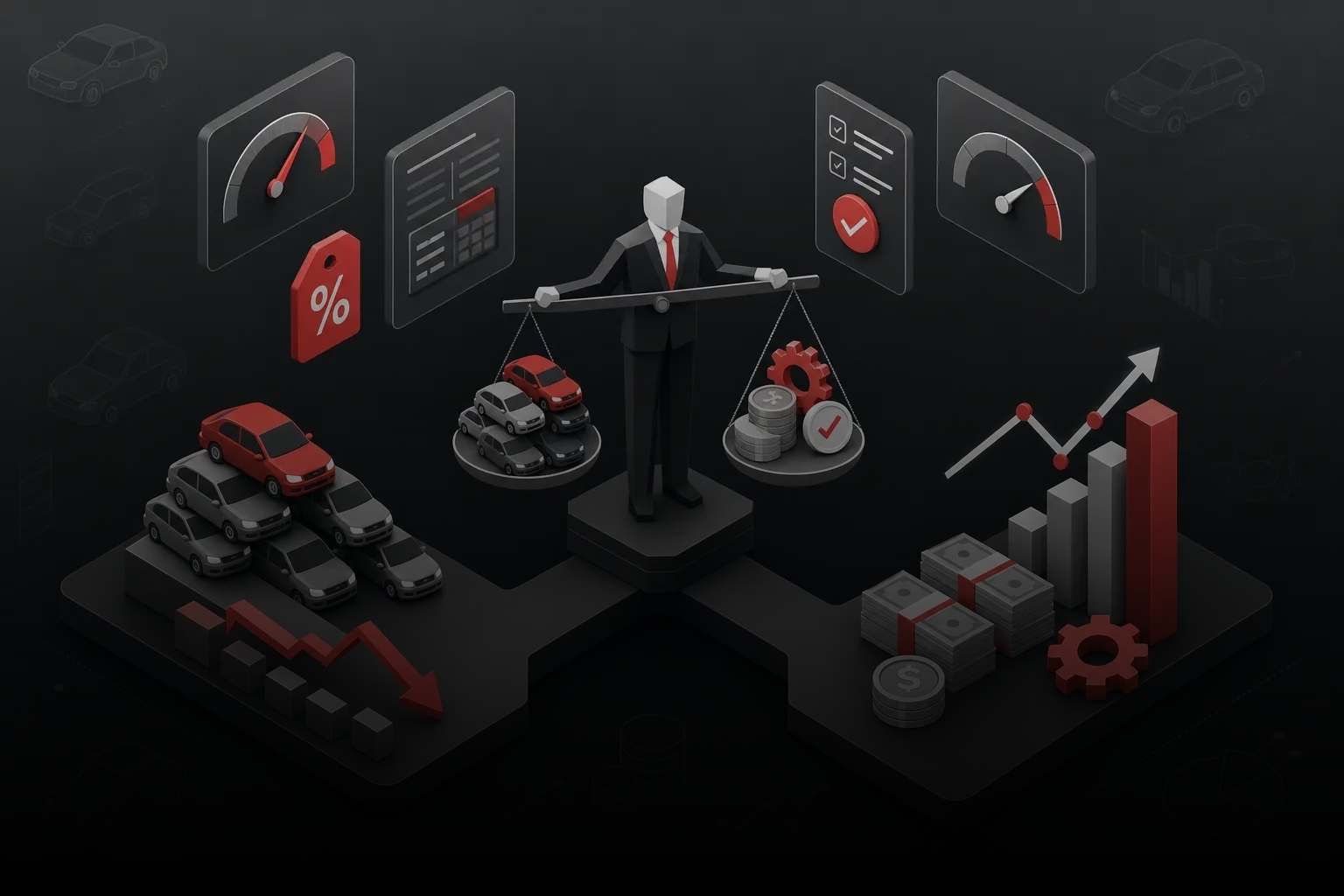
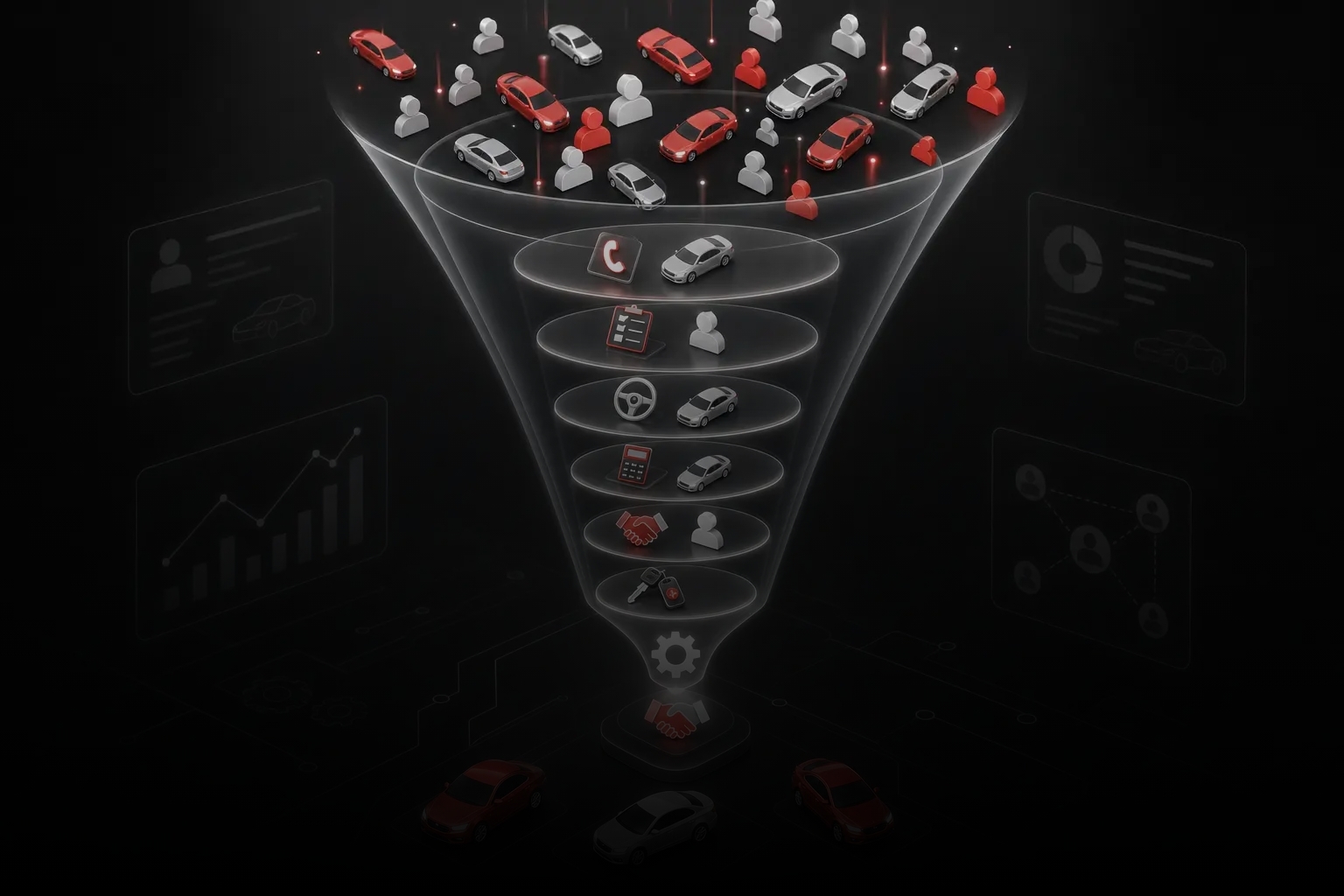
That’s exactly why creating a car dealership sales department isn’t about hiring people – it’s about building a system. Marketing, the call center, managers, CRM, vehicle inventory, financing, trade-in, and leadership all need to operate under the same set of rules. If even one link falls out, the entire funnel loses control. Let’s break down how to build this system step by step.
Market Analysis and Strategic Planning
Establishing a car dealership’s sales department doesn’t start with an org chart or hiring – it starts with cold, hard market analysis. You need to understand your region’s capacity, seasonal demand fluctuations (spring and fall are traditionally more active than winter), your main competitors, and their strengths. Without this picture, any sales plan is essentially pulled out of thin air, and manager KPIs end up disconnected from reality.
Next, you choose a competitive strategy. Some dealers bet on price and aggressive promotions, others on service and long-term customer relationships, and some build a digital-first approach with fast online vehicle selection and minimal showroom visits before the decision is made. The strategy you choose determines who you hire and what processes you set up. In parallel, you calculate the required lead volume: if the sales plan calls for 40 cars a month and the lead-to-deal conversion rate is 8%, you need at least 500 quality inquiries. This is also where the concept of speed-to-lead comes in – the speed of the first response to a customer, which directly affects the final funnel conversion.
From there, you can move on to how this strategy translates into specific roles and team structure.
Sound familiar? A car dealership sales department working in chaos, leads slipping through the cracks between managers, customers walking to competitors, and the sales plan hitting or missing with no consistency? Statistics show that 80% of dealerships face these issues due to a lack of systematized sales processes. At “Rocket Sales,” over 8+ years we’ve built a specialized methodology for setting up sales departments for car dealers that accounts for every nuance of the automotive business: from lead handling to trade-in and financing. We’ve successfully built 208 sales departments across various niches, including work with brands like Mitsubishi, Audi, Ford, and Mazda. Our expertise covers the full cycle: from auditing existing processes to implementing CRM, training the team, and setting up KPIs for steady sales growth.
Turn the chaos in your sales department into a well-oiled system that consistently hits 150% of plan - get a free audit of your dealership!
Organizational Structure of a Car Dealership's Sales Department and Key Roles
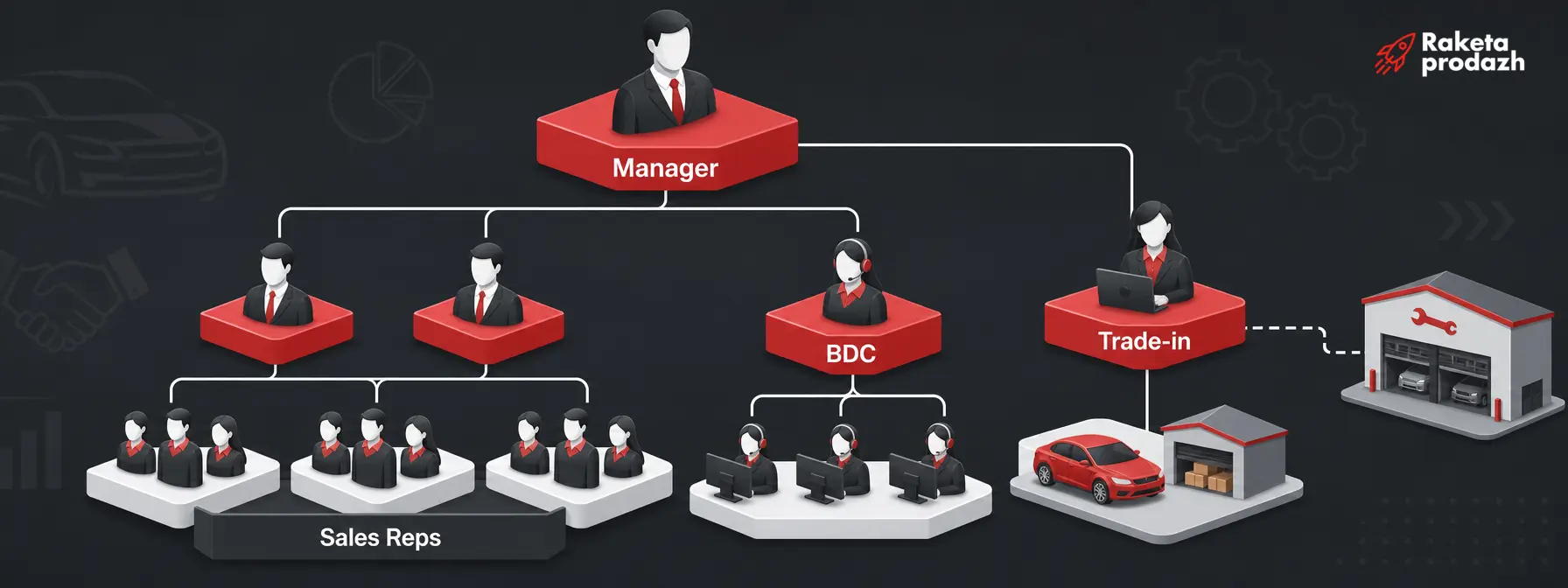
The structure of a car dealership’s sales department depends on the type of business. A single-brand new-car dealership can get by with a simpler setup than a multi-brand dealer or a used-car lot, which needs additional expertise for assessing vehicle condition. In the classic model, there’s a sales department head, team leads or senior managers, regular salespeople, and BDC (Business Development Center) or BRC operators who handle incoming inquiries and schedule appointments without pulling showroom managers away from their work.
There’s also the coordinator role, which tracks vehicle availability, delivery-prep logistics, and links sales with service and inventory. At larger dealerships, you’ll often find a sales trainer who onboards new hires and reviews calls. Experience shows that the connection between the sales department and the service department is critical to business stability: service customers are a ready-made base for repeat sales, and if the two departments operate in isolation, the dealer loses a significant share of potential revenue. An optimal setup assigns clear areas of responsibility to each role instead of blurring them across everyone.
Properly building the structure of a sales team lays the foundation for all other processes, but once roles are defined, the next question becomes: who exactly should fill these positions?
Hiring, Training, and Motivating Staff
Sound hiring and training of managers helps avoid a common mistake many dealers make – looking only for “car people” with car-sales experience. In practice, strong salespeople from other fields (real estate, financial services, insurance) often reach results faster, because they already know how to handle objections and guide a customer through the decision-making cycle. The profile of an ideal dealership manager includes stress resilience, flexibility when dealing with different types of customers, and genuine customer focus – not just going through the motions.
During interviews, it’s worth checking not just resumes but also reactions to simulated situations: how a candidate handles a price objection, how they behave with an unhappy customer. Onboarding new employees works better when structured around a 30-60-90 day framework: in the first month, the person learns the product and the CRM; in the second, they start handling real deals under mentorship; in the third, they’re at full workload. Regular training sessions with call reviews and role-playing keep the team sharp, and a well-thought-out sales department motivation system should combine clear KPIs and bonuses for closed deals with non-material recognition within the team: a leaderboard of top results works better than it might seem at first glance.
Once people are hired and trained, it’s important to give them clear processes to follow every day.
Sales Department Processes at a Car Dealership: From Incoming Lead to Closed Deal
Management of a car dealership’s sales department is built on protocols, not on a manager’s gut feeling. How clearly the day-to-day work of a car dealership’s sales department is structured determines the speed of response to every inquiry and the ultimate funnel conversion. Handling an incoming inquiry should fit within a clear SLA: for example, responding to a website form within 5 minutes, and to a phone call immediately. The longer a customer waits for a response, the higher the chance they’ve already messaged a competitor and will buy from whoever answered first.
Communication scenarios shouldn’t be left to chance either. Phone and online scripts help quickly qualify a customer: find out their budget, desired model, purchase urgency, and whether they have a current vehicle for trade-in. If the company runs a BDC or call center, tasks need to be clearly divided: the operator schedules the appointment and confirms the visit, while the showroom manager handles the actual selling and vehicle presentation. Visit confirmation and reminder systems should be set up through the CRM with automated messages, because manual reminder calls often get lost in the daily shuffle. No-shows deserve special attention: a customer who doesn’t show up for an appointment shouldn’t disappear from the funnel – they should get a follow-up contact a day or two later.
For these processes to run reliably, you need to understand which channels inquiries are actually coming from.
Which Inquiry Channels Should a Dealership Handle
A modern dealership gets customers through far more than just phone calls. The main sources include the dealer’s website, model-specific inquiry forms, phone calls, car listing sites and marketplaces, PPC and targeted ads, social media, messaging apps, repeat customers, referrals, walk-ins without a prior inquiry, and corporate requests. Each of these channels has its own customer behavior logic: someone who messages on Viber after seeing a listing behaves differently than someone who drives to the showroom without calling, just to look at a car.
The problem for most dealers isn’t a lack of channels – it’s their fragmentation. If calls sit in the phone system, website leads sit in a separate spreadsheet, and messenger conversations live on managers’ personal phones, a manager physically can’t see the real conversion rate for each source. Organizing a car dealership’s sales department requires that every inquiry, regardless of channel, land in one system under a single customer record. Only then does it become clear which channel actually generates real deals and which one is just eating up ad budget without results.
That unified system is exactly what a CRM is, and it’s important to understand what data it needs to capture.
CRM for a Dealership: What Data Needs to Be Captured
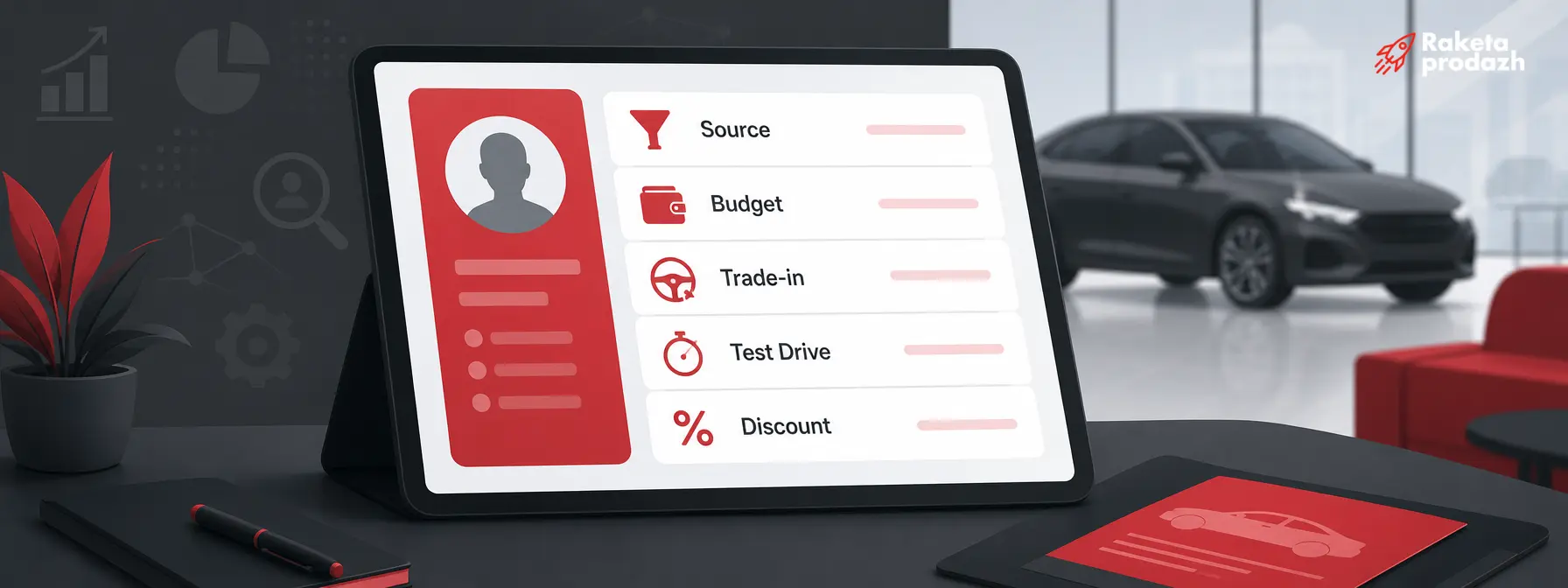
A car dealership sales system without a proper CRM turns into a scattered pile of notes in managers’ notebooks. The CRM should give a salesperson full context on a customer even before the call: where the lead came from, which model and trim they’re interested in, their budget and payment method, whether they have a current vehicle for trade-in, and whether they’re considering financing. Without this context, a manager starts every conversation from scratch, and the customer feels like nobody remembers anything about them.
Beyond basic customer data, the system should track the deal’s progress: the visit date, whether a test drive happened, what offer and discount were mentioned, the reason for a lost deal if the sale didn’t go through, and any mentions of competitors the customer might have gone to instead. Just as important is management data: the next step for the customer, the expected purchase timeline, the responsible manager, and the full history of calls and messages. For a manager, this kind of database provides analytics across the whole funnel – not just a closed-deals number at the end of the month.
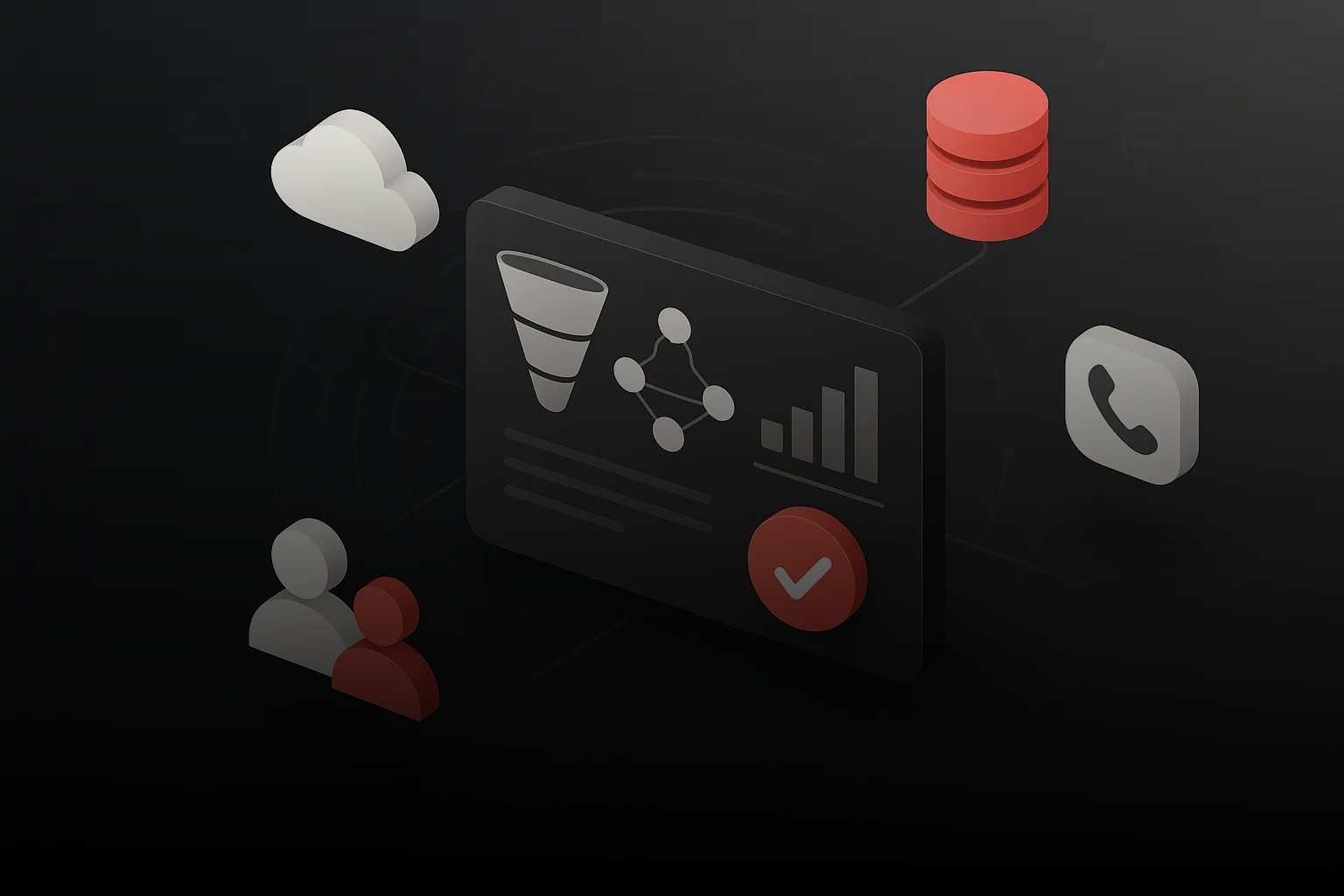
That said, it’s not enough to just pick a CRM – it needs to be connected to every communication channel and department process. Proper CRM and telephony implementation lets you automatically log inquiries, calls, and customer interaction history, track managers’ next steps, and get objective data across the entire sales funnel.
Here’s a list of key fields that absolutely must be in the customer record:
- lead source, model and trim of interest, budget and payment method – this is the foundation for proper qualification;
- trade-in details and the customer’s current vehicle, plus financing status – these affect the final deal terms;
- visit date, whether a test drive happened, the offer and discount mentioned – these capture real deal progress;
- reason for the lost deal and any competitor mentioned – these help identify where customers are being lost;
- next step, expected purchase timeline, and the responsible manager – these keep the deal alive instead of forgotten.
Once the data is collected correctly, you can build a full-fledged performance metrics system on top of it.
Key Performance Indicators (KPIs) and Reporting
Car dealership sales department processes without metrics exist only on paper. The real picture is shown by speed-to-lead, call-to-appointment conversion, the percentage of visits that actually happen, revenue per appointment, and average deal size. These metrics matter more than a raw “number of calls,” because they reflect the quality of the work rather than an imitation of activity.
Sales analytics and dashboards for daily monitoring should pull these numbers automatically from the CRM and phone system, not require manually reconciling spreadsheets at the end of the week. A manager who sees a drop in visit-to-test-drive conversion in real time can quickly figure out the cause: maybe the salesperson is qualifying customers poorly on intake, or the lot simply doesn’t have the right trims in stock. A common mistake in interpreting metrics is focusing only on the number of closed deals without analyzing intermediate funnel stages. If sales have dropped but lead-to-visit conversion has stayed stable, then the problem isn’t marketing – it’s somewhere further down the chain, and that’s worth checking right away.
Understanding these metrics naturally leads to the question of how to properly launch a sales department from scratch so that measurability is built in from day one.
Launching the Department: A Step-by-Step 90-Day Plan
The question of how to organize a car dealership’s sales department from scratch is best tackled in stages, breaking the process into clear steps rather than trying to launch everything at once. A chaotic start almost always results in the CRM being implemented while new hires are still being trained, and scripts being written on the fly during real customer calls – which lowers the quality of each of these processes.
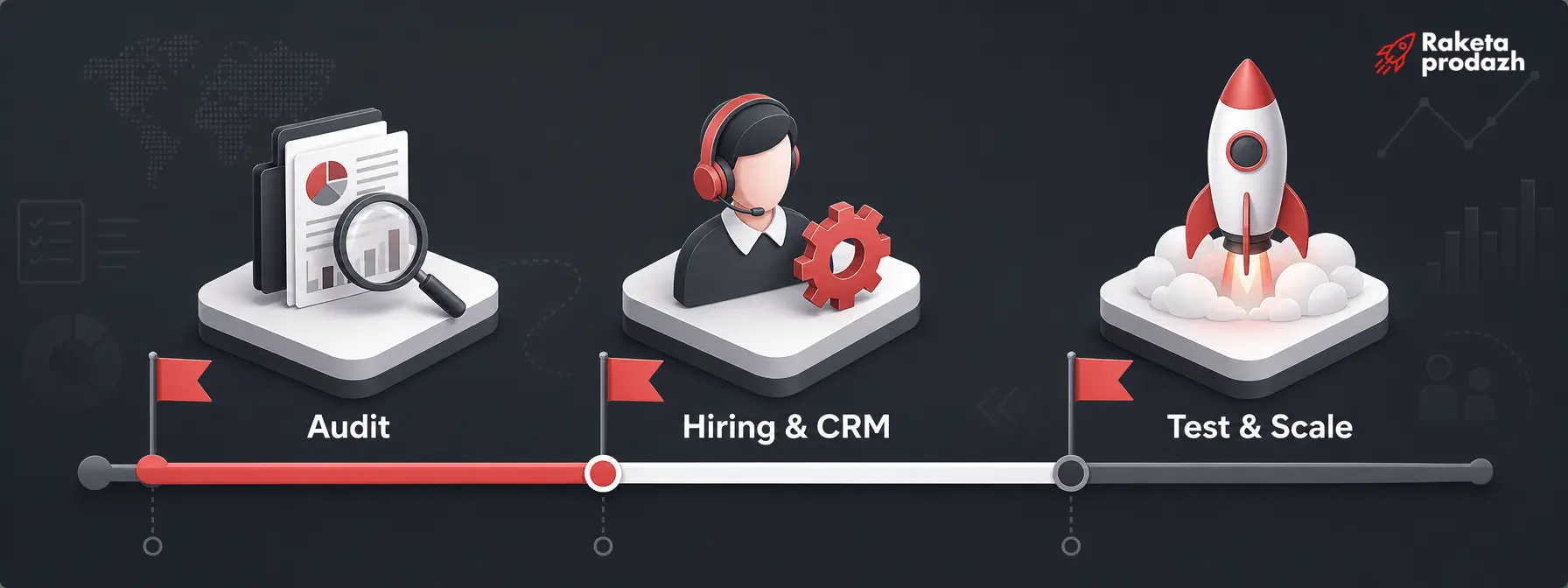
The first two weeks go toward a sales department audit and identifying bottlenecks: where leads are getting lost, how long it takes to get a first response, and which objections most often go unresolved. In parallel, role charters and the first drafts of scripts get written. The next period is dedicated to hiring and training people, plus implementing CRM and telephony, writing message templates, and setting up call recording. In the final stage, a test run launches on 1-2 inquiry channels, calls and correspondence get QA’d daily, processes get refined based on real practice, and only after that does the department scale to all channels at once.
Even with a plan like this, some dealers still trip over the same issues, and they’re worth addressing separately.
Common Mistakes When Creating a Sales Department and How to Avoid Them
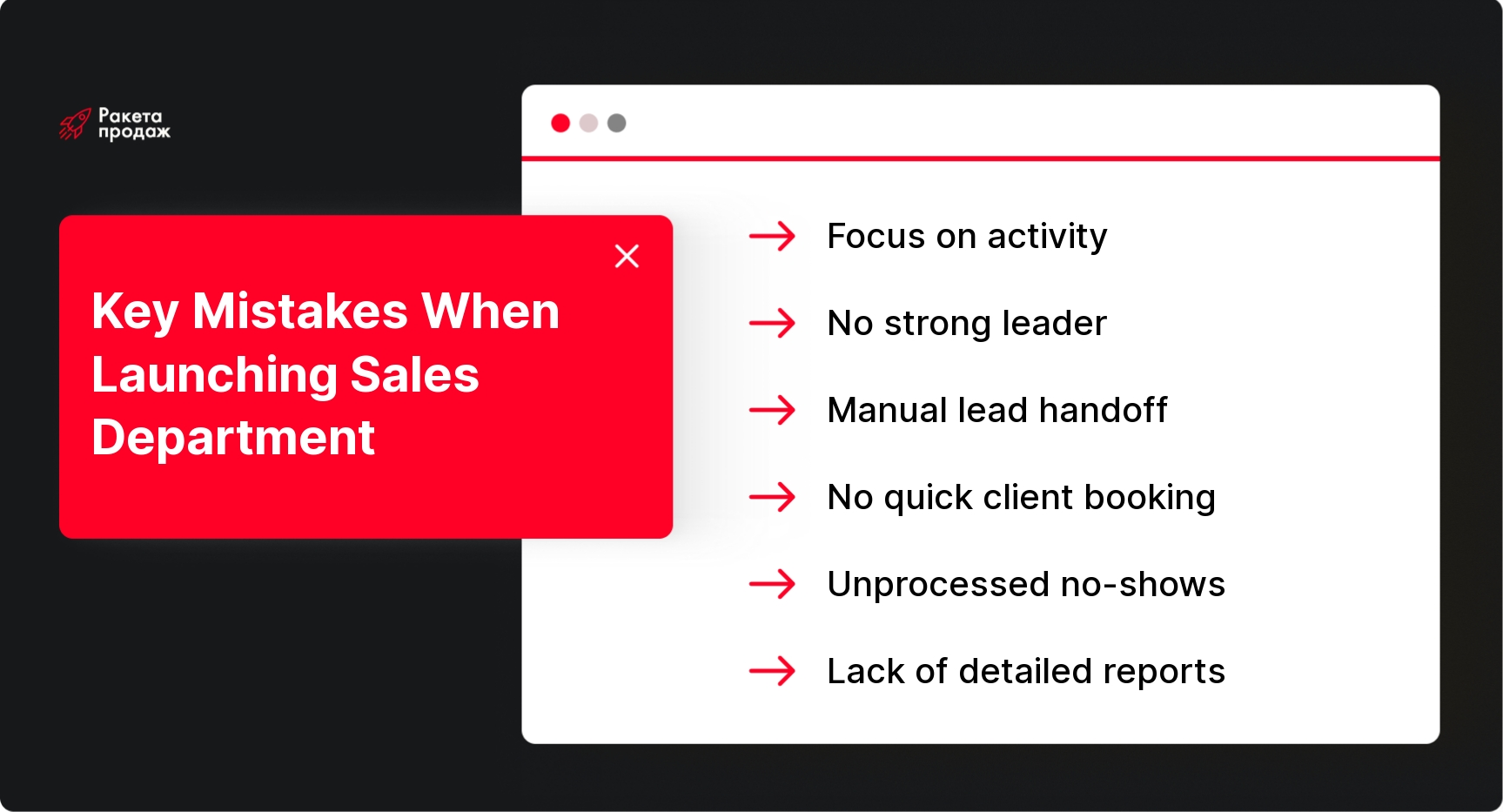
Experience from successful dealers shows that failures more often come from structural miscalculations than from weak employees. One of the most common mistakes is focusing on activity instead of results, where managers get praised for the number of calls instead of the number of actual visits and closed deals. This creates an illusion of busyness while sales are actually falling.
Another problem is the lack of a manager with real authority to make decisions about discounts, lead distribution, and the team’s schedule. If every decision has to be run past the owner, the department loses its ability to react quickly to the market. Too many manual handoffs between departments (marketing hands the lead to the operator, the operator hands it to the manager, the manager hands it to the financing department) increases the risk that the customer gets lost at one of those seams. Not being able to book appointments directly through the CRM or calendar forces customers to wait for a callback, even though they’d be ready to book themselves in under a minute. And disorganized handling of no-shows, without a reminder-and-recovery system, effectively flushes part of the lead-generation budget down the drain.
To catch these breakdowns in time, a manager needs proper reporting – not just a final sales number.
What Reports Does a Dealership Sales Manager Need
A management report should help identify the cause of a slump, not just note that the plan wasn’t met. The basic set includes plan-vs-actual sales, the funnel by stage, per-manager metrics, lead response speed, and the number of missed calls. It’s also worth looking separately at scheduled versus actually completed visits, the number of test drives, and reservations on specific vehicles.
The financial part of the report should show sales, the size of discounts given, and gross profit per deal – not just revenue. Equally important are the reasons for lost deals and the list of leads with no next step assigned, because these are exactly the customers who most often disappear from the funnel without any explanation. Sales broken down by inquiry source show which channel is actually bringing in money, and a month-end forecast based on the current funnel gives a manager time to adjust the team’s actions instead of dealing with a missed plan after the fact.
If a dealership deals not just in new cars but in used ones too, a separate logic gets added on top of these reports.
How to Build Used Car Sales
Working with used cars differs from selling new ones for one key reason: every single unit is unique and can disappear from inventory at any moment. Here, the quality and actual condition of the vehicle matter especially, along with a transparent mileage and service history, and honest diagnostics without trying to hide problems from the buyer.
Inventory turnover speed directly affects profit: the longer a car sits on the lot, the more money is tied up and the higher the risk that its price becomes uncompetitive relative to the market. Trade-in and financing also play a special role here, because a customer is often selling their old car and buying a used one from the dealer at the same time. Because each unit is unique, logging specific customers’ interest in a specific vehicle in the CRM becomes critical: if two buyers are interested in the same car, a fast follow-up decides who drives it home. That’s exactly why organizing the sales department of a dealership that works with used cars requires faster manager response times than in the new-car segment.
Once the basic processes are working and consistently delivering results, you can start thinking about growing the whole system.
How to Scale a Car Dealership Sales Department
Scaling a car dealership sales department can happen along several tracks at once. The most obvious path is adding more managers, but it’s often more effective to create a separate BDC that takes on the entire incoming flow and frees up showroom salespeople. Larger dealers also carve out a separate used-car track, dedicated corporate-account managers, and a dedicated trade-in function, because each of these streams has its own sales logic.
Another growth vector is brand specialization within a multi-brand dealership and deeper CRM automation that takes over routine reminders and lead distribution. Growing digital sales – where part of the deal can be completed online before the showroom visit – and a centralized call center for a multi-location network also help you grow without a proportional increase in chaos. But scaling an unpolished process is risky: if the funnel, communication standards, CRM, and quality control aren’t yet running consistently at the current volume, adding more leads and staff will only multiply the existing problems.
Putting all these elements together, you can see the full picture of what makes a sales department a truly functioning system.
Building an effective car dealership sales department isn’t just about hiring managers and buying a CRM – it’s about creating a system where every element works toward a shared result. But implementing all these described processes on your own can take months of trial and error with unpredictable results, especially if you don’t have experience with automotive sales. “Rocket Sales” offers ready-made solutions for car dealers: from the “Sales Department Foundation” system for new dealerships to full “Sales Department Systematization” for existing dealer centers. Our methodology includes specialized sales funnels built for the auto business, trade-in scripts, integration with financing products, and a control system covering every stage – from lead to vehicle handover. Our clients include companies like Mitsubishi, Ford, and Audi. On average, our clients see a revenue increase of +35%, with the best result reaching +$10,907,403 in 4 months. Don’t spend years hunting for the right solutions through trial and error.
Create a car dealership sales department that's guaranteed to beat the plan - our clients see an average revenue growth of +35%!
How to build a car dealership sales department that actually generates profit? You have to start with the customer journey and commercial processes, not just hiring a few salespeople. Sales organization at a car dealership works as a system only when lead generation, first contact, the showroom, test drives, vehicle availability, trade-in, financing, CRM, follow-up, and manager oversight are all linked into a single chain. Every link in this chain needs to pass the customer forward without loss or delay. Only then does sales growth become the natural result of a well-tuned process, instead of a random stream of lucky customers who made it to the dealership on their own despite every internal breakdown along the way.


 Time to read: 9 min.
 09 September 2026