Investments in key account manager training can be significant, so it’s important to be able to measure the effectiveness of such programs. A properly built evaluation system allows not only understanding the return on investment but also continuously improving the learning process, adapting it to changing business needs.
To evaluate training effectiveness, Kirkpatrick’s model is often used, which offers four levels of measurement: participant reaction, acquired knowledge, behavior change, and business results. An alternative approach is calculating training ROI, which compares program costs with the financial return from improved manager performance.
It’s important to understand that training effectiveness manifests not only in the knowledge that managers have gained, but also in how their behavior has changed and what business results this has brought. Therefore, the assessment should be comprehensive and cover various aspects of working with key clients.
Behavioral indicators help understand how managers apply the acquired knowledge in their daily work. These indicators include activity with key clients (contact frequency, number of meetings, depth of interaction), communication quality (adherence to standards, use of specific techniques), level of trust from clients, and number of contract renewals and upsells.
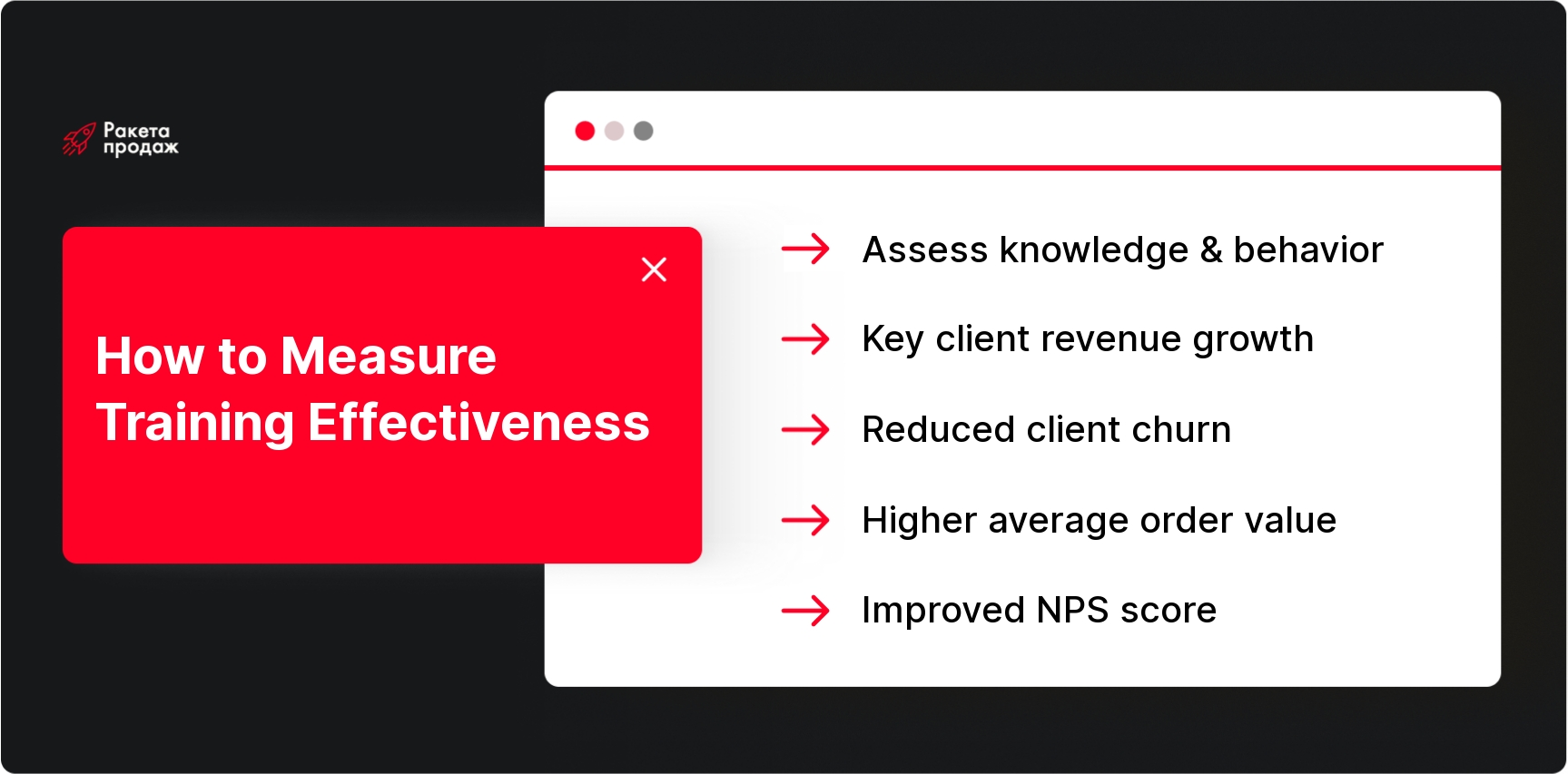
Business results directly link training to the company’s financial indicators. Key metrics here can be revenue growth from working with key clients, reduction in churn percentage, increase in budget share, and growth in client loyalty indicators (NPS). It’s important to track these indicators dynamically, comparing the situation before and after training.
For example, an IT company, after restructuring the accounting function and conducting a comprehensive training program for managers responsible for key client work, recorded a 23% increase in revenue from key clients against an overall market growth of 7%. The company also noted a reduction in key client churn from 15% to 8% annually and an increase in average check by 17%.
An equally important aspect of effectiveness evaluation is feedback and engagement from training participants. Regular collection of reviews helps not only assess subjective perception of the program but also identify opportunities for improvement. It’s important to collect feedback not only from the managers themselves but also from their supervisors, who can assess changes in subordinates’ work, and even from clients who directly experience the training results.
The most complete picture is given by a combination of quantitative and qualitative assessment methods. Numbers will show objective dynamics of indicators, while interviews and case studies will help understand the reasons for successes or failures, as well as identify non-obvious training effects. This comprehensive approach to evaluation allows for continuous improvement of the training program, making it maximally effective for specific sales to major clients and their growth.


 Time to read: 11 min.
 17 November 2025