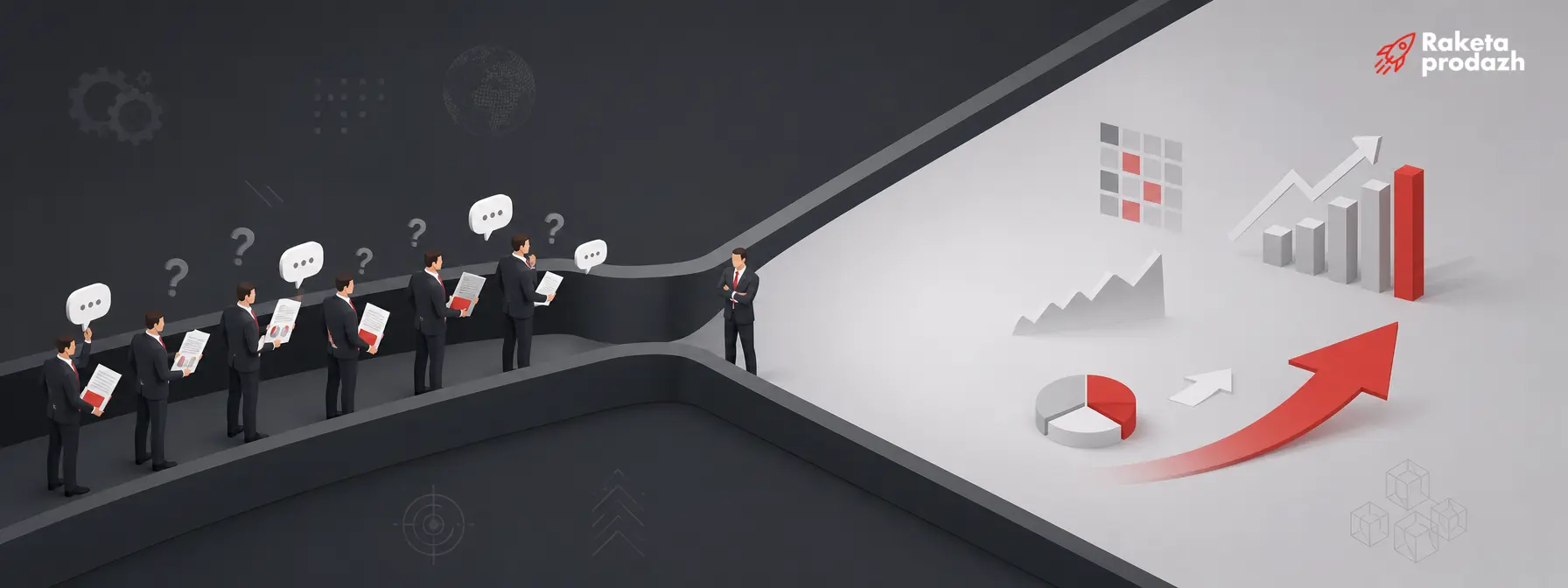
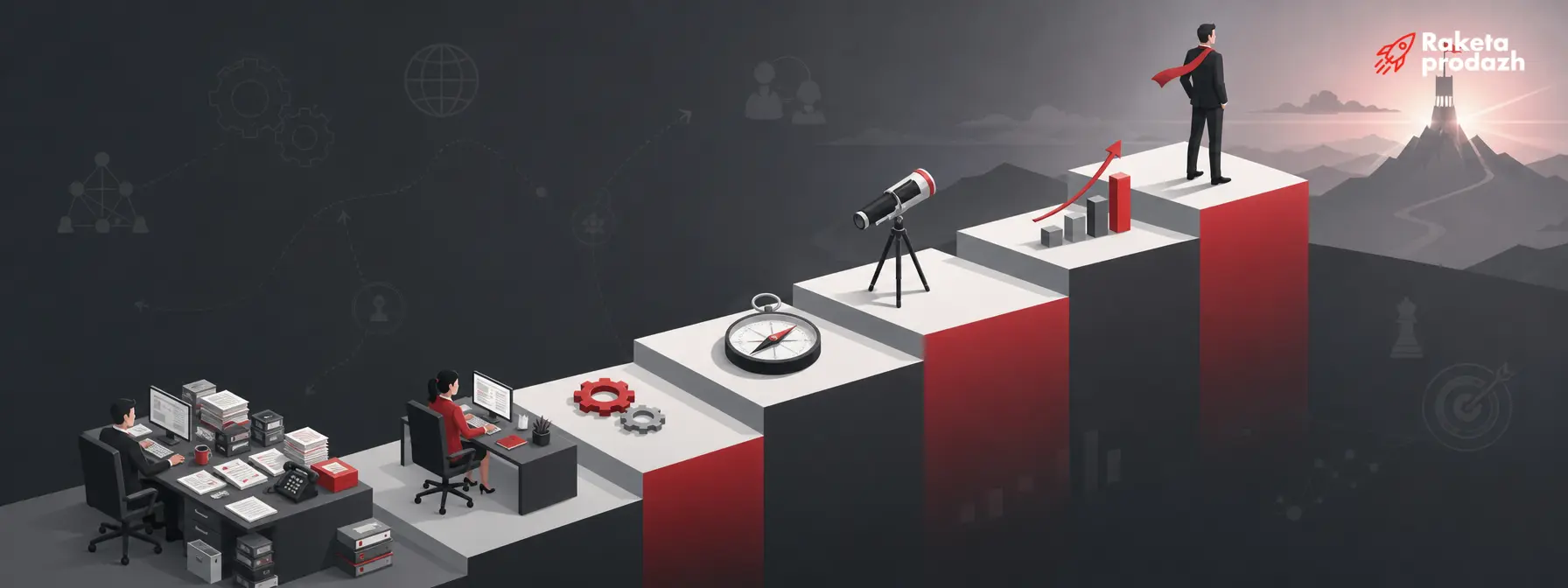
Transitioning from the role of “chief salesperson” to the role of strategist and system architect requires methodical work and can’t be accomplished in a single week. Stepping back from day-to-day operations calls for the right approach, which includes several sequential stages, each of which lays the groundwork for the next.
Daily operations in the sales department should gradually shift from being the owner’s responsibility to the sales director’s. This isn’t just about overseeing managers, but also about running meetings, analyzing the funnel, maintaining CRM discipline, handling complex deals, and hitting the sales plan.
The first step is to document in detail all the sales processes that currently exist only in your head. This includes the customer journey from first contact to repeat purchase, lead qualification criteria, product presentation structure, common objections and ways to handle them, pricing rules, and discount policies. It’s important to capture not just the sequence of actions, but the logic behind decisions: why this client can get a 15% discount and that one can’t, in which cases it’s worth making concessions on payment terms, how to prioritize leads.
The second stage is creating templates and automating repetitive tasks. This includes phone call scripts, standard email sequences for different client categories, proposal templates, automatic CRM reminders, and setting up inbound lead distribution. The goal is to make it possible for managers to properly handle standard operations without your involvement.
The third step is finding and preparing a sales director. This could be an internal candidate (your best manager with leadership qualities) or an external specialist with experience managing a sales team. The key requirement is the ability not just to sell personally, but also to build processes, motivate the team, analyze metrics, and be accountable for the department’s overall results.
The fourth stage is gradually transferring functions while monitoring results. It’s best to start with less critical tasks: running meetings, monitoring CRM discipline, resolving minor client conflicts. As these functions are successfully carried out, you can hand over more responsible areas: managing major deals, making decisions on discounts, hiring, and training new managers.
The final stage is transitioning to the strategist role while retaining control through metrics and regular meetings with the Sales Director. Your task becomes setting goals, analyzing results, adjusting strategy, and supporting the sales director in difficult situations, while they make operational decisions independently. At this stage, the owner stops managing sales at the operational level, focusing instead on strategic aspects of development.


 Time to read: 9 min.
 22 July 2026