icon

IP Telephony: What It Is, How It Works, and How It Helps Sales

IP telephony is a technology that has revolutionized corporate communications, becoming not just an alternative to traditional phone lines, but a comprehensive tool for managing business communications. Unlike classical telephony, which is tied to specific physical lines, IP telephony is a system for transmitting voice and data over the internet, providing companies with unprecedented flexibility and functionality.

Want a high-performing sales team without the hassle?
We’ll build it for you.
Contact Us

Key Takeaways

  • IP telephony converts voice into digital signals and transmits them via the internet, offering greater flexibility and functionality compared to traditional phone lines.
  • Call recording allows managers to analyze sales team performance, identify mistakes, and use successful calls as training materials for the team.
  • CRM integration automatically captures all customer interactions, creating a complete communication history and improving sales effectiveness.
  • Multi-channel capabilities minimize missed calls, while intelligent routing connects customers with the most appropriate specialists.
  • Choosing the right solution for your sales department should be based on CRM integration capabilities, manager control features, and quality of technical support.

In the full article, you’ll find a detailed overview of how IP telephony transforms sales department operations and significantly increases its efficiency 👇

IP telephony technology has become especially valuable for sales departments, where the quality of communications directly affects conversion and revenue. Instead of simple calls, managers receive a comprehensive solution with analytics, call recording, and integration with CRM systems. Let’s understand how IP telephony works, what advantages it gives to businesses, and why it’s impossible to imagine a modern sales department without it. Companies often have a practical question: IP telephony what is it and how does it work and whether it can truly replace classical communication—essentially, it’s a technology for transmitting voice over the internet while maintaining high quality and providing additional capabilities.

What is IP Telephony and How It Works

IP telephony (VoIP) is a type of communication where your voice is transmitted over the internet rather than traditional phone lines. During a call, speech is converted into digital data, compressed with codecs, and sent in small packets across the network-much like messages or files. On the receiver’s side, these packets are reassembled in the correct order and instantly converted back into sound, so the conversation feels natural with no noticeable delays. Call quality depends on a stable internet connection and proper traffic prioritization (QoS) within the network.

In practice, IP calling most often runs through SIP and a virtual PBX: an employee connects to the system, gets an internal extension, and can make calls from whichever device is most convenient. This can be a desk SIP handset (often called an IP phone), a computer app (softphone), or a smartphone app. If you need to reach a mobile or landline number, the call goes through the provider and then continues over regular telecom networks-so for the customer it still looks like a normal call. Adding new agents and phone numbers usually takes minutes, without any cabling work.

This “smart” infrastructure makes it possible not just to place calls, but to manage communications: route inquiries, capture the full contact history, enable call recording, and collect analytics. Next, we’ll break down the features that deliver the biggest impact for a sales team.

So what is IP telephony in simple terms?

IP telephony is phone communication over the internet: the voice is converted into digital data, transmitted through the network, and then turned back into sound on the other end. For the customer, it looks like a regular phone call, while for the company it’s a flexible system with built-in control and analytics.

Example: a customer calls a local phone number → the call is routed to an IP PBX → the system automatically directs it to the right sales rep or the appropriate department.

How IP Telephony Works - Step by Step

Below is a simple walkthrough of what happens during a call. Minimal technical terms, but detailed enough to understand what you’re paying for and where the value for a sales team comes from.

Step 1. The customer dials your number
They call your landline, mobile, or multi-line business number-on the outside it feels like a normal call.

Step 2. The call enters your company system
Inside the company, the call is handled by an IP PBX (cloud-based or on-premise). It “knows” where to send the request: sales, support, a specific rep, or a queue.

Step 3. The system selects the right route
If routing rules are set up (business hours, departments, queues, priorities), the call is distributed automatically-to an available rep, the account owner, or the right specialist.

Step 4. The rep answers from a convenient device
The employee can pick up on a desk IP phone, a computer app, or a smartphone-while the company number remains the same.

Step 5. The conversation is captured and stored
At the same time, the system can start call recording, tag the source, and save the phone number and call duration. This turns calls into a manageable process instead of a “black box.”

Step 6. Data is sent to the CRM (if integrated)
After the call, details are automatically linked to the customer record: communication history, recordings, statuses, and notes-no manual duplication needed.

Step 7. The manager gets analytics and quality visibility
Reports show how many calls were answered/missed, speed of response, workload distribution, where conversion drops-and what exactly needs improvement.

Text diagram (how it looks “inside”):
Customer → Company number → IP PBX → (rules/queue/routing) → Rep (desk phone/PC/mobile) → Recording + analytics → CRM (history, outcomes)

That’s how IP telephony combines “just calling” with sales management in one system: familiar for the customer, transparent and measurable for the business.

Key Functions for the Sales Department

image

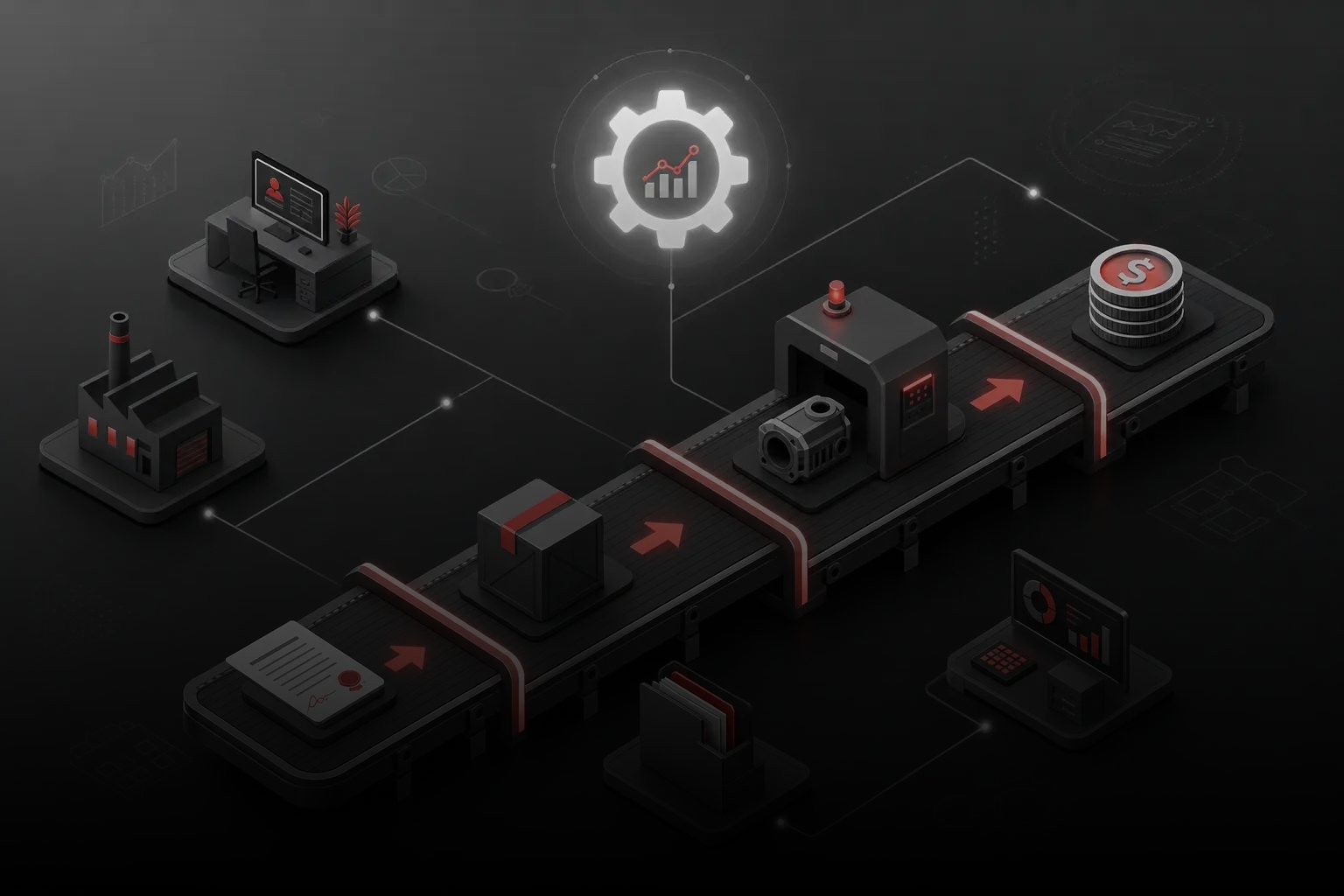
By implementing IP telephony, the sales department gets a powerful set of tools that transforms the approach to call processing and customer interaction. This technology doesn’t just help make calls—it creates a complete ecosystem for managing the entire sales cycle. The key value of IP telephony lies in the ability to analyze every aspect of telephone interaction and use this data to improve results.

Call recording becomes not just a formality, but a full-fledged training material. Managers can listen to staff calls, identify mistakes and successful telephone sales techniques, and then use these examples for training. The IVR system (interactive voice menu) automatically distributes incoming calls to departments or specific specialists, reducing customer waiting time and increasing the efficiency of handling inquiries.

Here are the key IP telephony functions that really change the game for the sales department:

  • Recording and storing conversations – the ability to analyze communication with customers, create training materials based on real cases, and control the quality of managers’ work.
  • IVR (voice menu) – automatic distribution of calls within the sales department, allowing customers to get qualified help on their issue faster.
  • Multi-channel numbers – simultaneous reception of several calls to one number, eliminating situations where a customer cannot get through due to a busy line.
  • Call analytics – detailed statistics on all communications: who called, when, how long the conversation lasted, and what was the result.
  • CRM integration – each call is automatically recorded in the system linked to the customer card, providing a complete history of interactions.

Comparing Telephony Providers for Sales

If you’re choosing telephony specifically for a sales team, don’t compare only the “per-minute price.” Focus on CRM integration, call quality control, and analytics. Below is a quick comparison of widely used options.

Provider Integrations / CRM Sales-focused features Best for
Ringostat CRM integrations + marketing data attribution Call tracking + telephony, recording, queues, source analytics When you need to see where calls come from and how they convert
Binotel Ready-made CRM integrations Recordings, stats, customer card pop-ups, rep monitoring When the priority is discipline and call quality in the team
UniTalk Integrations + process-based setup PBX, recordings, analytics, routing, bulk calling For active outbound calling and scalable sales teams
Zadarma Integrations + API PBX, recording, stats, flexible routing For distributed teams and cases where flexible integration matters

If you have a lot of inbound leads from ads, many teams start with Ringostat. If your key need is rep control and “telephony inside the CRM,” look at Binotel. For outbound activity and fast scaling – UniTalk, and for flexible, API-driven integrations – Zadarma.

Benefits of IP Telephony for Business and Sales

The financial benefits of IP telephony are also quite tangible. Companies significantly reduce communication costs, especially for long-distance and international calls. Internal conversations between employees are not charged at all, and the cost of calls to customers via internet protocol is substantially lower than when using traditional lines.

The main advantages of IP telephony for business and the sales department include:

  • Quality control of managers’ work – the supervisor can listen to recordings, evaluate sales techniques, and adjust scripts based on real data.
  • Savings on calls – especially noticeable when working with customers from other regions or countries, allowing expansion of sales geography without increasing costs.
  • Workplace flexibility – a manager can work from the office, home, or on a business trip, using any device with internet access.
  • Increased conversions – thanks to multi-channel capability and minimization of missed calls, more potential customers turn into actual ones.
  • Easy scaling – when expanding the department or entering new markets, no new lines or additional equipment installation is required.

Such transparency also positively affects the overall quality of the sales department’s work, allowing management to systematically improve service standards and staff training.

How effective is your telephony in sales? Statistics show that 70% of sales department success depends on a properly built system of communications and call control. However, most companies use IP telephony only as a tool for making calls, without revealing its full potential for sales management. At “Sales Rocket,” we don’t just implement telephony—we create a comprehensive system for controlling and managing all sales department communications. Our experts conduct a deep audit of existing processes, set up IP telephony integration with CRM systems, and develop individual checklists for evaluating call quality. Thanks to our comprehensive approach, clients receive a transparent control system where each call is analyzed and used for team training. The results speak for themselves: the average turnover increase of our clients is +35%, and conversion increases up to 86%.

Turn the chaos of phone calls into a system that brings measurable results—order a free sales department audit today!

How IP Telephony Increases Sales Department Efficiency

IP telephony becomes a real driver of sales department efficiency, affecting all key metrics. Intelligent call distribution ensures that the customer always reaches the relevant specialist, reducing request processing time and increasing satisfaction. The principles of IP telephony allow the system to consider the workload of managers, their specialization, and even the history of interaction with a specific customer, directing the call to the most suitable employee.

For a sales department head, IP telephony is a tool for complete process control, allowing them to organize sales department control and conduct a full sales department audit. You see how many calls each manager makes, how much time they spend on calls, what percentage of calls converts to sales. This data helps objectively evaluate manager’s work efficiency and build a motivation system based on real indicators, not subjective assessments.

Telephony for business based on IP protocol takes training new employees to a new level thanks to the ability to use successful call recordings as training material. Newcomers can listen to how experienced managers handle objections, present the product, and close deals. This significantly accelerates the adaptation process and allows employees to reach target sales indicators faster. In conditions of high turnover, characteristic of sales departments, such an approach to training significantly reduces the costs of preparing new personnel.

IP Telephony in Different Industries

IP telephony becomes a real performance driver for a sales team, impacting every key metric. Intelligent call routing ensures the customer reaches the right specialist, which reduces handling time and increases satisfaction. IP telephony can factor in rep workload, specialization, and even a specific customer’s interaction history-so the call is sent to the most relevant person.

For a sales manager, IP telephony is a full-process control tool that supports sales monitoring and a structured sales audit. You can see how many calls each rep makes, how much time they spend on calls, and what percentage converts into deals. This data helps evaluate performance objectively and build a motivation system based on real numbers rather than subjective impressions.

Business telephony built on IP also upgrades onboarding: successful call recordings become practical training material. New hires can listen to how top reps handle objections, present the offer, and close deals. This accelerates ramp-up and helps people reach targets faster. In high-turnover sales environments, this approach also reduces the cost of training new staff.

How it works across industries (so you can “see yourself” in the scenario):
E-commerce. A call about an order from ads or the website is automatically linked to the cart/order in the CRM, and the system routes it to the right flow: confirmation, delivery, or returns. Multi-line capacity prevents missed leads during peak hours, while recordings help quickly identify why orders are abandoned.

Healthcare. A patient can be routed immediately to the right specialty or a specific clinic location, and call recordings help monitor the quality of admin consultations. As a result, booking time decreases, fewer calls are missed, and a higher share of patients actually shows up for appointments.

Real estate. Calls are distributed by property, area, or deal type (rent/buy), and the agent sees the contact history and continues the conversation without repeating basic questions. Analytics reveals which sources bring qualified inquiries and which generate low-quality calls-so you don’t waste ad budget.

B2B. The system routes callers to the right industry rep or account owner, while the CRM captures the full communication journey-from first touch to closed deal. Recordings help managers spot weak points in presentations and negotiations fast, and analytics helps manage workload and conversion across funnel stages.

Security and Reliability of IP Telephony

Security issues become particularly important when it comes to transmitting confidential information over IP networks. The sales department processes sensitive customer data daily, including contacts, purchase history, and financial information. Unauthorized access to such data can lead to reputational losses and legal problems for the company.

Modern IP telephony systems address these issues comprehensively, applying multi-level protection. Encryption of voice traffic using TLS and SRTP protocols makes intercepting conversations virtually impossible. This is especially important when discussing contract terms or transmitting personal customer data over the phone.

The principle of IP telephony operation provides protection against spam and phone fraud through special filters that analyze incoming calls and block suspicious numbers. This protects not only employees from wasting time processing non-targeted inquiries but also the customer base from potential fraudsters. An additional level of security is provided by IP address access control, which restricts the ability to connect to the corporate phone network only to authorized devices.

An important aspect is also the constant monitoring of activity and keeping logs of all actions in the system. This allows identifying suspicious patterns and promptly responding to potential threats, ensuring the integrity and confidentiality of sales department data.

How to Choose IP Telephony for the Sales Department

Choosing the right IP telephony solution is a task that requires careful analysis of your sales department’s needs. There is no universal solution that will perfectly suit everyone: what works for a small company may not be sufficient for a corporation with a branched structure. The right choice begins with assessing current needs and growth prospects.

The first thing to pay attention to is the possibility of integration with the CRM system already in use. CRM system implementation is often a key stage for the correct operation of telephony and call accounting. Seamless integration ensures automatic data exchange between systems, freeing managers from the need to duplicate information. This not only saves time but also minimizes human errors when entering data.

The following factors are critical for decision-making:

  • Integration with the CRM in use – the system should provide two-way data synchronization, including automatic creation of new customer cards.
  • Call costs and tariffs – it’s important to evaluate not only the subscription fee but also the actual cost per minute of conversation for various destinations.
  • Functions for manager control – a set of analytical tools that allow tracking key performance indicators of employees.
  • Connection quality and technical support – even small connection problems can cost the sales department missed opportunities, so it’s important to choose a reliable provider with quality support.

When making a choice, it’s also useful to involve third-party specialists for an objective assessment and conducting a sales department audit to ensure that the chosen solution corresponds to real business processes.

Conclusion

IP telephony has long ceased to be just an alternative to traditional communication—it has become a strategic tool that transforms the work of the sales department. This technology provides an unprecedented level of control, analytics, and flexibility, allowing companies not only to reduce communication costs but also significantly increase the efficiency of managers. Thanks to call recording, CRM integration, and advanced analytics, managers get complete transparency of processes and the ability to make decisions based on real data, not intuition.

If you want to improve the quality of your sales department and systematically improve processes, it’s worth exploring solutions focused on control and analysis that will help take your department to a new level of efficiency. The use of IP telephony is becoming increasingly essential for businesses looking to optimize their communication systems and improve customer service.

IP telephony is a powerful tool, but its effectiveness directly depends on proper integration into the overall sales system. Many companies make the same mistake: they implement the technology but don’t change processes or train the team to work in new ways. “Sales Rocket” offers a comprehensive approach to building a sales system where IP telephony becomes not just a means of communication, but a tool for control and analysis. We not only set up integration with CRM, but also implement clear work regulations, create checklists for evaluating call quality, and provide individual training for managers based on conversation recordings. Our specialists accompany the team until the first results are achieved, adjusting scripts and work standards. Over 7+ years, we have successfully implemented control systems in 157 sales departments across 14+ different niches, including major brands like Mitsubishi, Audi, and Naftogaz. The maximum result of our clients is an increase of 1.6 million dollars in monthly turnover in just 4 months of work.

Turn your sales department into a transparent and manageable system where each call brings you closer to new heights—schedule a consultation with an expert!
In this article:
See more
Book a FREE sales funnel audit
CONTACT US
FAQ
What is IP telephony in simple words?

IP telephony in simple words is a technology that allows making calls over the internet instead of traditional phone lines. Your voice is converted into a digital signal, transmitted over the network, and converted back into sound on the recipient’s device.

Why does the sales department need IP telephony?

It provides the ability to record and analyze conversations, integrate with CRM, track manager effectiveness, and ensures multi-channel capability, which reduces the number of missed calls and increases conversion.

Can you call from an IP phone to a regular one?

Yes, IP telephony allows calling any phones: landlines, mobile phones, and other IP phones. For the recipient, such a call is indistinguishable from a regular one.

How does IP telephony help control managers?

It provides complete statistics on each employee’s calls, allows recording conversations for work quality analysis, and tracks conversion from call to sale; such tools significantly simplify sales department control.

How to choose IP telephony for business?

Focus on integration with your CRM, call costs, functionality for controlling and training managers, as well as provider reliability and quality of technical support.

What is an IP phone and how does it differ from regular phones?

An IP phone is a device specifically designed to work with IP telephony systems. Unlike traditional phones, IP phones connect directly to the internet and can offer additional features like video calling, conference capabilities, and direct access to company directories.

What advantages does IP telephony have over classical communication?

Unlike traditional telephony, IP telephony is not tied to physical lines and provides more flexibility. It’s cheaper for long-distance and international calls, allows working from anywhere with internet access, integrates with CRM, provides analytics, recording, and storage of conversations. Additionally, scaling the system takes minutes, while classical communication requires installation of additional equipment.

SUBSCRIBE TO MY TELEGRAM CHANNEL
The most valuable sales information right on your phone!
icon

LOTS OF USEFUL INFORMATION, FREE TEMPLATES, AND CHECKLISTS ON MY INSTAGRAM

Materials and practical advice on sales growth in our blog: