How to Connect Lead Generation Specialist and Sales Manager Work So Leads Don't Get Lost
Imagine this picture: your team excellently generates leads through targeted advertising, cold calls and partnership programs. Every day new applications come from potential clients. But after a month you realize that half the leads simply disappeared somewhere between lead generation and sales. The client didn’t get a callback, ended up with the wrong manager, or their application got lost in the general flow.
Want a high-performing sales team without the hassle?
Half of leads disappear not because of poor manager performance, but due to chaos in handoffs: no rules, no context, no responsible parties.
Your qualifier should pass not just a contact, but full business context: client request, budget, timelines, agreements.
Weak teams transfer leads via messengers and Excel, strong ones use CRM with mandatory fields, statuses and automatic reminders.
SLA between lead generation and sales kills gray zones of responsibility: who, what, when does what and what reaction to violations.
Qualifier KPIs (response speed, meeting quality) and manager KPIs (conversion to revenue) should have a shared component so both teams are motivated for results.
Full algorithm for setting up lead handoffs without losses, system verification checklist and technical integration details – read in the article below 👇
This problem is familiar to many Ukrainian B2B companies: excellent lead attraction work crashes against the chaotic process of handoff to the sales department. As a result, money, time and reputation are lost. In this article we’ll show how to organize interaction between sales department and lead generation so that each lead gets maximum attention, and responsibility is clearly distributed among all process participants.
To better understand how to handle leads without losses or chaos, watch the video “Ефективна обробка лідів: як не втратити клієнтів і збільшити прибутки”. It adds a practical explanation of how not to lose potential clients during lead processing.
Why Leads Get Lost After Handoff to Sales Department
Most losses happen not because of bad managers or poor quality leads, but due to lack of clear forwarding leads to the sales department process. When there are no rules of the game, each participant interprets their duties differently. The lead generation specialist thinks their task is to simply “drop a contact,” while the manager thinks it’s enough to call once and check a box.
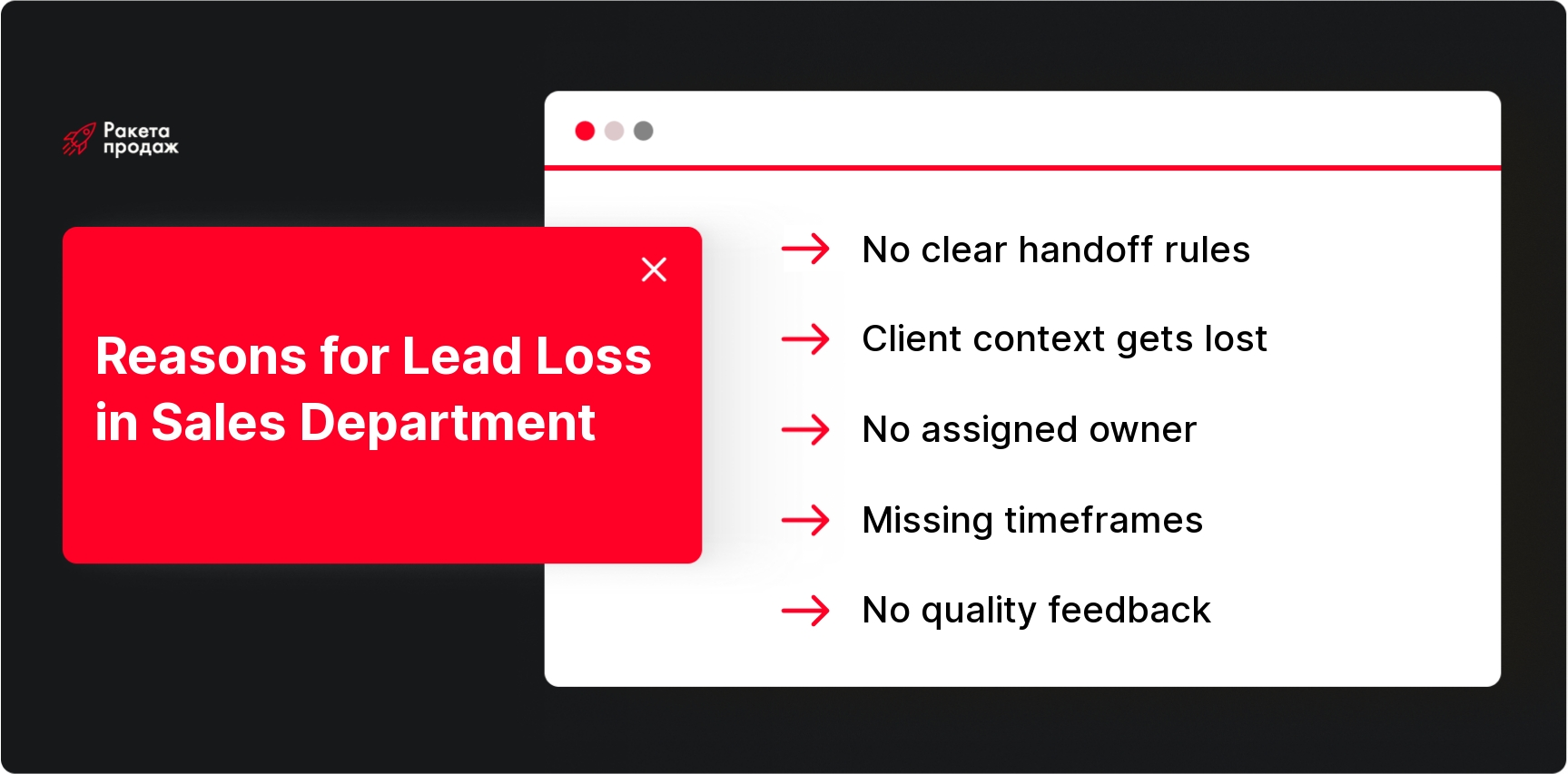
Typical loss reasons look like this: no common understanding of when a lead is ready for manager handoff; qualifier passes incomplete client information; manager doesn’t understand the context of the request; lead isn’t assigned to a specific responsible person; no timeframes for first contact; sales don’t provide feedback on lead quality. Each of these problems seems minor, but together they turn a well-oiled lead generation machine into a leaky bucket. The solution starts with understanding proper collaboration between the Sales and Lead Generation Departments and how to set up lead handoffs.
Do you recognize yourself in this situation: leads come in but get lost somewhere between marketing and sales? This is a classic Ukrainian B2B problem faced by 80% of growing companies. At “Sales Rocket” we’ve created over 8+ years of work a systematic approach to organizing lead handoffs that eliminates losses and makes every stage transparent and manageable. Our methodology includes CRM setup for business specifics, developing clear qualification procedures and training teams to work by unified standards. During our collaboration we’ve helped 208 companies build sales departments where every lead gets maximum attention and converts to revenue. The result? Our clients get average revenue growth +35%, and the best result is +$10,907,403 in 4 months of work.
Turn chaotic lead handoffs into a polished revenue growth system - get a free audit of your sales department effectiveness!
How Lead Generation and Sales Department Should Interact
Effective interaction is built on clear division of responsibility zones and understanding of the common goal – converting a lead into a satisfied client with maximum conversion. The lead generation specialist or qualifier is responsible for initial contact with the potential client, collecting basic need information and checking target audience compliance. Their task is to prepare the lead for productive manager work.
The sales manager takes over at the stage of in-depth need diagnostics, solution presentation, commercial proposal preparation and negotiation management until deal closure. It’s important to understand: this isn’t a conveyor where one simply passes to another. This is teamwork where both sides are interested in results and work by unified standards.
Key elements of proper interaction include common lead qualification criteria, standard data set for handoff, clear reaction timeframes, unified CRM system for fixing all steps and regular feedback between teams. More details about why specifically feedback between departments helps not lose leads and promotes sales growth can be found in a separate article. Only when these conditions are met does assigning clients to managers become transparent and controlled.
What Should Be Known About a Lead Before Manager Handoff
Assigning clients to managers is not simply “dropping a contact in chat.” The manager should receive full context to start the conversation with understanding of the client’s situation, not force them to retell everything from the beginning. Imagine how irritating it is for a client when the third person in the company asks them to “tell about your task again.”
The minimum data set should include contact information (name, position, company, phone, email, convenient contact time), lead source and campaign details that brought them, client’s request or problem in their own words, interest level and solution urgency, approximate budget or cost guidelines, supplier selection criteria, current situation and solutions being used, plus agreements and next steps. This information should be structured and understandable – not just “client is interested in service,” but “logistics company manager looking for warehouse accounting automation solution, budget up to $50,000, solution needed implemented in 3 months.”
The quality of this information directly affects how to monitor lead processing – the more context the manager has, the higher the chances of successful deal closure. Learn how to build truly effective lead processing and at which stages mistakes are most often made in our expert publication.
Efficiency Metrics and Interaction Control Points
Transparent and manageable collaboration between the Sales and Lead Generation Departments is impossible without clear metrics that show each team’s contribution to the overall result. These indicators help identify bottlenecks in the process and make informed decisions for system improvement. It’s important to track both speed characteristics (how quickly teams react to leads) and quality indicators (what percentage of leads actually convert to revenue).
Lead response time becomes a critically important factor – research shows conversion drops several times if first contact occurs several hours after the request. Pick-up Rate shows how many leads received at least one contact attempt from a manager. Standardized contact cascade completion coefficient helps understand how disciplinedly the team follows approved processing procedures. The share of leads that moved to qualified pipeline and closed deals reflects the overall efficiency of the entire system from first touch to revenue generation.
Lead response time (target – 15-30 minutes for hot leads)
Percentage of leads processed within SLA (goal – at least 90%)
Lead conversion to scheduled meetings (depends on industry, usually 15-25%)
Share of leads that moved to “opportunity” status (10-20% of total)
Average deal size and closing time by lead sources
These metrics allow both teams to see their contribution to the overall result and motivate process improvement rather than shifting responsibility to each other. How to monitor lead processing becomes clearer when every stage is measured by objective indicators. For those who want to dive deeper into the question, we recommend reading the article about key sales department KPIs – it covers not only basic metrics but implementation nuances.
Agreeing on Handoff Standards and Lead Quality Assessment
Proper organization requires a technical base that eliminates information losses and ensures process transparency. How to set up lead handoffs technically is a crucial question for any growing company. All leads should be transferred exclusively through CRM system – no personal messages, Excel tables or verbal agreements. CRM becomes the single source of truth where the entire client interaction history is recorded.
The system needs clear lead statuses configured that reflect each processing stage. Mandatory fields must be filled before lead handoff – the system simply won’t allow the qualifier to “push through” incomplete information. Automatic tasks and reminders guarantee the manager won’t forget to contact the client within established timeframes.
All communication history should be saved in CRM so any employee can understand what happened with the client earlier. This is especially important if a lead transfers from one manager to another or returns after a long break. More details about how CRM system implementation works and what to definitely consider when digitizing lead handoff processes are explained by experts in a special article.
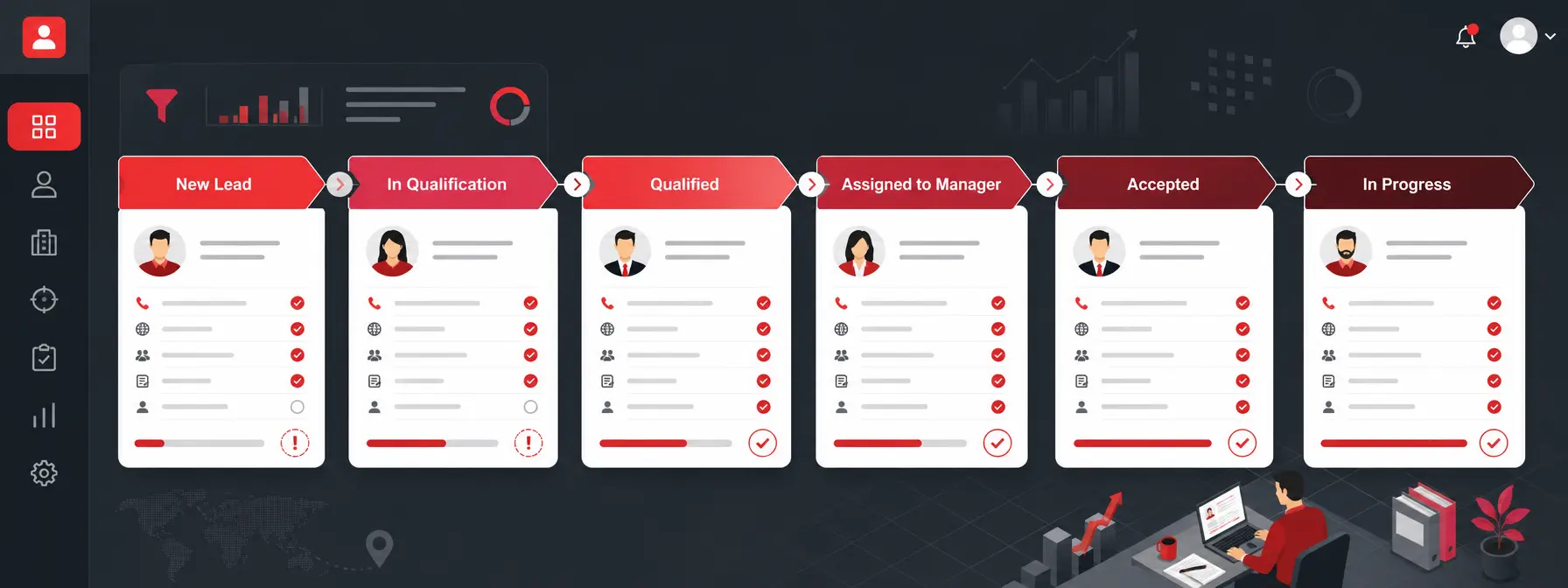
An example of CRM statuses might look like this: “new lead” (just arrived, awaiting initial qualification), “in qualification” (specialist clarifying need details), “qualified” (lead matches target audience and ready for handoff), “assigned to manager” (lead assigned to specific sales manager), “accepted by manager” (manager confirmed receipt and readiness to work), “in progress” (active client interaction ongoing), “meeting scheduled” (presentation or negotiations planned), “non-target lead” (doesn’t fit target audience criteria), “couldn’t reach” (failed to establish contact after all attempts), “rejection” (client refused further cooperation), “deal created” (client moved to active sales).
Each status has clear transition criteria and responsible employee. Moreover, sales reporting automation will help not only track status transitions but also timely identify bottlenecks in lead processing. Such a system allows real-time visibility of where exactly leads are being lost and which stages require additional attention.
How to Set Up SLA Between Lead Generation and Sales
SLA (Service Level Agreement) is a formal agreement between teams about service standards and lead processing timeframes. The document removes responsibility “gray zones” and prevents conflicts between lead generation and sales. SLA compliance control becomes an objective and measurable management tool.
SLA should clearly define that the qualifier must fill all mandatory fields before lead handoff, including request context and interest level. The sales manager commits to accept the lead in the system within a certain time (usually 1-2 hours during business hours) and make first client contact within established timeframes – 15-30 minutes for hot leads, up to 24 hours for cold ones.
Each interaction result must be recorded in CRM the same day with next steps indicated. If a lead turns out to be non-target or poor quality, the manager must specify the concrete rejection reason, not just set status “not interested.” Regular SLA compliance reports (weekly or monthly) allow teams to adjust processes and improve indicators.
SLA violations should have consequences – not necessarily penalties, but at minimum situation analysis and problem elimination plans. This motivates teams to take the agreement seriously and constantly work on process improvement.
Two-Tier Sales Department KPIs
In companies with two-tier sales departments, where there are qualifiers (SDR/BDR) and sales managers (AE), KPIs for qualifier and KPIs for a two-tier sales department should reflect each level’s specifics and motivate teamwork. Incorrect metrics division leads to conflicts between levels and reduced overall efficiency.
First-level KPIs for qualifier are responsible for speed and quality of initial lead processing. Who is responsible for qualifying leads? The qualifier’s main indicators include new lead response time, percentage of leads where contact was established, CRM data quality before handoff, lead conversion to scheduled meetings (appointment rate) and share of meetings the client attends (show rate). These indicators reflect the qualifier’s ability to effectively “warm up” a lead and prepare it for productive manager work.
Second-level managers focus on converting qualified meetings into revenue. Their KPIs include meeting conversion to commercial opportunities, percentage of commercial proposals sent from meetings, proposal conversion to closed deals, average deal size, sales cycle duration and total revenue per period. It’s important that part of KPIs for a two-tier sales department be shared between both levels – for example, overall lead to revenue conversion or average client profitability.
This approach motivates qualifiers to pass truly quality leads, and managers to most effectively work each meeting, since results depend on coordinated work of both teams. Manager responsibility requires not only product knowledge but regular skill development: pay attention to sales manager training that helps teams work more efficiently.
Checklist: How to Organize Lead Handoffs Without Losses
Creating a lead handoff system without losses requires sequential completion of key steps, each critical for overall success. This checklist will help you check your system readiness and identify weak points.
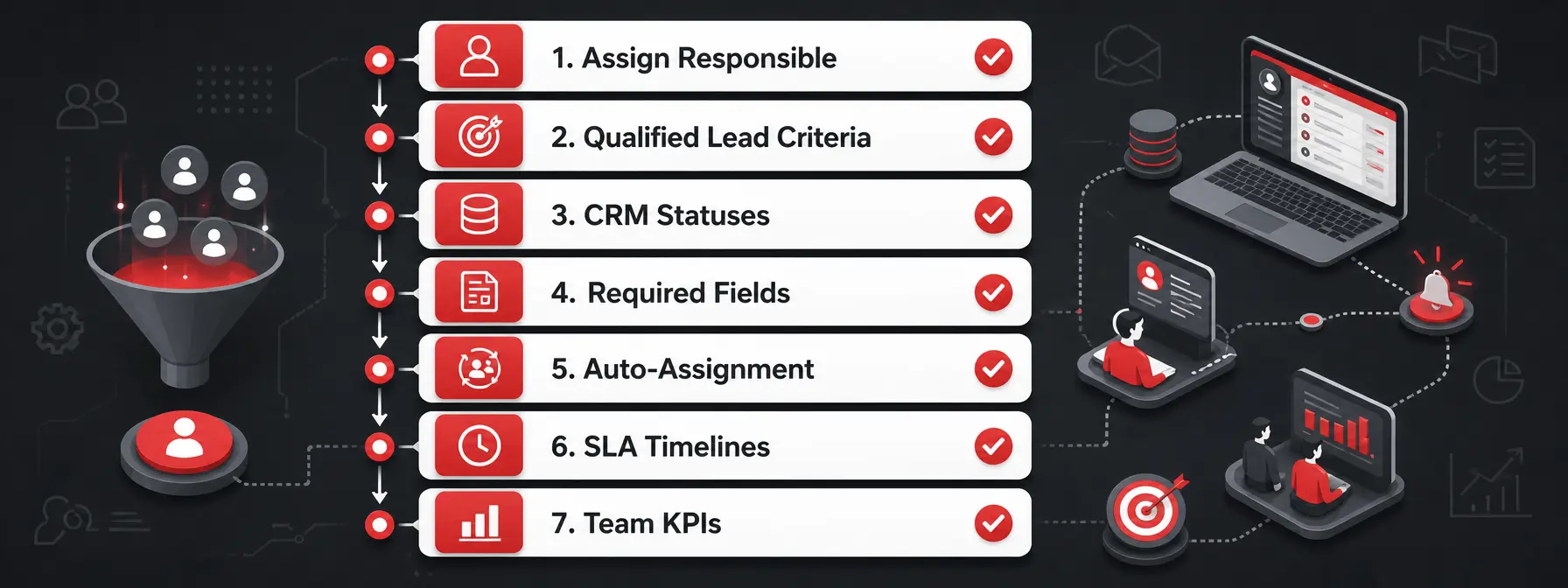
Determine who is responsible for qualifying leads – assign a specific employee or team responsible for initial processing of incoming applications. Describe clear qualified lead criteria – what exactly makes a lead ready for handoff to sales manager. Set up CRM statuses so every lead processing stage is visible and controlled.
Make mandatory fields before handoff – the system shouldn’t allow lead transfer without key information. Set up automatic responsible manager assignment by clear rules (territory, industry, company size). Always record lead source and full request context – the manager should understand where the client came from and what brought them.
Establish clear first contact timeframes and set up automatic CRM reminders. Create a mechanism for manager lead acceptance confirmation – leads shouldn’t “hang” between teams. Standardize rejection reasons so you can analyze lead quality and improve the qualification process.
Set up KPIs for each process participant and regularly hold joint team meetings for feedback and process adjustment. Maintain lost lead analytics – every missed client should become a lesson for system improvement.
Proper lead handoffs aren’t a set of rules that can be implemented in a week, but a comprehensive system with technical base, trained people and constant quality control. But creating such a system requires deep sales expertise, understanding of team interaction psychology and experience implementing similar solutions across various industries. “Sales Rocket” specializes in building “turnkey” sales departments: we don’t just consult, but fully configure processes, implement CRM systems, train teams and ensure constant result control. Our methodology includes creating personalized sales funnels, developing qualification scripts, setting up automatic reminders and KPI dashboards for management. Among our clients are companies like Mitsubishi, Yamaha and Naftogaz – we know how to work with both small teams and large corporate structures. Don’t waste months on experiments with uncertain results while your competitors capture the market.
Create a sales department where not a single lead gets lost - increase conversion up to 86%!
Effective forwarding leads to the sales department isn’t a one-time agreement between employees, but a systematic approach with clear rules, technological base, measurable KPIs and regular compliance control. When every participant understands their responsibility zone, has necessary tools and is motivated for the shared result, leads stop getting lost in the handoff process and convert into stable company revenue.
Lead qualification can be handled by a special employee (SDR/BDR), lead generation manager or designated sales department representative. The main thing is to clearly define the responsible party and not allow situations where everyone and no one handles qualification simultaneously.
What data needs to be passed to the manager along with the lead?
The mandatory minimum includes full contact details, lead source, client request or problem description, interest level, approximate budget, decision-making timeframes and any agreements about next steps. The more context the manager receives, the higher the chances of successful closure.
What KPIs should a qualifier have?
Main KPIs for qualifier: new lead response time, successful contact percentage, CRM data quality, lead conversion to scheduled meetings and percentage of meetings the client attends. It’s important to tie part of KPIs to final revenue to motivate quality work.
Why do leads get lost after handoff to managers?
Main reasons: lack of clear handoff process, incomplete client information, absence of reaction timeframe control, improper responsibility distribution between employees and lack of feedback between teams. A systematic approach solves most of these problems.
SUBSCRIBE TO MY TELEGRAM CHANNEL
The most valuable sales information right on your phone!


 Time to read: 9 min.
 22 June 2026