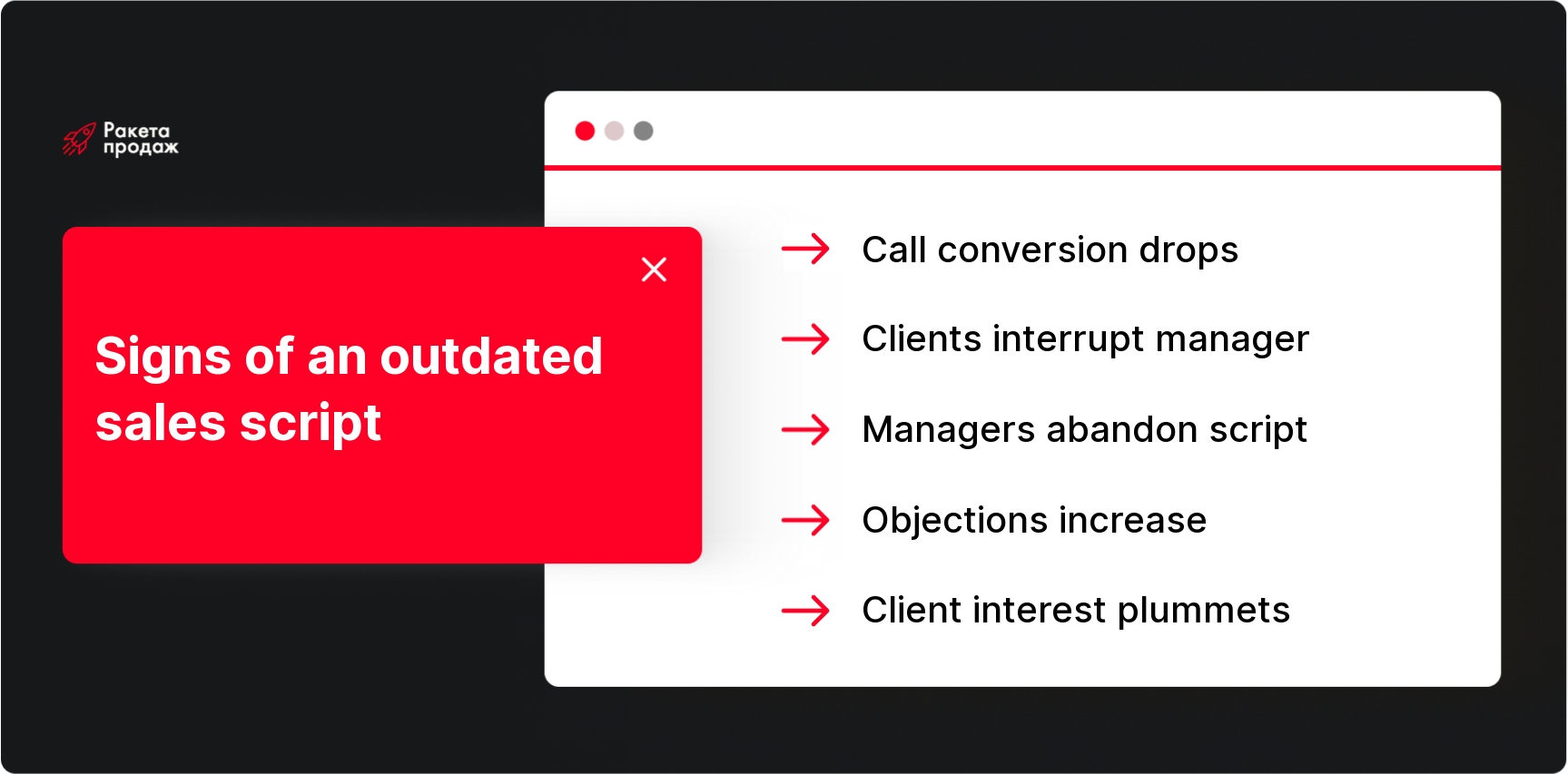
It’s not always obvious that a script is outdated and needs updating. Often the problem is attributed to manager incompetence, poor lead quality, or seasonal demand fluctuations. However, there are clear signs that indicate problems with the sales scenario.
Declining conversion from call to meeting or sale is the first and most important signal. If you notice that fewer calls are turning into the next funnel stage with an unchanged lead flow, you should pay attention to the script. It’s especially indicative if the decline happens gradually, month after month. This is the classic picture of a scenario becoming outdated – it doesn’t stop working overnight but slowly loses effectiveness.
Also monitor the dynamics of average conversation time. If clients start ending conversations earlier than before, this may indicate that your script no longer holds their attention and doesn’t generate interest.
Pay attention to seller mistakes that may arise from outdated or inflexible communication scenarios. Often managers start voluntarily deviating from the script to increase their own effectiveness and maintain contact with the client.
Another important sign – clients increasingly interrupt the manager during presentations. When a manager tries to follow the script, but the client constantly intervenes with questions or objections, this shows that the conversation structure doesn’t meet the interlocutor’s expectations. The modern client doesn’t want to listen to a long presentation; they expect dialogue and the opportunity to ask questions. If your script involves a lengthy monologue at the beginning of the conversation, it’s almost certainly outdated.
Also pay attention to your managers’ behavior. If they begin systematically deviating from the script, it’s a signal that the scenario doesn’t correspond to the real situations they face. Experienced sellers intuitively feel which approaches work and which don’t, and modify the script on the go. If most of the team ignores certain parts of the scenario or refuses to use it altogether, the document doesn’t meet market needs.
An increase in objections also indicates that the script is becoming outdated. When clients increasingly respond “we don’t need this,” “we’re already working with another supplier,” “it’s too expensive,” this suggests that your scenario doesn’t address key doubts or offer convincing arguments. A modern script should anticipate typical objections and include effective methods for handling them.
Finally, another sign is negative feedback from clients. If you receive complaints about intrusiveness, lack of individual approach, or misunderstanding of needs, this directly indicates problems with the script.


 Time to read: 10 min.
 20 April 2026