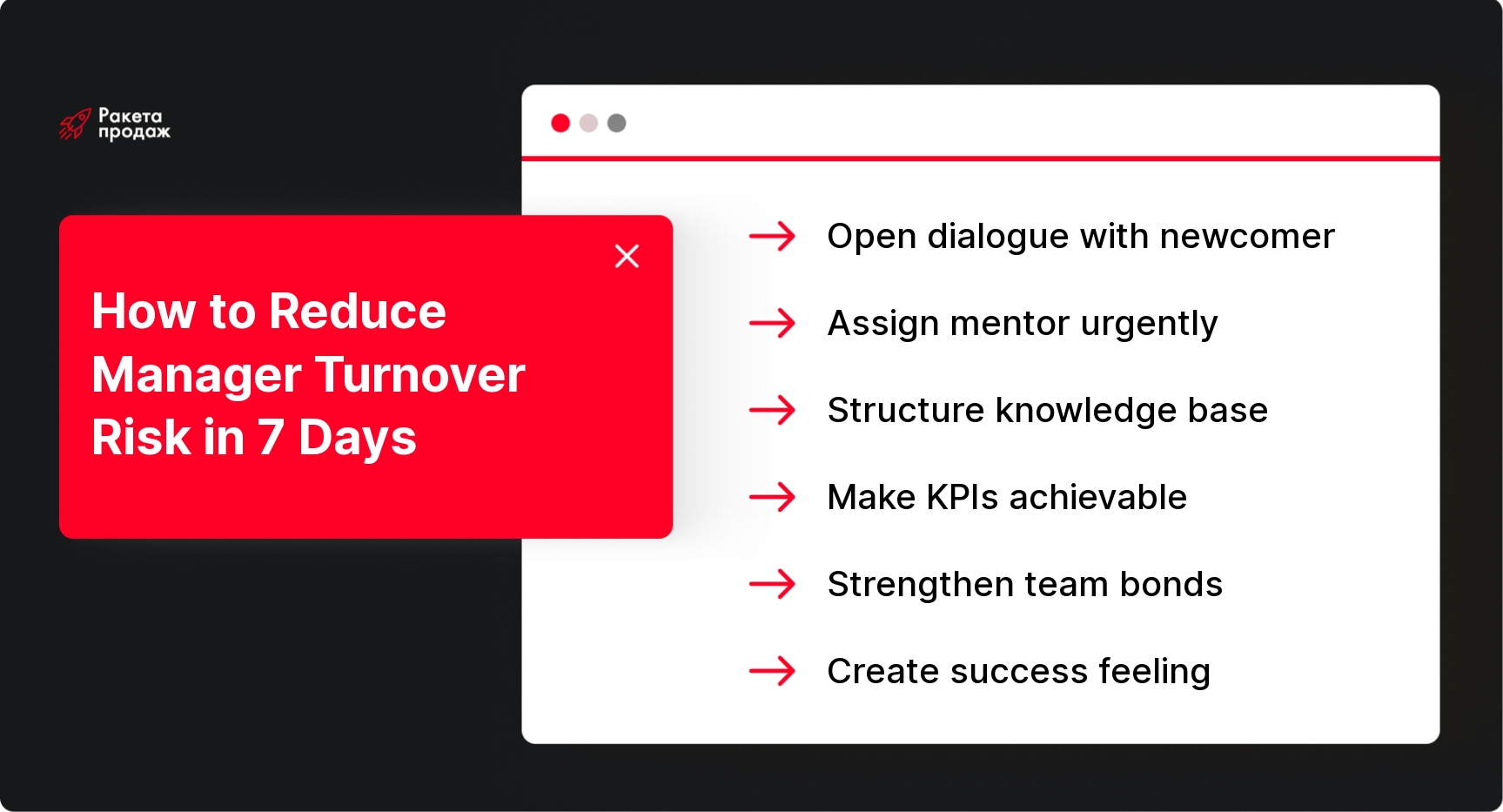
If you see that the adaptation of a new manager is not going according to plan, and the first signs of potential departure have appeared (detachment, decreased enthusiasm, passivity, lateness), not all is lost. There is a set of emergency measures that can be taken within 7 days to stabilize the situation and return the employee to a constructive path.
First of all, it’s necessary to have an open conversation with the manager. This should not be a formal meeting “for show”, but a sincere dialogue about what’s going wrong. It’s important to create a safe atmosphere where the employee can fearlessly share their disappointments and concerns. Often the very fact of such a conversation already reduces tension and shows that the company is not indifferent to their condition.
After identifying problem areas, you need to immediately start eliminating them. If the problem is the absence of a mentor – appoint one right now, and it’s better to choose not the most loaded employee, but someone who is really ready to invest time in training the newcomer. Allocate separate hours in the schedule of both employees for this and monitor the first meetings.
If the main difficulty is information overload, then it’s necessary to urgently structure knowledge. Create a brief guide to the most important aspects of the product and processes, prioritize: “you need to know this now, this in a week, and this when you master the basics.” Give the opportunity to ask questions in a convenient format – for example, through a dedicated chat or regular short meetings with an expert.
It’s critically important to revise the KPIs for the coming month. If the plans were initially unrealistic, acknowledge this and set achievable goals. For example, instead of “5 sales in the first month” set “5 quality presentations with feedback from the leader.” This will reduce financial stress and provide an opportunity to focus on skill development, rather than panic attempts to achieve the unachievable.
Social integration also requires immediate attention. Organize an informal team meeting where the new manager can get to know colleagues in a relaxed setting. Ask experienced employees to share their stories about how they adapted and what difficulties they faced – this will show the newcomer that their problems are normal and can be overcome.
One of the most effective measures is creating an individual plan for the coming week. This plan should contain specific, measurable, achievable tasks with a clear understanding of who will help fulfill them and how. For example: “Conduct 3 training calls with a mentor, receive feedback, implement corrections in the next 5 calls.” This approach gives a sense of structure and progress, which is often lacking in the chaotic beginning of work.
Don’t forget about the technical side. If the manager still has problems with access, equipment, or programs, solve them as a priority. Appoint a specific person responsible for technical support of the new employee so they don’t waste time fighting with infrastructure.
An important psychological moment – give the manager an opportunity to feel success. Find a task that they will definitely be able to perform well, and publicly note their achievement. This could be a well-conducted presentation, properly filled data in the CRM, or a well-prepared commercial offer. The first recognition of success is a powerful stimulus for further development.
Finally, conduct daily short check-ins during this “rescue week.” Literally 15 minutes at the beginning or end of the day to track progress, answer arising questions, and adjust the plan if necessary. This will create a feeling for the employee that they haven’t been left alone with problems, and the company is really interested in their success.
If all these measures are applied comprehensively and promptly, then in most cases it’s possible not only to retain a manager who was already thinking of leaving, but also to turn them into a loyal, productive employee. After all, competently resolving a crisis situation often forms a stronger connection than if problems hadn’t arisen at all.


 Time to read: 9 min.
 12 December 2025