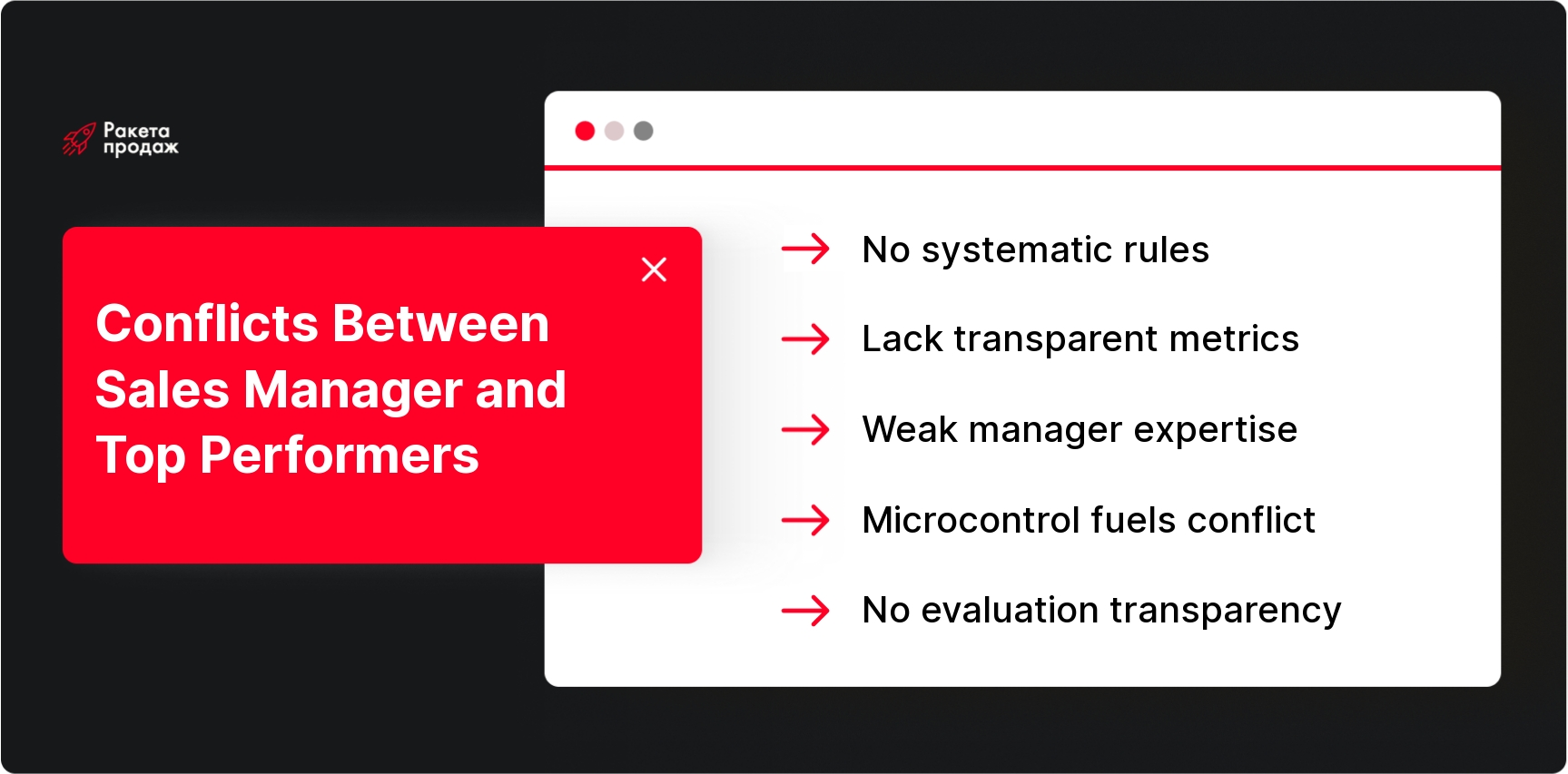
Successfully managing top salespeople requires a fundamentally different approach than working with newcomers or average employees. A sales manager must stop being just a “boss” and become a system leader who creates conditions for maximizing the potential of each team member.
The first and most important thing is to transfer your authority from personal to systemic. This means that as a manager, you should rely not on the phrase “I said so,” but on objective indicators: KPIs, sales funnel, customer service standards, and CRM data. When decisions are made based on numbers and facts, not personal preferences, even the most experienced salespeople are forced to recognize their validity.
For example, instead of simply criticizing a top salesperson’s approach to working with clients, show them the data: conversion at different funnel stages, retention rates, average deal margins. Compare these figures with market benchmarks or the indicators of other successful salespeople. This approach moves the conversation from the emotional plane to the rational and demonstrates your managerial expertise.
The second key point is to manage through numbers, not opinions. Set clear metrics for activity and effectiveness: number of calls, meetings, presentations, conversion at each stage, average check, customer retention percentage. Regularly track plan vs. actual on these indicators and discuss results with each salesperson individually.
It’s important that the metrics are truly significant for the business, not formal. Top salespeople quickly identify artificial indicators and lose respect for a manager who imposes them. If you require 10 cold calls a day, be prepared to explain how this affects the funnel and the end result.
The third principle is a clear separation between zones of freedom and mandatory rules. Strong salespeople critically need a certain autonomy, the ability to act at their discretion within their expertise. But there should also be inviolable rules, mandatory for everyone without exceptions.
For example, a salesperson can choose their own style of communication with a client, the sequence of presenting product benefits, decide when to schedule a meeting. But they cannot independently change pricing policy, ignore entering data into the CRM, or skip weekly planning meetings. Such a division allows maintaining the creative freedom of top performers while ensuring system manageability and transparency.
The fourth key aspect is using an individual management style for different types of salespeople. Newcomers need more directiveness and training, average performers need motivation and control of key indicators, but top performers require a completely different approach. Recognition of their status and expertise, involvement in strategic decision-making, and the ability to influence the product and processes are important to them.
The impact of the Head of Sales on experienced employees should be more subtle and thoughtful than on newcomers. With strong salespeople, it’s worth practicing joint goal setting: “What indicators can we achieve this quarter?”, “What do you need from the company for this?”, “What barriers should we remove?” This collaborative approach increases the top salesperson’s responsibility and engagement in the overall result.
It’s also important to give top performers special tasks that emphasize their status: mentoring newcomers, participating in developing training programs, testing new products, or entering new markets. This satisfies their need for growth and recognition, and also strengthens their loyalty to the company.
Another important aspect of leadership in the sales department is creating a transparent system for career and financial growth. A top salesperson should clearly understand how their career can develop: possibly becoming a department head, a sales trainer, reaching the level of partnership with the company. When there’s a clear perspective, the temptation to oppose management or look for opportunities elsewhere is reduced.
Finally, it’s extremely important to build a culture of open and honest communication. Regular individual meetings with top salespeople, where not only numbers but also feelings, ambitions, difficulties are discussed, are a necessary element of management. The sales manager must be ready to listen to criticism, admit their mistakes, and together look for solutions to problems. This doesn’t undermine authority but, on the contrary, strengthens it, demonstrating the manager’s confidence and openness.
Now let’s move on to what a manager who faces disobedience from strong salespeople should absolutely not do.


 Time to read: 8 min.
 29 April 2026