The ability to quickly identify a client type is a kind of superpower in sales. By carefully observing speech, communication pace, and non-verbal signals, you can understand what type of interlocutor you’re dealing with and choose the right communication strategy.
Psychologists and sales experts typically identify four main psychological types of buyers. Each has their own decision-making style, priorities and fears, and communication pace. By identifying your client’s type in the first minutes of conversation, you can significantly increase the chances of a successful deal.
For a deeper understanding, it’s worth familiarizing yourself with materials devoted to the topic of client types and buyer psychology, since psychology determines how to build effective communication with different segments.
Let’s look at these types and key approach features for each:
- Analysts: value facts, logic, argumentation. Expect clear answers and evidence.
- Emotional clients: make decisions based on feelings and impressions; love stories, engagement.
- Practical clients: seek short-term benefits, quick results, and simplicity.
- Social clients: focused on relationships, communication, value care and attention.
Analysts speak slowly, in a structured manner, and ask many clarifying questions. They don’t trust emotional arguments and general phrases. Detailed information, the ability to compare options, and specific figures are important to them. When communicating with them, be prepared to provide research, comparison tables, and technical specifications.
Emotional clients, in contrast, speak quickly, often change topics, and use figurative expressions. Impressions of the product and success stories of other clients are more important to them than dry facts. They make decisions intuitively and may buy an expensive product just because “it’s cool” or “I like how it looks.”
Practical clients value their time and don’t like lengthy discussions. They are focused on specific results and quick benefits. When talking to them, it’s important to get straight to the point, show simple solutions to their problems, and specific advantages.
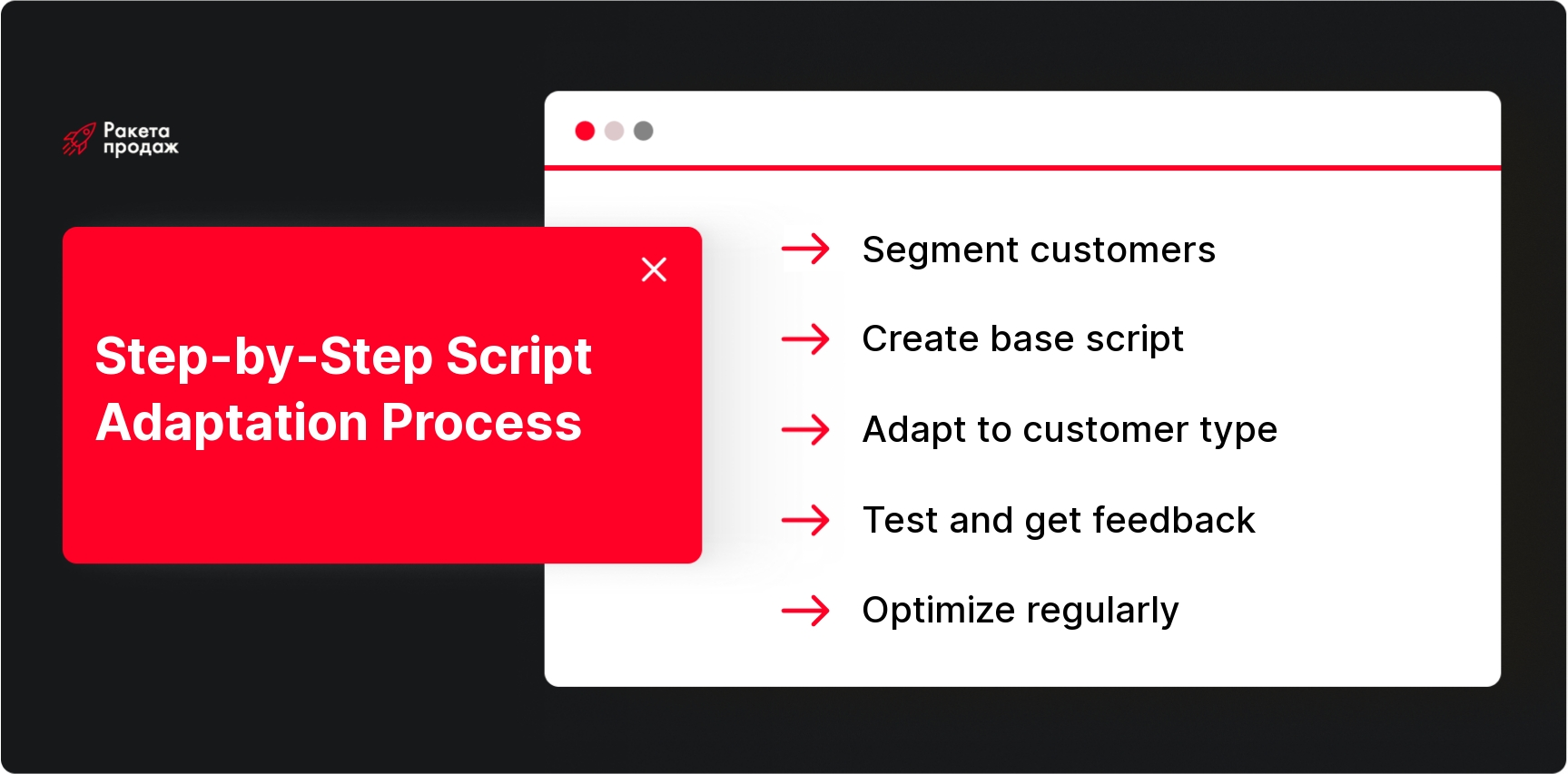
Social clients build relationships before purchasing. Trust in the seller, company reputation, and the feeling that they are cared for are important to them. They value communication, can discuss topics not related to business for a long time, and make decisions based on recommendations from acquaintances and experts. An effective strategy for these clients would be to talk about your company, reviews from other clients, and personal recommendations. But how do you properly adapt a script for all these types?


 Time to read: 10 min.
 24 April 2026