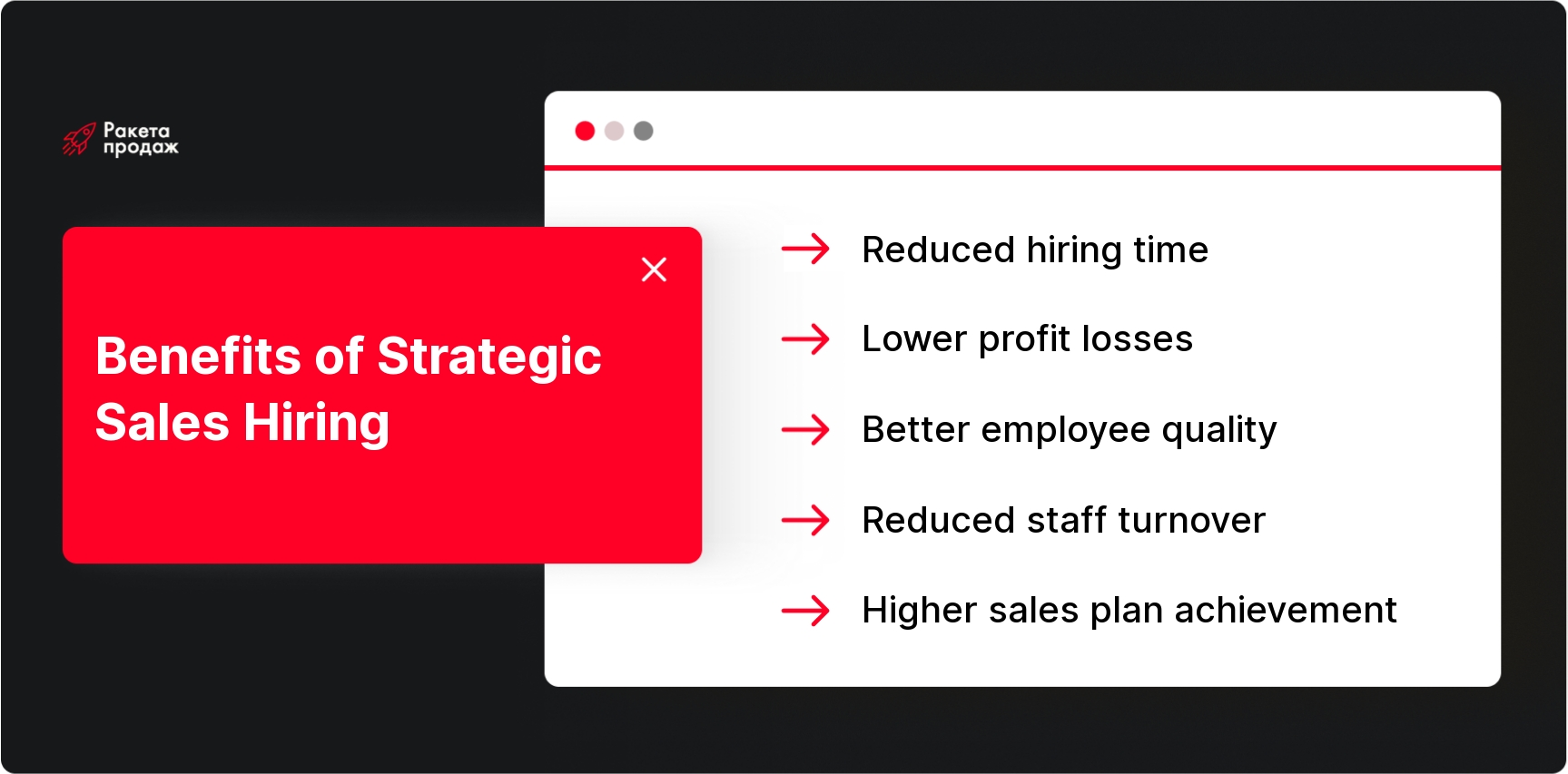
Building an effective planned recruitment system is a process requiring a systematic approach and coordination between different company departments. But the result is worth the effort: you get a reliable mechanism for providing the business with qualified salespeople exactly when needed.
The first step is synchronizing the hiring strategy with the company’s business goals. You need to clearly define what commercial tasks the organization faces for the coming year and more distant perspective. Are you planning geographical expansion, launching new products, increasing market share? All these factors directly affect the number and profile of required sales managers.
Based on the business strategy, develop annual and quarterly recruitment plans. These documents should indicate specific figures: how many managers you need to hire in each period, what competencies are critical for them, what the budget is for attracting and adapting them. It’s important that the recruitment plan is realistic and considers possible staff turnover, business seasonality, and timeframes for managers to reach target indicators.
The next step is organizing constant candidate sourcing. This means that the search and primary evaluation of potential employees are continuous, not just when vacancies open. Create a system for monitoring the labor market, track interesting specialists, maintain contacts with candidates from previous recruitments, use referral programs with your current employees.
It’s also important to implement effective candidate assessment tools. Develop standardized interviews, cases, and tests that will objectively evaluate key competencies of salespeople. This is especially important when different people conduct the assessment – having clear criteria ensures a unified approach and reduces subjectivity.
To systematically and without errors approach employee evaluation, we recommend studying modern methodologies for assessing sales manager effectiveness.
Don’t forget about automating recruitment processes. Modern ATS systems (Applicant Tracking Systems) allow you to effectively manage candidate flow, automate routine tasks, save interaction history, and generate analytical reports. This significantly reduces the workload on HR specialists and sales managers.
Be sure to establish a process for regular talent pool revision. Once a quarter, review the database of potential candidates, update information about them, conduct repeated interviews with the most promising ones. This will help maintain the relevance of your “bench.”
Finally, create a metrics system to evaluate the effectiveness of planned recruitment. Track indicators such as average time to fill a vacancy, cost of hiring one manager, percentage of successful probation completion, time for new employees to reach target indicators, turnover in the first 6-12 months. Analyzing this data will help continuously improve your recruitment system. Now let’s look at how planned recruitment affects turnover and sales department stability.


 Time to read: 9 min.
 01 December 2025