icon

How to Hire the Right Sales Rap: Tips for Selecting the Best Candidates

Looking for a Sales Rep Who Can Drive Your Business Like an F1 Champion? In this article, we’ll show you how to distinguish a true professional from a “kid on a bicycle.” Discover where to find the best sales reps, how to build a structured hiring funnel, and how to avoid costly mistakes that could cost your business millions.

Want a high-performing sales team without the hassle?
We’ll build it for you.
Contact Us

Key Takeaways

  • A successful sales manager is not just someone who closes deals, but a strategic player who can manage the sales process under pressure and work for team results.
  • Finding the right manager requires a clear hiring funnel — from screening 75 resumes to conducting 10 12 interviews to find 3 5 finalists.
  • The most common hiring mistake is evaluating candidates solely on experience without testing real skills and ability to adapt to your niche.
  • The right candidate demonstrates not only sales results but also motivation, values, and willingness to work within your processes.
  • A transparent offer should include functional responsibilities, KPIs, motivation scheme, and probation period criteria.

In the full article, you’ll find a detailed algorithm for selecting the ideal sales manager, from creating a candidate profile to their successful adaptation to the team 👇

Imagine your business as a McLaren F1 race car. It has a unique design, a powerful engine, and the potential to win. But when the race starts, the car doesn’t move. Why? Because the person behind the wheel has no idea how to drive it.

This is exactly what happens when you hire a sales rap who claims to be a “natural-born salesperson” but freezes up at the first client objection. Sounds familiar?

A sales rap  is like a pit stop mechanic: their performance determines the speed of refueling, tire changes, and fixing issues on the fly. So how do you find a representative who doesn’t just close deals but becomes the perfect “driver” for your McLaren?

In this article, we’ll break down how to choose the right sales representatives, how to distinguish top-performing salespeople from mediocre ones, and why experience in sales isn’t always a sign of a true professional. Get ready for practical insights, real-world case studies, and answers to the questions you’ve been looking for. Let’s get started!

To add a practical perspective on hiring and the role of a sales leader, watch the video “Як наймати перших менеджерів у відділ продажу”. It explains what to look for so you do not hire a strong résumé that fails to deliver results.


Why a Top-Tier Sales Rap Is the Foundation of an Effective Sales Department

Your sales department is like an F1 race car—it has the speed, efficiency, and strategy to win. But what happens if an inexperienced driver gets behind the wheel? The car crashes at high speed, and the team loses the race. That’s exactly what a sales department looks like without a skilled sales representative.

Why is a successful sales representative so crucial? Because they are your driver—the one who:

  • Instantly connects with a client from the first call
  • Knows how to handle the toughest objections and turn a “no” into a “yes”
  • Navigates challenges and finds solutions instead of blindly following a script
  • Possesses strong sales skills, strategic thinking, and the ability to adapt to different client profiles
  • Works for the team’s success, like a pit stop mechanic, rather than operating as a lone wolf
  • Closes deals even when the “track” is slippery

Without a strong sales representative, even the most advanced McLaren can fall behind in the race. So before you start hiring, ask yourself: how do you choose a sales representative who won’t just make calls but will drive the entire sales team’s growth?

A high-performing sales rep isn’t just someone who hits their KPIs. They are someone who maintains the right pace even in the toughest conditions. Finding this kind of professional takes more than just scanning resumes—you need a solid foundation: a structured sales department, a clear hiring plan, and an efficient recruitment funnel.

And don’t forget—your sales representative must not only be a top performer but also a team player. Because your sales department isn’t a solo race—it’s a team effort.


“Hiring Sales Raps Is Not About Finding a Star. It’s About a Systematic Selection Process, a Well-Structured Hiring Funnel, and Seamless Integration Into Your Corporate Culture and Business Processes.” — Kateryna Chabanova

Key Challenges in Hiring Sales Candidates: Lack of Experience and Mismatch with Business Needs

Think of a Formula 1 car pulling into a pit stop for a rapid service check. In that moment, even the smallest mistake from the mechanics can cost the team victory. The same principle applies to hiring sales representatives—choosing the wrong candidate results in lost money, wasted time, and missed business opportunities.

The list of challenges in hiring a strong sales team is long, but here are the most common mistakes:

  • Lack of relevant experience. The candidate may have strong sales skills but comes from an entirely different industry. It’s like having a mechanic who has spent their entire career fixing bicycles trying to service an F1 car.
  • Cultural misalignment. A candidate may seem experienced, but if their values don’t align with your company’s, it can lead to internal conflicts and lower team morale.
  • Falling for the “star” without proper analysis. Some candidates present themselves as top professionals during interviews, but when put to the test, they can’t keep up with the pace. Their so-called “expertise” turns out to be nothing more than a polished sales pitch.

“Every bad hire in sales is wasted time and money.”
— Kateryna Chabanova

How to Avoid These Mistakes? To differentiate a great sales representative from a weak one, focus on these key traits:

  • Adaptability. Can they quickly adjust to changes and new challenges?
  • Understanding customer needs. Do they truly solve a client’s problem, or are they just pushing a product or service?
  • Intrinsic motivation. Are they looking to grow with the company, or just chasing a paycheck?

Additionally, before launching your hiring process, analyze your company’s needs. Define the exact tasks your future sales rap should handle, then start your search. Your goal isn’t just to fill a vacancy—it’s to find the right “driver” who will lead your team to victory.

Hiring a sales manager is not about intuition or finding a “natural-born seller”. It is a strategic business process that directly impacts revenue, stability, and scalability. Hiring mistakes are costly: lost leads, failed deals, slower growth, and demotivated teams. That’s why an unstructured hiring approach often becomes a bottleneck even for businesses with strong products.

Raketa Prodazh specializes in building systematic sales hiring processes tailored to specific business goals. We analyze your sales department, define a clear profile of the ideal candidate, build a structured hiring funnel, and implement objective tools to assess skills, motivation, and cultural fit. Our approach allows you not just to hire a sales manager, but to integrate them into your processes so they quickly reach target KPIs and strengthen the entire team. On average, Raketa Prodazh clients achieve +35% revenue growth through a systematic approach to sales team building.

Turn sales hiring into a predictable and controllable process - book a free consultation today.

How to Define the Ideal Sales Rap for Your Business?

Finding a top-performing salesperson is like assembling a Formula 1 team. You don’t just need someone who can drive—you need someone who knows how to handle high-pressure situations, maintain control on the track, and work seamlessly within a team.

To clearly define the type of sales rap you’re looking for, create a detailed candidate profile. This will help you avoid hiring mistakes and save valuable time and resources. Your ideal candidate profile should include:

What tasks should they perform?

Before hiring a sales manager, it is essential to clearly define the responsibilities this role will include. One specialist may focus on cold outreach and lead generation, while another works with inbound requests, deal management, or key accounts. It is also important to consider product complexity, sales cycle length, and the level of involvement required in negotiations. Clearly defined responsibilities help attract candidates who are well suited to your business model and can deliver measurable results from the start.

What skills are a priority for you?

The required skill set for a sales manager depends on your business type and target audience. In B2B sales, strong negotiation skills, objection handling, value-based selling, and relationship building are critical. In B2C or retail sales, speed of response, communication skills, and the ability to handle high volumes of inquiries are more important. Defining priority skills in advance allows you to evaluate candidates more objectively and make better hiring decisions.

What KPIs should they meet?

Clear KPIs help define performance expectations and measure the effectiveness of a sales manager. These may include the number of closed deals, revenue targets, average deal size, conversion rates, or activity metrics. KPIs should be measurable, realistic, and aligned with the company’s business goals. This clarity benefits both the employer and the candidate by establishing transparent expectations and a clear framework for success.

Where to Find the Right Sales Raps?

Where can you find sales raps who will bring stability and productivity to your business?

  • Professional job platforms such as Work.ua or Rabota.ua.
  • LinkedIn – the ideal platform if you’re looking for B2B sales professionals or those who work with international clients. Here, you can review not just resumes but also recommendations from previous employers.
  • Referrals from partners, clients, and employees – an excellent channel that often leads to the best hires.
  • Industry-specific groups and chats on social media, as well as specialized communities where sales professionals search for jobs and employers seek talent.
  • Career fairs – a great opportunity to meet potential candidates in person and immediately assess their communication skills.

And most importantly—don’t rely on just one channel. To find the perfect sales rap, use multiple strategies at once. The right candidate for your team might be waiting in the most unexpected place.

How to Properly Screen Candidates?

How to Properly Screen Candidates?

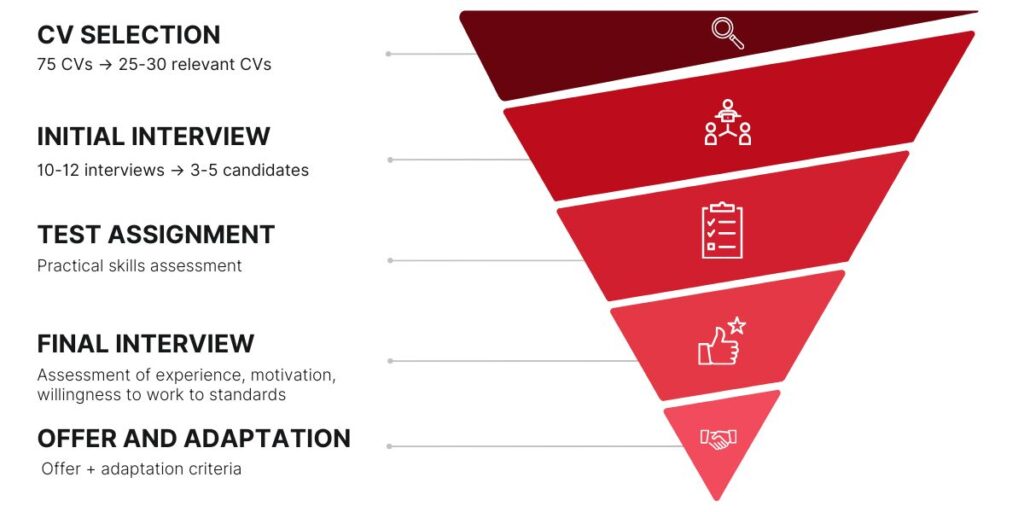
Let’s look at the hiring process as a sales funnel. In sales, you generate and qualify leads before closing deals. The same applies to hiring—your candidates are leads, you qualify them through interviews and tests, and the final result is hiring the right sales rap. If your hiring funnel isn’t structured correctly, you won’t be able to build a high-performing sales team.

Resume Screening

To hire one strong sales rap, you may need to review around 75 resumes. How do you stay focused and select the best ones?

  • Shortlist 25–30 relevant resumes for initial screening.
  • Check if they match the requirements and align with your ideal candidate profile.

Initial Interview & Test Assignment

The first interview is your opportunity to learn more about the candidate—their experience, motivation, and expectations. After conducting these interviews, you’ll likely narrow the list down to 3–5 final candidates who will receive a test assignment.

A test assignment, such as writing a cold-calling script, is a great way to check if the candidate can do more than just “talk a good game”—they need to demonstrate real skills.


“I’m a natural-born salesperson. Being a salesperson is a skill. Saying that makes me a great seller is like saying I can be a Formula 1 driver just because I once rode a kid’s bicycle.”
— Kateryna Chabanova

Final Interview

At this stage, only 3–5 candidates remain. Your goal is to select the one who will become the ideal “pilot” for your sales team by evaluating their experience and motivation. This is the perfect time to ask questions about:

  • Previous experience and results they achieved in past roles.
  • Motivation, ambitions, and career goals.

Don’t forget to clarify how comfortable the candidate is with structured processes. If they insist on complete creative freedom and struggle to accept established standards, they might not be the right fit for your sales team.

Offer & Onboarding

Welcome to the final stage—the job offer and onboarding. The offer is an official written proposal for collaboration, which should be discussed with the new sales rap during a follow-up meeting. It should include:

  • A detailed job description outlining their responsibilities.
  • Criteria for successfully passing the probation period.
  • A clear breakdown of the sales department’s incentive system.
  • Opportunities for career growth within the company.

If your company has a sales manager evaluation process during the probation period, make sure to clearly state this in the offer.

Mistakes in Hiring a Sales Rap and How to Avoid Them

The process of hiring a sales rap is not just about finding someone with experience in sales. It is a well-structured funnel, much like selling your product or service—you need to “sell” your company and position to potential candidates. However, business owners and sales leaders often make mistakes that undermine the entire hiring process. Here are the most common pitfalls:

Evaluating Only Based on Experience

The experience listed on a candidate’s resume doesn’t always mean they are the right fit for your team. For example, a rap might have successfully sold insurance, but that doesn’t guarantee they will be just as effective in selling IT solutions. To avoid this mistake, evaluate not just experience, but also actual skills. Use practical assignments and assess how well the candidate can adapt to your industry.

Ignoring Candidate Motivation

A candidate may make a strong impression during the interview, but if their sole motivation is salary, it can backfire. Someone who lacks interest in your company’s products or services is unlikely to be a strong long-term performer. To avoid this, make sure to assess their motivation during the interview. Ask about their goals, ambitions, and expectations. Motivation should be a key selection criterion.

Lack of a Clear Interview Structure

Random questions, lack of standardized evaluation criteria, and subjective decision-making create chaos in the hiring process. As a result, you might end up selecting a candidate who does not meet your expectations. To avoid this, develop a clear interview structure with predefined questions and evaluation metrics. Always include a practical component—such as a test assignment or role-playing scenario.

Unclear Job Offer

A vague job offer with unclear terms can create distrust in the candidate. If your offer doesn’t clearly outline the sales department’s incentive structure or probation period criteria, it may lead to misunderstandings and dissatisfaction later. To prevent this, create a transparent offer that includes all critical details:

  • Job responsibilities
  • KPI expectations
  • Career growth opportunities
  • Compensation and incentive structure

By avoiding these mistakes and structuring your hiring process effectively, you’ll increase your chances of finding a top-performing sales rap who drives revenue and aligns with your company’s goals.

How to Successfully Onboard a New Sales Rap?

Congratulations! You’ve found the perfect candidate, but the job is far from over. To ensure your new hire becomes a productive and effective member of your sales team, you need to properly onboard them—not just throw them into the deep end with a “learn as you go” approach.

Onboarding is a structured, step-by-step process that a new sales rap must go through to ensure a strong start. Most importantly, remember that sales rap onboarding is an investment—in their future productivity, in your entire sales team’s efficiency, and in the overall stability of your business.

For a detailed breakdown of how to build an effective onboarding system, check out our article: Onboarding Sales Staff: How to Quickly Integrate Managers and Sales Leaders into Work.

Choosing a sales manager is not just about finding a new employee. It’s a strategic task that can either lead to success or result in missed opportunities for your business. If your sales manager doesn’t possess the necessary skills for effective selling in various conditions, even the most powerful business can remain stagnant.

How do you choose the right manager so they not only meet their KPIs but also work as the true ‘pilot’ of your sales team? To do this, it’s important to clearly define the tasks that the candidate will face and also their motivation. In addition to experience, it’s essential to understand how quickly they adapt to changes and whether they can work in a team, achieve company goals, and actively grow with it.

Learn how to choose the right sales manager for your business! Choosing the right sales manager is a critical step for any business. Don’t let chaos in candidate selection affect your results!

Raketa Prodazh’s Tips for Finding the Best Sales Rap

At Raketa Prodazh, we have been building high-performing sales teams for over six years. During this time, we have completed more than 157 projects across various industries. Our clients achieve an average revenue growth of +35%, with our best case showing an increase of +$1.6 million in monthly revenue in just four months.

We know exactly how to find top-tier sales raps, and we’re ready to share our key hiring insights with you:

  • Analyze your business needs. Before starting the hiring process, define what tasks the sales rap should perform and what results they need to achieve.
  • Use multiple recruitment channels. Job sites, referrals, and LinkedIn are essential tools for finding the most relevant candidates.
  • Build a structured hiring funnel. Develop a clear hiring process that includes resume screening, interviews, test assignments, and a structured job offer.
  • Ensure transparency. Clearly outline how your sales team’s compensation structure works and what career growth opportunities candidates can expect in your company.
  • Onboard new hires properly. A well-structured onboarding program will help new sales raps integrate faster and start hitting KPIs sooner.

And if you don’t have the time for trial and error—reach out to us! We will audit your sales department, develop an efficient hiring funnel, and help you find the best sales rap for your team.

Conclusion

Finding the right sales rap is not just a hiring process—it’s a strategic decision that directly impacts your business success. Selection, onboarding, and transparent working conditions are the key pillars that create a strong foundation for a productive sales team.

So why take unnecessary risks when you can get it right the first time?

Book a consultation with Raketa Prodazh, and we’ll show you how to hire the best sales talent and build a sales team that drives your business forward.

Kateryna Chabanova

In this article:
See more
Book a FREE sales funnel audit
CONTACT US
FAQ
What does a sales rep’s salary consist of?

A sales rep’s salary typically includes three key components:

  • Base salary – A fixed amount paid regardless of sales performance.
  • Commission – A variable portion directly tied to the number and value of closed deals.
  • Bonuses & incentives – Additional payments for exceeding KPIs, attracting VIP clients, or achieving strategic business goals.
How much commission should a salesperson receive?

The commission percentage for a sales rep depends on product margins, deal complexity, and level of responsibility. For example:

  • Retail sales – 1-3%, due to high transaction volume.
  • B2B sales – 5-10%, as deals take longer to close.
  • Service sector – 7-15%, if operational costs are low.

A progressive commission structure can also be applied: the higher the revenue generated, the greater the commission percentage. This approach encourages overachievement and helps boost overall company revenue.

How is sales-based compensation calculated?

A sales rep’s salary usually combines a fixed base salary and commission on sales. This model ensures income stability while motivating sales reps to achieve better results.

When designing a compensation model, it’s crucial to consider:

  • Business profitability & margins
  • Deal complexity
  • Sales cycle length

An optimal incentive system balances the interests of both the company and the sales team, fostering sustainable growth.

What does a sales director’s salary include?

A sales director’s compensation typically consists of:

  • Fixed salary – Covers management responsibilities and ensures financial stability.
  • Bonus structure – Based on achieving KPIs, such as revenue growth, higher average deal size, and team performance.
  • Profit-sharing or commission on revenue – Some companies offer a percentage of net profit or total company revenue.
SUBSCRIBE TO MY TELEGRAM CHANNEL
The most valuable sales information right on your phone!
icon

LOTS OF USEFUL INFORMATION, FREE TEMPLATES, AND CHECKLISTS ON MY INSTAGRAM

Materials and practical advice on sales growth in our blog: