icon

How to Integrate CRM, Marketing, and Sales into One Report

A familiar picture: the marketing team brags about beautiful numbers on clicks, leads, and cost per lead, while salespeople throw up their hands – the leads, they say, are low quality, deals aren’t closing. A data gap opens up between the two teams, and nobody understands which channels are actually bringing in money and which ones are just draining the budget.

Want a high-performing sales team without the hassle?
We’ll build it for you.
Contact Us

Key Takeaways

  • Marketing brags about clicks, sales complains about lead quality, but the real problem is that nobody sees which channels actually bring in money and which ones just burn through the budget.
  • End-to-end analytics connects the entire customer journey from first touch to closed deal, showing the real economics of each channel instead of pretty but useless charts.
  • A CRM filled in chaotically kills any analytics. Information buried in comments, missing UTM tags, and missed calls turn reports into pure guesswork.
  • Companies that reallocated budget toward channels with high conversion into deals increased sales by 40% with the same ad spend.
  • Start with processes, not technology. Without data discipline, unified standards, and quality control over how fields get filled in, end-to-end analytics simply doesn’t work.

Below you’ll find a step-by-step algorithm for building end-to-end analytics, specific metrics for your report, and ways to avoid the most common mistakes when merging data 👇

The problem is that each department looks at its own piece of the funnel: marketing sees the beginning of the customer’s journey, sales sees the end. But what happens in between? Where do hot leads get lost? Why does advertising look effective based on lead volume but doesn’t translate into sales? The answers to these questions lie in building a Consolidated Sales and Marketing Report that connects the entire customer journey from first touch to paid deal. In short, learning how to align marketing and sales is the first step toward closing that gap.

In a unified report, it is important to see not only the lead source, but also what happens to the lead after it is handed over to the sales department. In this video, we explain how to process leads properly so you don’t lose potential customers between marketing, CRM, and the sales manager.

What End-to-End Analytics Is and Why Your Business Needs It

End-to-end analytics is a system that combines data from every customer touchpoint into a single picture. Think of it as an X-ray of your business: you see how a customer moves from a Facebook ad to a call with a manager, from a website form to signing a contract, from first touch to repeat purchase.

Unlike regular reports that only show part of the story, end-to-end sales analytics links every part of the chain together. Marketing analytics says: “We brought in 100 leads for $1,300.” The CRM shows: “We closed 10 deals worth $5,300.” And the end-to-end system answers the key question: “Which of those 100 leads actually became those 10 deals, and was it worth spending money on channels that don’t convert?”

Sound familiar – marketing reports look great, but sales keeps complaining about lead quality? That’s a classic symptom of fragmented analytics, and it hits 85% of companies as they scale. At Rocket Sales, over 8+ years we’ve built a system that pulls all the data – from ad campaign to paid deal – into one clear picture for decision-making. Our expertise covers full CRM implementation, setting up end-to-end analytics, integrating every marketing channel with sales processes, and building transparent reporting for leadership. We’ve used our methodology to build 208 sales departments across 14+ industries, giving clients a clear understanding of the economics behind each channel so they can grow revenue predictably. The result – our clients’ companies see an average revenue increase of +35%, with the best result reaching $10,907,403 in 4 months of work.

Turn data chaos into a profitability management system - order an audit of your marketing processes today!

Your business gains the ability to see not just statistics, but the real economics of each channel. You start to understand that, for example, PPC ads bring in expensive leads that close well, while social media targeting delivers cheap leads that only convert into deals 2% of the time. This transparency changes how you approach budget allocation and campaign planning.

The Key Links of Integration: Ads, Website, Phone System, CRM

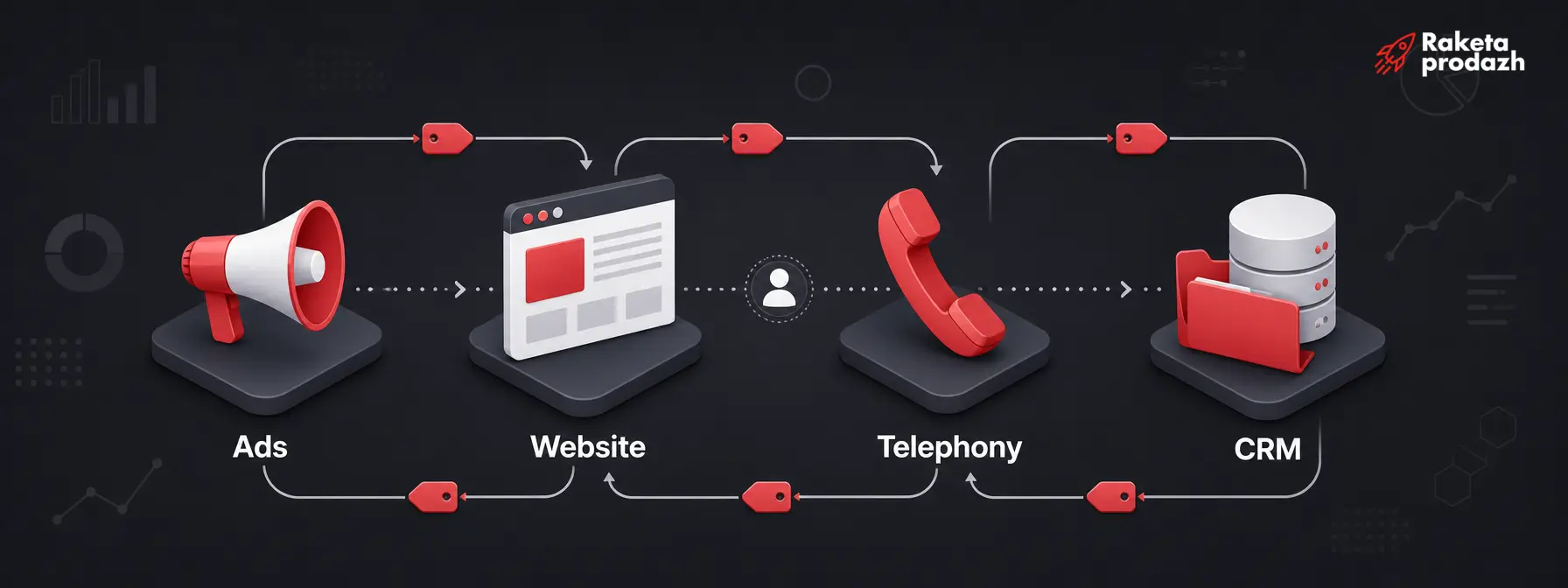
To build an end-to-end process, you need to track and merge data from all key systems: ad platforms, website and web analytics, phone systems and call tracking, and CRM. Understanding How to Integrate CRM and Marketing becomes critical for any business striving for process transparency. The same logic applies to How to Integrate Marketing and Sales into a single reporting system, since both departments must rely on the same data to succeed. Skipping even one link distorts the final picture and makes the analytics useless for decision-making.

Ad platforms generate clicks and impressions, the website records visits and conversions into leads, the phone system logs calls and their duration, and the CRM stores information about deals and revenue. Each system collects its own type of data, but the magic happens when that data gets connected through shared identifiers – UTM tags, phone numbers, user IDs.

UTM tags work like the DNA of an ad campaign: they pass information about the source, campaign, and keywords straight into the CRM along with the lead. Call tracking links phone calls to specific ad channels through number substitution. Properly filled-out deal cards in the CRM close the loop, connecting the customer’s first touch with the final result – a closed deal or a qualified rejection.

Without this integration, you end up with fragmented data that never gives you the full picture of marketing effectiveness.

CRM and marketing integration — Diagram of integrating advertising, website, telephony and CRM into one data chain

What Data You Need to Combine for End-to-End Analytics

To make end-to-end analytics work, you need to gather data from multiple sources and learn how to connect them. Each source provides its own piece of the puzzle: ad accounts provide spend, impressions, and clicks; the website and lead forms record conversions; UTM tags carry traffic source information; call tracking links calls to campaigns.

The CRM becomes the central hub for information about leads, deals, and customers, the phone system logs all incoming inquiries, and email and messengers add extra communication channels. Payments and deal data show the financial outcome, information about managers helps evaluate team performance, and marketing spend lets you calculate ROI by channel.

It’s critical that leads and deals always sit at the correct stage and status in the funnel, and that rejection reasons are logged accurately – this data shows exactly where customers are being lost and what can be improved in the sales process. Marketing and Sales Analytics only works when you can trace the full chain: ad touch → lead → contact with a manager → deal → revenue.

To improve the effectiveness of this process, proper lead handling at every stage matters a great deal. Without connecting these elements into a single system, you’ll end up with a bunch of pretty charts but won’t be able to make informed decisions about where to invest your marketing budget and which channels to cut.

What Questions a Consolidated Sales and Marketing Report Should Answer

Before building a report, it’s important to define the management questions it needs to answer. Simply collecting data isn’t enough – you need to understand what decisions you’ll be making based on it. A Consolidated Sales and Marketing Report should show which channels actually drive sales (not just leads), where the highest conversion into deals happens, and which campaigns deliver the highest-quality leads.

The report helps you understand the economics of each channel: where customer acquisition cost is lowest, which sources generate the most profit, and how quickly the sales team processes leads from different channels. You can see at which stages of the funnel you’re losing the most potential customers, and which managers perform best with specific traffic sources.

The system needs to connect marketing activities to financial results: how much revenue and profit is tied to each channel, what real ROMI your ad campaigns are delivering, and where you need to optimize your marketing strategy or restructure the sales process. Without answers to these questions, the report becomes a pretty picture that has no impact on business results.

Properly configured analytics becomes a decision-making tool: increase budget for effective channels, stop underperforming campaigns, change sales scripts, or redistribute workload among managers.

How to Prepare Your CRM for a Consolidated Report

Your CRM needs structured fields, without which a consolidated report will remain a pipe dream. It’s not enough to just create customer cards – you need specific fields for lead source, acquisition channel, UTM tags, lead creation date, responsible manager, deal stage, amount, and status. Every field needs to be filled in according to unified rules, otherwise your analytics turns into pure guesswork.

It’s critical not to store key information only in comments. If a manager writes “customer came from Facebook” in a free-form notes field, the analytics system will never see it. For this to work correctly, you need separate fields: “Source,” “Campaign,” “Keyword,” “UTM Tags,” along with mandatory reference lists for rejection reasons, product types, and deal statuses.

Payment date, margin or profitability figures (if relevant to your business), information about repeat purchases – all of this data needs to be structured and available for export into your analytics system. Proper integration of CRM and Sales ensures data accuracy and the ability to analyze it further. CRM filling rules need to be written up as formal guidelines and their compliance regularly monitored.

To achieve data standardization, it’s often recommended to conduct a sales department audit to identify weak points in your processes and fix them in time. Data quality in the CRM directly affects the accuracy of end-to-end analytics – if managers fill in fields haphazardly, no system can turn that chaos into useful insights.

Implementation Options: How Small and Medium Businesses Can Integrate Marketing and Sales

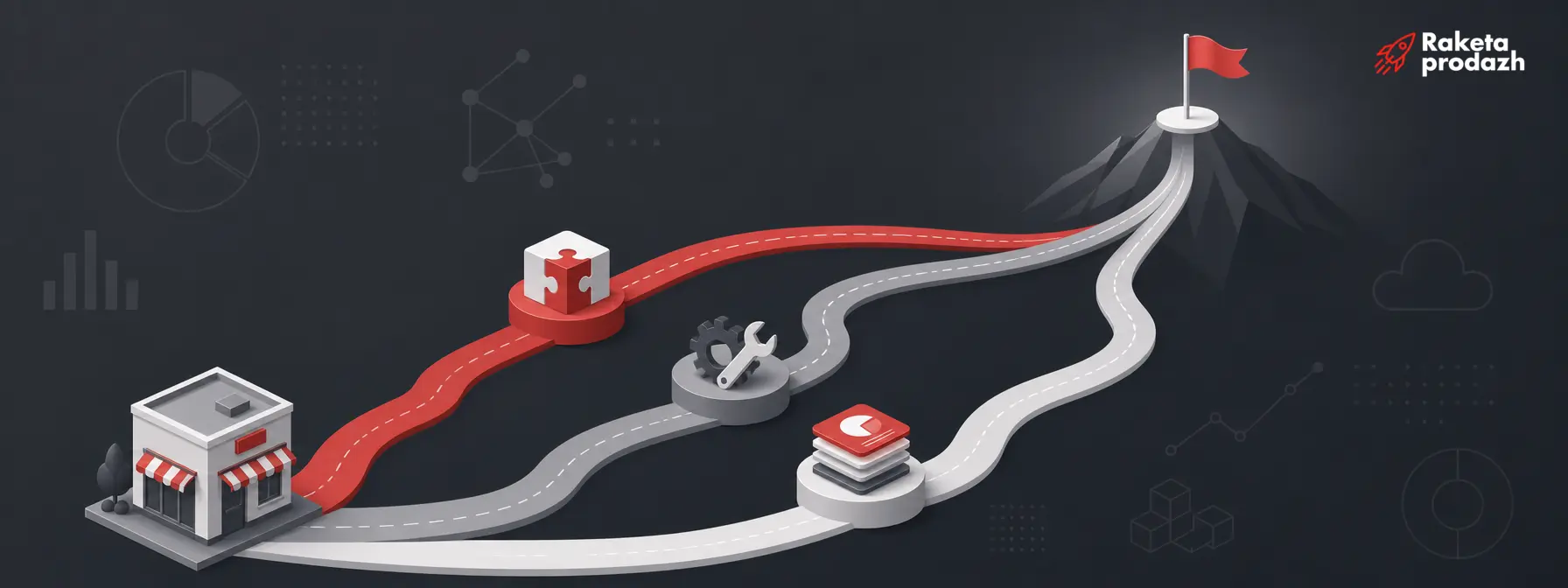
Different business sizes call for different approaches to implementing an end-to-end tracking system. Some companies choose ready-made analytics services, others build a connection between web analytics and CRM, and others implement BI platforms tailored to their needs. The choice depends on budget, number of channels, and sales complexity.

Ready-made services solve the problem “out of the box”: quick setup, pre-built integrations with popular CRMs and ad systems, simple reports. The downside – limited customization and a monthly fee per lead. Building your own system on top of CRM and web analytics takes more time to set up, but gives you full control over your data and a lower total cost of ownership.

BI platforms suit mid-sized companies with large volumes of data and complex business processes – they let you build deep analytical models, but require expertise to configure. Internal automation within the CRM (through APIs and integrations) works best for companies with technical resources.

For a successful start, it’s worth looking into CRM and phone system integration to bring all communication channels together and automate data collection. The main thing is understanding How to Align Sales and Marketing into a single tracking and analysis system.

implementing end-to-end analytics — Three different implementation paths for end-to-end analytics

The Benefits of a Unified Cycle: How Integration Boosts Revenue and Transparency

A connected “marketing – sales – analytics” cycle lets you manage not just lead flow, but effectiveness all the way through to the final receipt. The two departments start working as a single team, making decisions based on shared data instead of trading blame over bad leads or weak sales.

Budget allocation becomes evidence-based: instead of relying on gut instinct, you see the real payback of each channel and can react quickly to changes. Your speed of reaction to downturns increases dramatically – if conversion on one channel drops, you see it in real time. Employee motivation grows thanks to transparent data: everyone understands their contribution to the overall result.

Feedback flows in both directions: marketing quickly sees lead quality based on sales conversion and adjusts targeting, while the sales team gets more relevant customers. For example, an equipment sales company discovered that leads from search ads converted into deals 15% of the time, while leads from social media converted only 3% of the time. By reallocating 70% of their budget to search, they increased sales by 40% with the same ad budget.

Understanding the stages of the sales cycle helps you build proper control over the customer journey, cutting losses and improving profitability.

The accumulation effect of data lets you build forecasts and plan ahead: you understand seasonality by channel, can calculate staffing needs, and plan next quarter’s marketing budget based on real data.

How to Build End-to-End Analytics: A Step-by-Step Framework

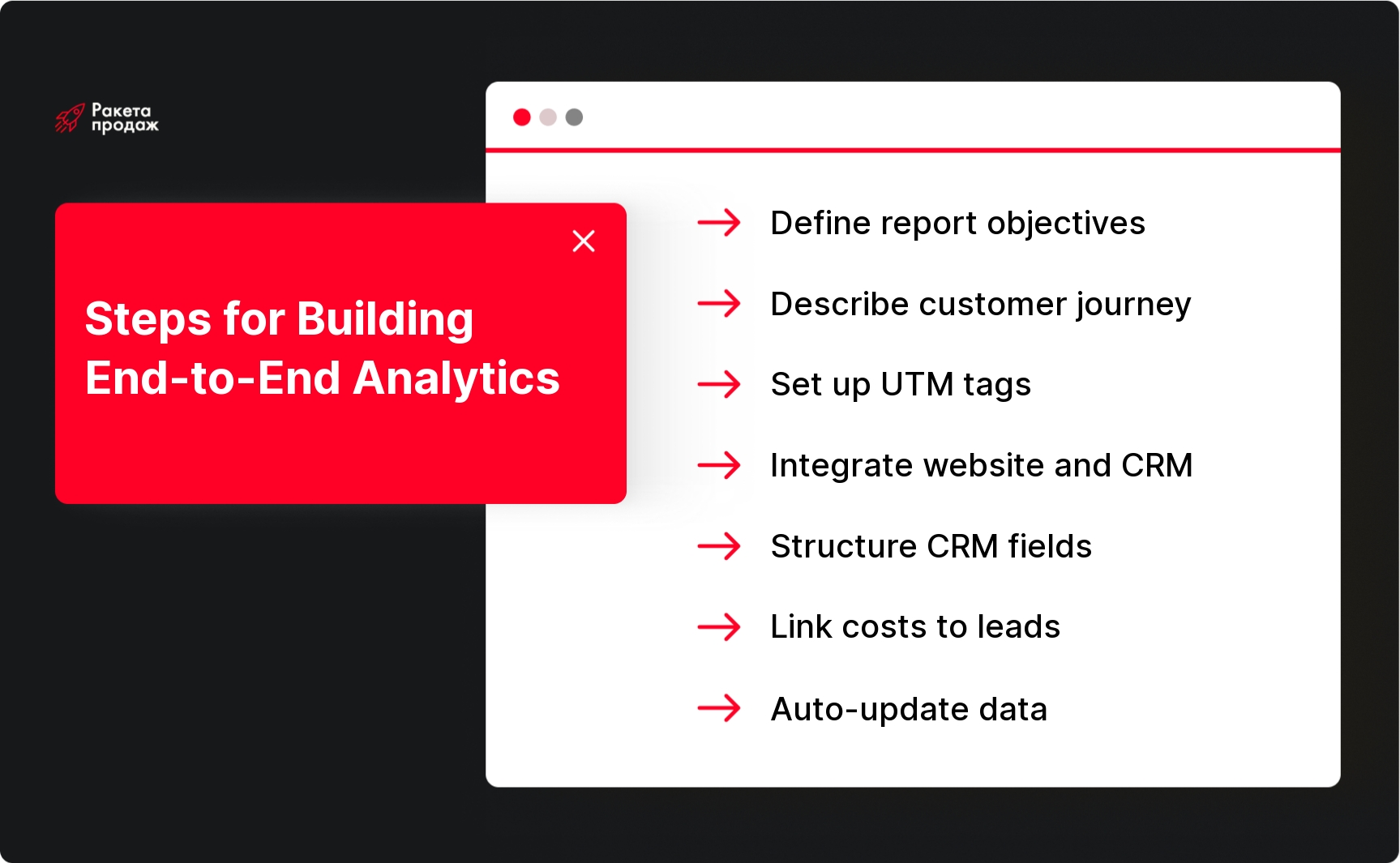
Building end-to-end analytics starts with defining the goals of the report: what exactly you want to measure and what decisions you plan to make based on the data. The next step is to map out the customer journey in detail from first touch to purchase, including every possible touchpoint: ads, website, phone calls, email, messengers, offline meetings.

Set up a unified UTM tagging system for all ad campaigns – this is the foundation for connecting traffic to results. Connect all website forms, phone systems, and messengers to your CRM so every inquiry automatically lands in the system along with source information. Prepare your CRM field structure: source, campaign, UTM tags, deal statuses, amounts, dates, responsible managers.

Set up automatic transfer of ad spend from ad accounts into your analytics system. Ensure a connection between leads and deals through unique identifiers. Add payment or revenue data to calculate ROI. Create a Dashboard Marketing Sales with key metrics and set up automatic data updates.

If your business uses multiple channels – both online and offline – it’s worth considering an omnichannel strategy. This approach helps you account for every touchpoint and improves analytics accuracy.

Verify data accuracy on test campaigns. Introduce clear CRM filling rules and train your team on the new system. Schedule regular report reviews and a process for continuously improving based on the data you collect.

Remember: figuring out how to build end-to-end analytics is a marathon, not a sprint, so it’s important to move step by step and lock in each stage before moving to the next.

What Metrics Should Be in Your Marketing and Sales Report

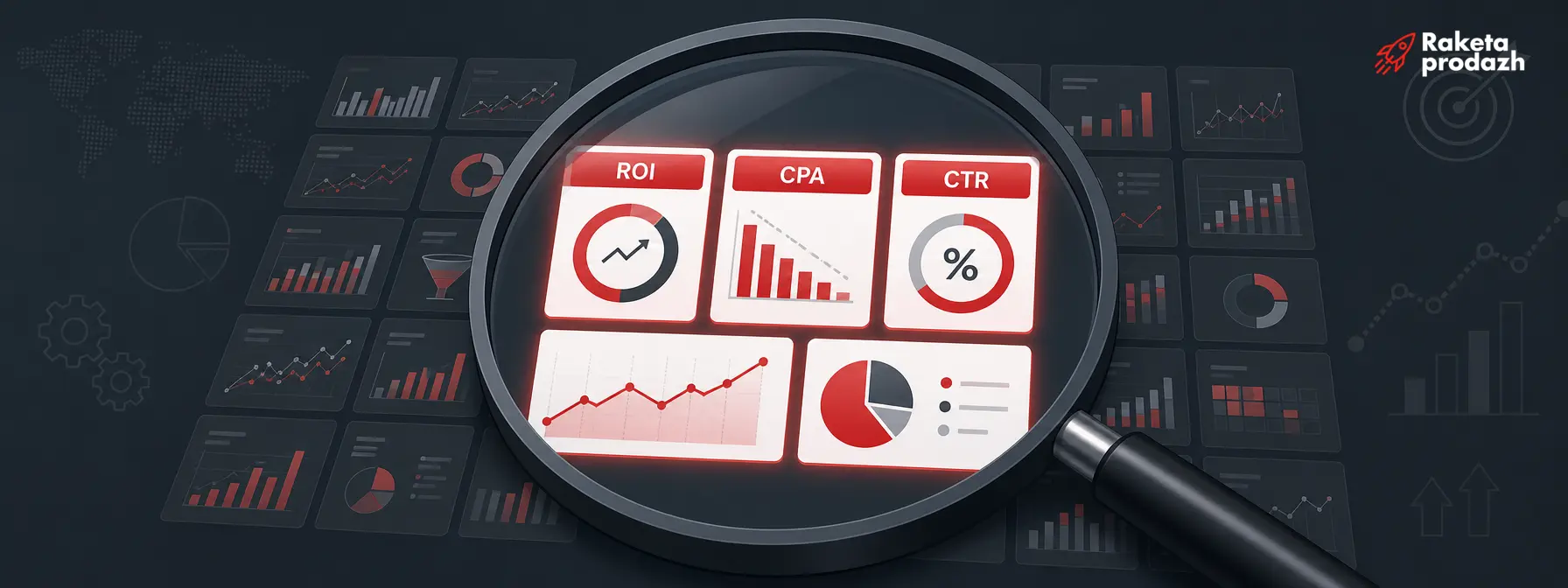
The right set of metrics turns chaotic information into a business management tool. The foundation of the report is ad spend by channel and campaign, impressions and clicks with CTR calculated, number of leads and calls, and cost per lead. These basic indicators give you an understanding of effectiveness at the top of the funnel.

Key sales metrics include the number of qualified leads, meetings held, closed deals, and revenue. ROAS and ROMI show the payback of marketing investment, while conversion rates at each funnel stage reveal bottlenecks in the sales process. Customer acquisition cost (CPO), average order value, and deal cycle length help you plan resources and budgets.

Operational metrics include how quickly managers process leads, customer rejection reasons by category, and individual manager performance broken down by traffic source. These indicators reveal problems in team performance and opportunities to improve processes.

It’s worth remembering: your set of metrics should answer specific management questions and show not just marketing activity, but each channel’s real contribution to profit. Too many metrics are just as harmful as too few – focusing on 10-15 key indicators is more effective than trying to track everything at once.

Regularly review your list of metrics: what mattered during the launch phase may lose relevance as the business scales.

marketing and sales report metrics — Dashboard with key marketing and sales metrics highlighted under a magnifying glass

Common Mistakes When Combining CRM, Marketing, and Sales

The most common mistake is trying to build a report on top of a “dirty” CRM, where data is entered chaotically, deal statuses aren’t standardized, and key information is buried in comments. An analytics system can only connect structured data, so without order in your CRM, end-to-end analytics turns into pretty but useless charts.

Many companies forget to pass UTM tags into the CRM, losing the connection between ad campaigns and results. They fail to account for calls and messenger inquiries, which distorts the picture of channel effectiveness. The sales team doesn’t log rejection reasons, denying marketing the chance to improve lead quality.

Technical mistakes include no connection between ad spend and revenue, a gap between leads and deals in the tracking system, and no rules for lead processing. Traffic sources get entered manually by managers instead of being passed automatically, leading to errors and gaps.

Organizational problems: marketing and sales keep looking at different reports and using different definitions of success, the system is overloaded with metrics but doesn’t answer practical management questions. Most problems don’t come from weak analytics tools – they come from a gap between processes, a lack of unified standards, and insufficient data quality control.

The solution is to start with processes, not technology, and remember that end-to-end analytics only works with a disciplined approach to data at every level of the company.

Building end-to-end analytics isn’t just a technical task – it’s a comprehensive overhaul of how marketing and sales work together. Applying the principles from this article will help you structure your processes, but for a guaranteed result, it’s worth trusting experts who’ve implemented systems like this hundreds of times. Rocket Sales specializes in building turnkey, transparent sales departments: we don’t just set up the technical integration of CRM, analytics, and marketing channels – we also build out processes, train your team, and provide ongoing results monitoring. Our methodology includes a full audit of your current processes, selecting and implementing the right CRM system, setting up automated reporting with KPI dashboards, integrating every communication channel, and establishing unified working standards across all departments. Among our clients are companies that, after implementing end-to-end analytics, increased sales by 15-30% within their first months, secured stable acquisition of major clients, and were able to scale their business with predictable results. Don’t spend months experimenting with an uncertain outcome.

Build a system where every advertising dollar delivers measurable profit!

Conclusion

image

To integrate CRM and Marketing into a single report, you need to systematically combine all your data sources, set up proper UTM tag and lead source tracking, structure information in your CRM, log sales results, and maintain ongoing data quality control. End-to-end sales analytics only becomes truly useful when it helps your team see the real reasons behind growth or losses and make informed decisions – not just when it produces a collection of pretty charts for presentations.

In this article:
See more
Book a FREE sales funnel audit
CONTACT US
FAQ
What should be included in a Consolidated Sales and Marketing Report?

The report should include ad spend, number of leads by channel, conversion rates at each stage of the funnel, revenue and ROI by source, plus operational metrics – lead processing speed and rejection reasons.

Where should you start when building end-to-end analytics?

Start by auditing your current processes and systems, then introduce rules for filling out the CRM correctly, connect UTM tags, integrate phone systems and website forms with the CRM, and only then add your analytics system.

Why might end-to-end sales analytics be inaccurate?

The main causes are incorrect CRM data entry, lost UTM tags during lead transfer, uncounted communication channels (calls, messengers), duplicate customer records in the system, and no connection between leads and deals.

Do calls and messengers need to be tracked in end-to-end analytics?

Yes, absolutely. Calls and messengers need to be tracked in end-to-end analytics because, for many businesses, that’s where most of the customer communication actually happens. If inquiries from phone calls, Telegram, WhatsApp, Viber, or other channels don’t make it into the CRM and don’t get linked to a traffic source, the report shows a distorted picture.

For example, an ad channel might look ineffective based on website leads alone, but might actually be bringing in customers who call directly or message through a messenger app. That’s why every call and conversation needs to be logged in the CRM with its source, responsible manager, lead status, and processing outcome. Only then can you see marketing’s real effectiveness and avoid shutting down a channel that’s actually driving sales.

SUBSCRIBE TO MY TELEGRAM CHANNEL
The most valuable sales information right on your phone!
icon

LOTS OF USEFUL INFORMATION, FREE TEMPLATES, AND CHECKLISTS ON MY INSTAGRAM

Materials and practical advice on sales growth in our blog: