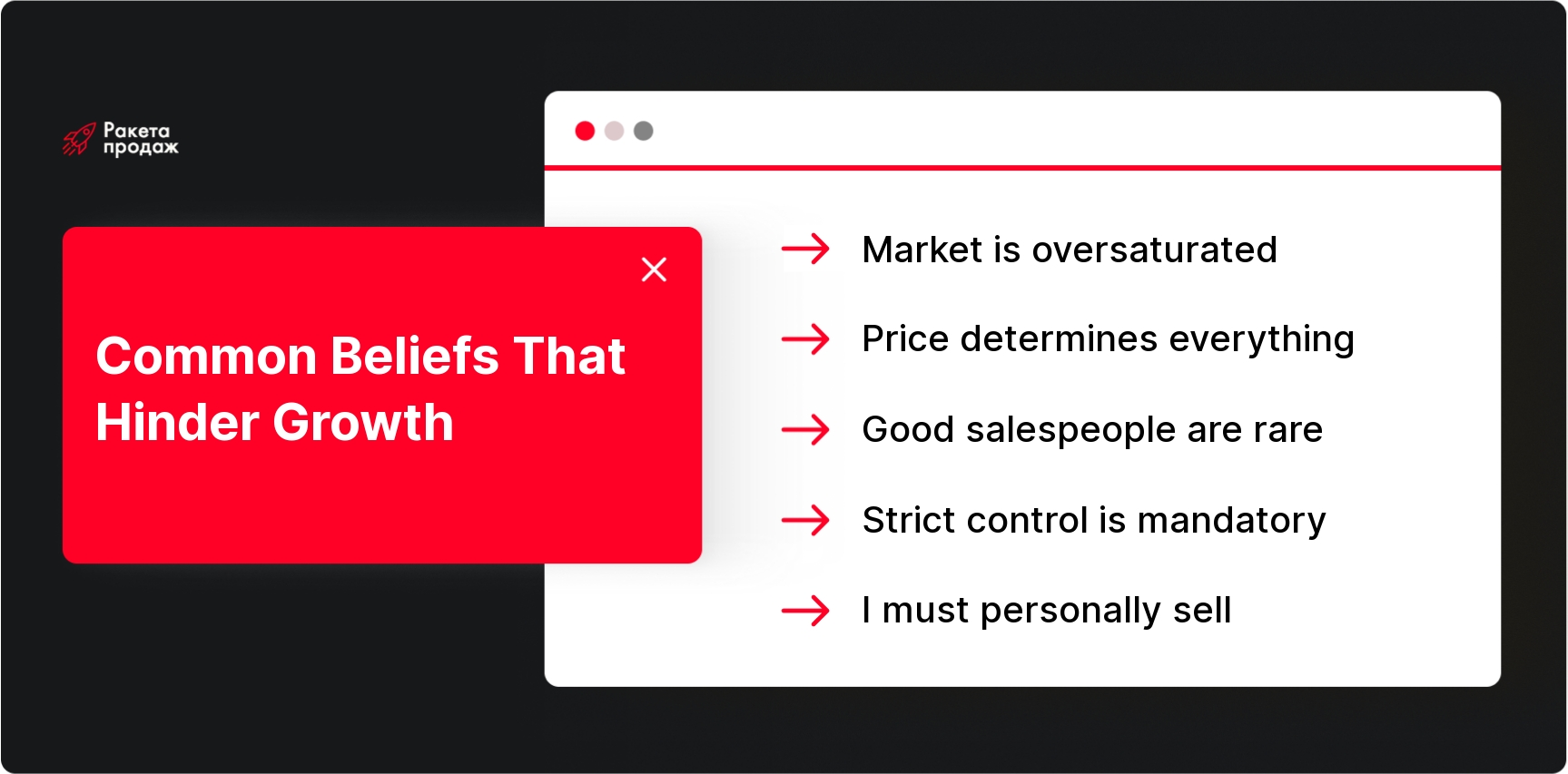
The transformation of a leader’s mindset is not just a personal journey but an organizational process. The corporate environment can either facilitate overcoming limiting beliefs or reinforce them, making individual changes practically impossible.
In companies with toxic cultures, where an atmosphere of constant pressure, accusations, and blame-finding reigns, even the most motivated sales manager will be forced to return to defensive mindsets. Fear of mistakes and punishment blocks any attempts to experiment or recognize one’s own limitations. In such an environment, employees learn to “keep their heads down,” and leaders to control every step of subordinates.
In contrast, organizations with cultures of openness and psychological safety create conditions where a leader can safely explore their beliefs, admit mistakes, and test new approaches. Key elements of such a supportive environment include:
First, a culture oriented toward learning, not just results. In such companies, not only “what” is achieved is valued, but also “how” and “what we learned.” Sales managers get space for pilot projects and limited experiments, the results of which are analyzed without blame for failure.
Second, the practice of regular constructive feedback at all levels. The sales manager receives balanced feedback from upper management, focusing not only on numbers but also on processes, approaches, team development. This helps see blind spots in their own thinking and management approaches.
Third, investment in leader development. A company serious about transforming leadership thinking allocates resources for their training, coaching, participation in professional communities. This signals that leader development is a strategic priority, not just a fashionable trend.
Fourth, alignment of values and actions at all organizational levels. If a company declares the value of innovation and development but punishes any deviations from the plan, the sales manager develops a duality: officially they need to talk about development, but in reality – avoid any risks.
Success stories show that changes are most effective when supported at the organization-wide level. In one manufacturing company, the process of overcoming sales leaders’ limiting beliefs began with a series of strategic sessions for the entire management team. These sessions openly discussed past failures and mistakes, analyzed beliefs that led to them, and formulated new working principles. The CEO first shared their limiting mindsets, creating a psychologically safe space for others.
Another company implemented regular “belief reviews” alongside results reviews. Each quarter, managers not only reported on achieved KPIs but also shared what limiting beliefs they discovered in themselves, how they worked with them, and what results this brought. Such an approach integrated mindset work into the regular management cycle.
HR also plays an important role, creating tools for leadership mindset diagnostics, organizing development programs, and providing methodological support for the change process. In some companies, internal coaches or mentors specifically work with leaders, helping them recognize and overcome limiting beliefs.
Experience shows: the more systemic and consistent organizational support is, the higher the probability of sustainable changes in leadership thinking and, consequently, in their teams’ results.


 Time to read: 8 min.
 04 May 2026