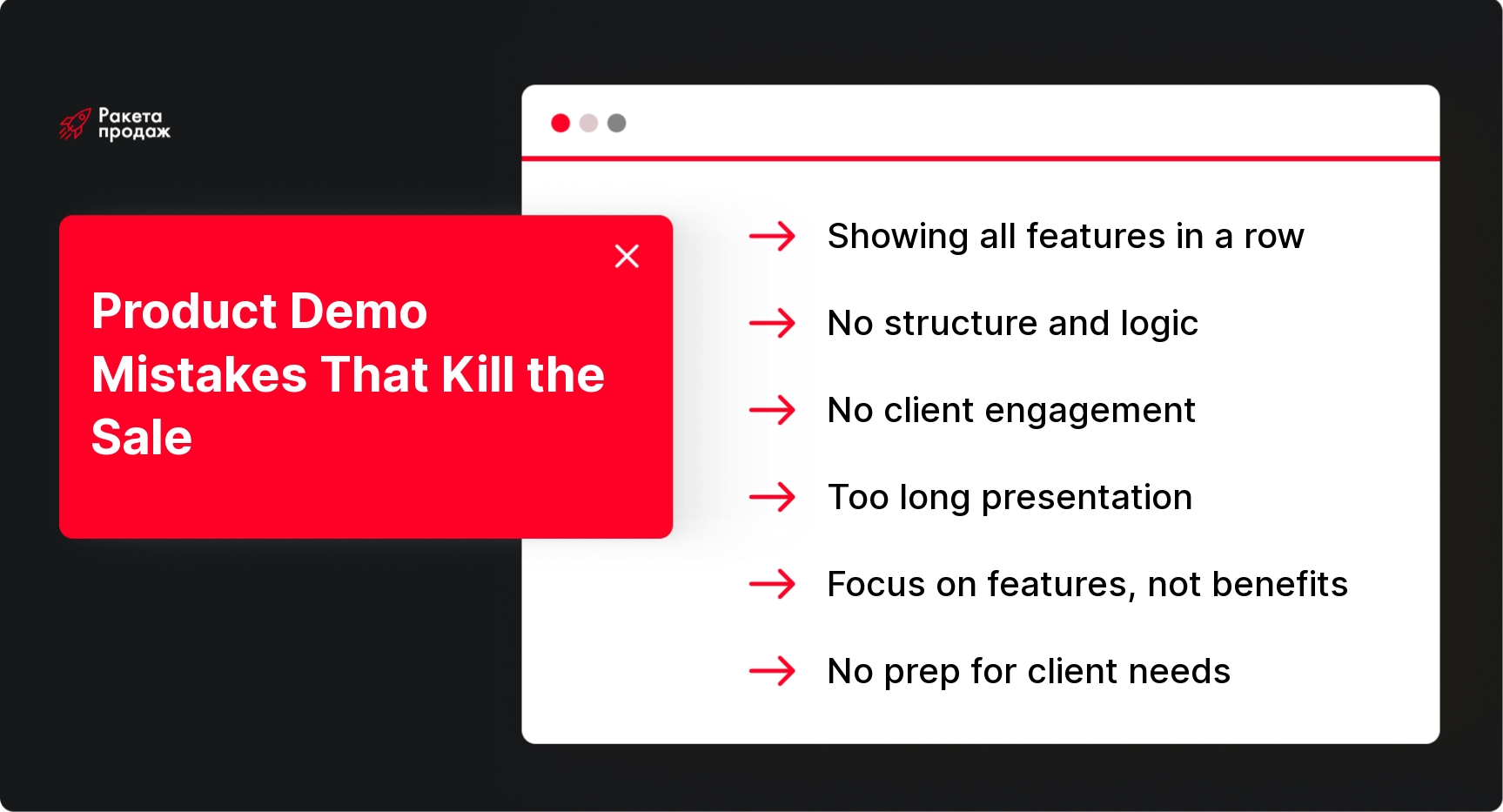
Product demonstration in sales is not just showing features, but a strategic tool that should bring you closer to closing the deal. To turn a demonstration into an effective sales tool, you need to properly manage the demo stage, as it’s at this stage that the client decides to move forward or end the dialogue. To turn a demonstration into an effective sales tool, you need to properly manage the demo stage and focus on value, not characteristics.
The key principle of selling through demonstration is identifying and emphasizing those aspects of the product that solve the client’s specific pain points. Before each demonstration, ask yourself: “What 3 client problems does my product solve best?” These are the aspects you should concentrate on.
During the demonstration, constantly translate technical characteristics into the language of business benefits, using the formula “This means that…” For example: “Our system uses cloud data storage with triple redundancy. This means that you will never lose critical information even in the case of serious technical failures, which will protect you from downtime and associated financial losses.”
An effective technique is the “before and after” approach. Vividly portray the client’s current situation with all problems and limitations (“before”), and then contrastingly present how their business will look after implementing your solution (“after”). The more clearly the client sees this contrast, the stronger their motivation to buy will be.
The product presentation scenario should include “trial closes” – moments where you check the client’s readiness to move forward. After demonstrating a key feature, ask: “How important is this capability for you?” or “If you could implement this solution tomorrow, what impact would it have on your business process?” The client’s answers will give you an understanding of their interest and readiness to purchase.
A crucial component of successful selling through demonstration is handling objections directly in the showing process. How to conduct a product demonstration to a client when they express doubt or objection – don’t postpone the answer until the end of the presentation. Address it immediately, showing how your product solves the voiced problem: “That’s an excellent question. Let me show you how our system handles this exact task…”
Also, don’t forget the importance of follow-up after presentation – a timely sent meeting summary and specific next action significantly increase deal conversion.
At the end of the demonstration, always propose a clear next step. Avoid vague formulations like “Let’s stay in touch.” Instead, offer a concrete action: “Based on what we’ve discussed, I suggest launching a 2-week pilot project with your marketing department. We can start implementation as early as next Monday. How does this plan sound to you?”
It’s important to remember that selling through demonstration is not a one-time event, but part of a broader process. Even if the client isn’t ready to make a decision immediately after the demonstration, a properly conducted product showing strengthens relationships and creates a foundation for further negotiations.


 Time to read: 10 min.
 22 April 2026