Improving personnel motivation should be a constant management process, not a one-time project. Regular improvement of the personnel motivation system allows timely adaptation of the reward system to changes in the market, company strategy, and employee expectations, maintaining a high level of sales team engagement.
Motivation audits are not a one-time event but a regular process that should become part of the company’s management cycle. The market changes, the company grows, new employees come with different expectations – all this requires constant adaptation of the motivation system.
Effective improvement of personnel motivation requires regular analysis of business results, feedback from employees, and KPI adjustments. This approach allows maintaining a balance between company and employee interests, ensuring sustainable sales growth and increased department efficiency.
An effective approach to improving the personnel motivation system involves a cyclical process: analysis → adjustment → testing → implementation. After conducting an audit and identifying problems, the team develops changes to the motivation system, which are then tested on a small group or for a limited period. Based on test results, final adjustments are made, and the updated system is fully implemented.
An important element of continuously improving the personnel motivation system is collecting feedback from sales managers. Regular surveys, informal conversations, and discussions at team meetings help keep a finger on the pulse and notice early signs that the system is ceasing to work effectively.
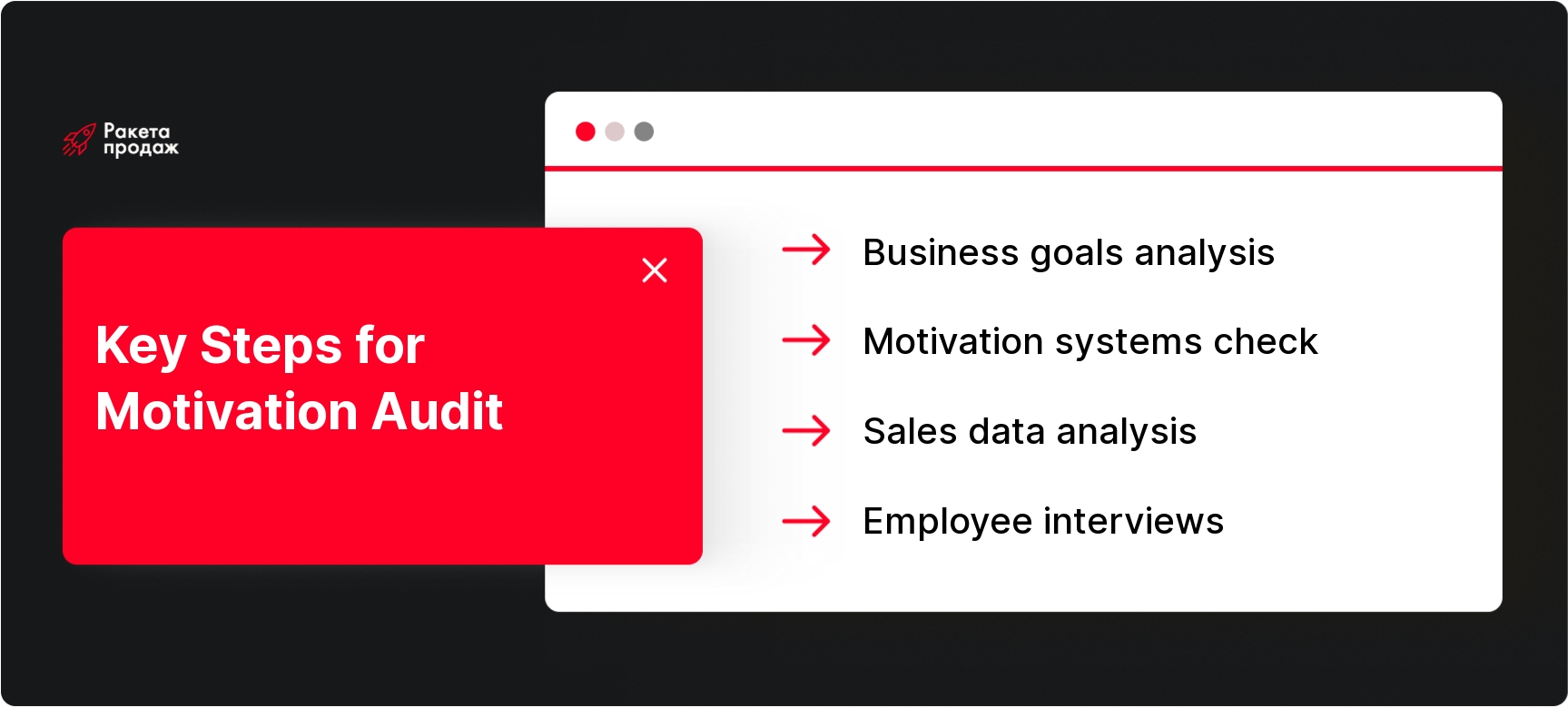
It’s also useful to implement a practice of quarterly or semi-annual mini-audits, analyzing key metrics: plan fulfillment, distribution of sales among managers, employee turnover, satisfaction survey results. This will allow identifying problems at early stages when they can still be solved with minimal costs and losses.
For a comprehensive evaluation of the motivation system’s effectiveness, both quantitative and qualitative indicators should be used. The first includes business metrics (revenue, profit, conversion), the second – level of engagement, employee satisfaction, quality of customer work. Only such a comprehensive approach will provide a complete picture of how well the system works.
It’s equally important to regularly analyze market trends and competitor practices. What do other companies offer their salespeople? What innovative approaches to motivation have appeared in the market? This will help remain a competitive employer and attract the best talent to the sales department.
For organizations that want to systematically approach development and performance improvement issues, sales department motivation is extremely important, and for creating a long-term sustainable structure – focus on an effective motivation system.
Changing motivation in the sales department is a process that requires not only technical adjustments but also the right communication strategy. Any changes can cause resistance, so it’s important to know how to properly explain to the team the need for changes, their advantages, and how to sell changes in the motivation system to employees themselves so they become allies, not opponents.


 Time to read: 11 min.
 18 March 2026