It’s impossible to effectively manage what can’t be measured. Therefore, sales manager onboarding should be digitized—it’s necessary to determine specific KPIs that will show how successfully the process of assuming the position is going.
Success metrics can be divided into quantitative and qualitative. Quantitative metrics are easily measurable and usually include: number of calls made, number of appointments scheduled, number of commercial proposals sent, number of deals closed, total sales amount, conversion at different stages of the sales funnel.
It’s important that the plan for these metrics is progressive—that is, gradually increasing throughout the probation period. For example, in the first month, the manager is expected to make 20 calls per day and close 2 deals for the month; in the second month, 30 calls and 5 deals; in the third month, 40 calls and 8 deals. This allows the newcomer to gradually build up the pace without feeling overwhelmed from the very beginning.
Qualitative metrics evaluate the employee’s level of knowledge and skills. These may include: product knowledge (testing), CRM filling quality (completeness and accuracy of data), adherence to scripts and standards (call evaluation), ability to handle objections (evaluation of role-playing games), communication skills (client feedback).
For objective evaluation of qualitative metrics, intermediate attestations are usually used—for example, weekly product tests, regular call listening with checklist evaluation, role-playing games with a mentor or manager.
Some companies use a “traffic light” system for visual demonstration of progress. Each metric can be in the red zone (significantly below plan), yellow zone (slightly below plan), or green zone (meets or exceeds plan). This allows quickly visually assessing where the employee has problems and what to focus on.
If you’re looking for an optimal approach to forming and objectively evaluating performance criteria, pay attention to the article on manager evaluation criteria, which provides specific examples and modern methods.
It’s important that all metrics are known to the employee in advance and regularly discussed with them. Weekly meetings with the manager to discuss progress on KPIs is an excellent practice that helps maintain focus on the right indicators and timely adjust actions.
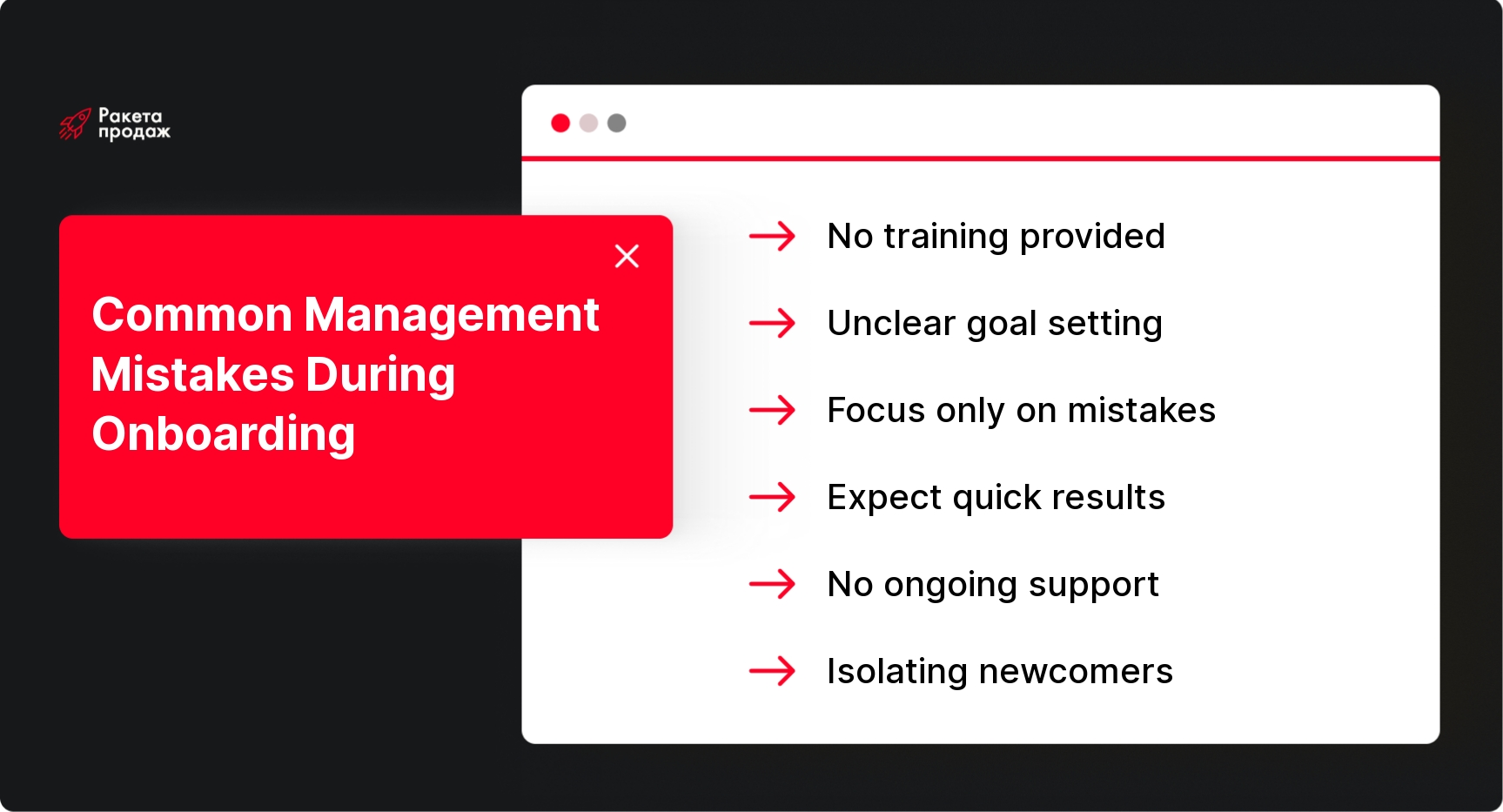
The final attestation based on the probation period results should consider the dynamics of indicators, not just the end result. If the manager demonstrates stable growth, even if they haven’t yet reached 100% of the plan, this can be a good sign—they’re on the right track. On the other hand, if indicators fluctuate or gradually decrease, this is cause for a serious conversation. But even with a metrics system in place, managers often make typical mistakes that hinder successful onboarding.


 Time to read: 9 min.
 03 December 2025