Proper interpretation of a candidate’s answers is no less important than formulating questions. A professional recruiter or manager should be able to see real competencies and experience behind the words.
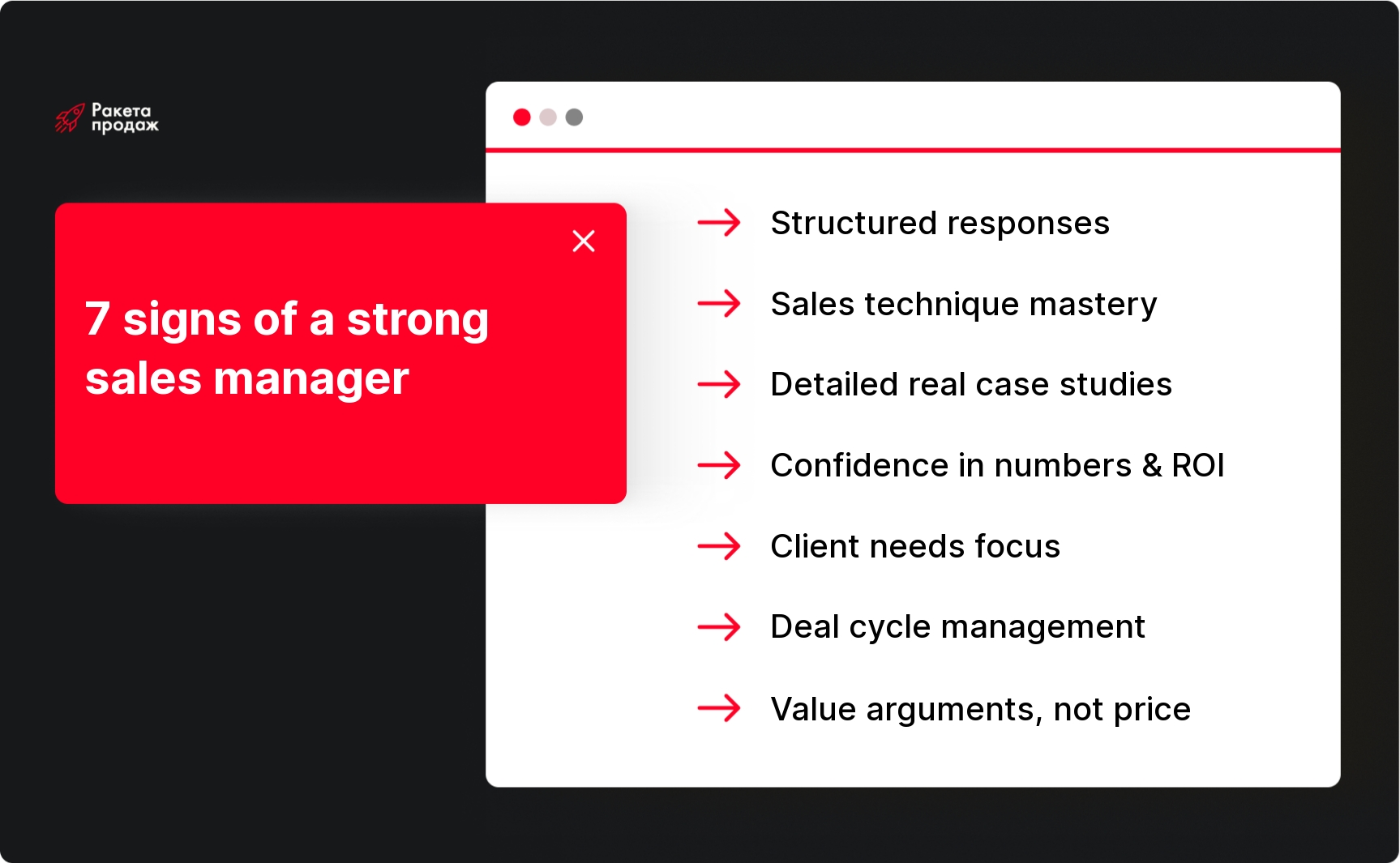
Strong sales skills usually manifest in several key characteristics of answers. First, specificity: an experienced manager talks about real situations, names numbers, dates, company names (even if they don’t fully disclose them for confidentiality reasons). Second, structure: a strong candidate presents thoughts sequentially, highlights causes and effects, shows the logic of their actions.
Another sign of a strong salesperson is results orientation. In their stories, the emphasis is not on the process (“I called, met, presented”), but on the achieved results (“increased average check by 30%”, “reduced deal cycle from 3 months to 1.5”). Additionally, a professional manager speaks the language of the client’s business, not the language of their product’s characteristics.
Warning formulations that indicate a lack of experience include excessive use of professional jargon without understanding its essence, vague generalizations (“always”, “never”), shifting responsibility to external factors, and excessive focusing on process rather than results.
When interpreting answers, it’s important to correlate what is said with real KPIs. For example, if a candidate claims they “excellently work with key clients,” ask about specific indicators: what was the average check, what was the client retention rate, how many additional sales did they make to existing clients.
Remember that real experience is always more valuable than hypothetical reasoning. If a candidate answers situational questions theoretically (“I would do this”), clarify: “Can you give an example of when you actually faced such a situation? What specifically did you do?” This will help distinguish theoretical knowledge from practical skills.
Finally, pay attention not only to the content of the answers, but also to how the candidate presents them: whether they speak confidently, how they react to clarifying questions, whether they acknowledge their mistakes, whether they know how to listen. These behavioral aspects can also tell a lot about their skills in communicating with clients.


 Time to read: 12 min.
 26 November 2025