Key Takeaways
- Launching an SDR team only makes sense when you have a working foundation: a clear product, a well-defined ICP, a refined sales process, and a CRM system – otherwise SDR will simply scale the chaos.
- SDRs are responsible for prospecting, first touch, and qualification, while sales takes the meeting and drives it to close. Without clear qualified lead criteria and handoff rules, the teams end up working in different paradigms, and the pipeline falls apart.
- The first 90 days are split into three phases: 30 days for building the foundation and setting up processes, 30 days for testing hypotheses and segments, and 30 days for stabilization and initial data-driven improvements.
- Weak SDR teams chase activity volume, while strong ones focus on balancing three groups of KPIs: activity, quality (reply rate, ICP fit), and results (meetings, qualified opportunities, conversion to deals).
- The SDR function can only be scaled after 2-3 months of stable results, clear benchmarks, and a smooth lead handoff to sales – rushing this process kills the quality of the processes.
In the article below, you’ll find a detailed roadmap for building an SDR team from scratch: from choosing the right structure and setting up your CRM to concrete steps for the first 90 days and the criteria for readiness to scale 👇
If you’re figuring out how to create an SDR team from scratch and turn lead generation into a manageable process, you shouldn’t start by hiring people. First, you need to define your ICP, set up your CRM, write out qualification criteria, and clearly split responsibilities between SDR and sales teams.
Only after that can you move on to forming an SDR team, launching your first outreach campaigns, and testing hypotheses.
SDR (Sales Development Representative) refers to specialists who take on the entire top of the sales funnel. They find potential clients, make the first touch, qualify leads, and hand off ready-to-go meetings to sales managers. This division of labor lets managers focus on what they do best – running meetings, negotiating, and closing contracts. Meanwhile, the SDR team ensures a steady flow of quality opportunities.
Does it sound familiar when your sales managers are simultaneously prospecting for clients, processing leads, and negotiating deals, yet constantly complain they don’t have enough time to close? The problem is that 78% of companies try building an SDR team intuitively, without a systematic approach, which leads to chaos instead of results. At “Rocket Sales,” over 8+ years of work, we’ve developed a comprehensive methodology for building effective SDR teams and lead generation departments. Our experts conduct a full audit of your sales funnel, design optimal lead qualification processes, configure your CRM for SDR-specific workflows, and train your team according to international standards (BANT, MEDDIC, SPIN). We don’t just give recommendations – we build a working system with clear processes, scripts, and KPIs that ensures a predictable flow of quality meetings for your sales team. As a result of implementation, our clients see steady conversion growth of 5-86% and an average revenue increase of +35%.
Turn lead generation chaos into a systematic sales machine - get a free audit of your funnel's effectiveness!
When a Company Should Launch an SDR Team
Building an SDR team isn’t a universal fix for all sales problems. Implementing this function only makes sense once you already have a working foundation: a clear product, a well-defined ICP, a refined sales process, and a CRM system. If these elements are missing, SDR will simply scale your chaos.
Implementation of SDR should only begin after basic sales processes are in place. If a company hasn’t defined its ICP, described qualification criteria, or set up its CRM, this new function won’t fix problems – it will just scale existing mistakes.
Here are the key signs that a company is ready to launch an SDR team: sales can’t keep up with processing all inbound leads, outbound activities are irregular, there’s a clear understanding of target segments for prospecting, managers complain about low-quality leads, and leadership wants to systematically scale lead generation. Another important signal is when your best salespeople spend more than 30% of their time on prospecting and initial qualification instead of selling.
However, remember: without a clear value proposition, a well-defined ICP, and solid lead handoff processes, an SDR team will become an expensive experiment that brings more problems than benefits. First, get your fundamentals in order, then think about how to organize an SDR team for effective sales growth.
What Tasks the SDR Department Should Cover
The SDR department isn’t just a group of people making calls all day. It’s a team responsible for the quality and volume of the top of your sales funnel. Creating this department means building a systematic approach to lead generation for the entire company.
The SDR department isn’t only responsible for finding potential clients, but also for creating a predictable flow of qualified leads for the sales department. That’s exactly why it’s important to define processes, KPIs, and lead handoff rules in advance, so the team works as a unified system.
The core tasks of SDR include finding target companies based on set criteria, identifying decision-makers (DMs) and influencers, and building quality contact databases. Additionally, SDRs process inbound leads from marketing, run outbound campaigns across various channels (email, LinkedIn, calls), conduct initial qualification of potential clients, and schedule meetings for the sales team.
They also handle follow-ups with those not yet ready to buy, maintain the CRM database, and gather feedback from sales on lead quality. An important part of SDR work is continuously testing new segments and messaging, analyzing results, and adjusting approaches. They need to understand which companies respond best, which messages work more effectively, and which channels deliver more quality meetings.
Essentially, a well-organized SDR team becomes your company’s research center for market and customer insights. The key thing to understand: SDRs aren’t accountable for activity volume, but for the quality of the pipeline they build for the sales team.
SDR Team Structure: What Roles Are Needed
At the start, many companies hire one universal SDR who handles research, outreach, and qualification all at once. This is normal for initial experiments, but as the team grows, it’s worth splitting these functions to boost efficiency.
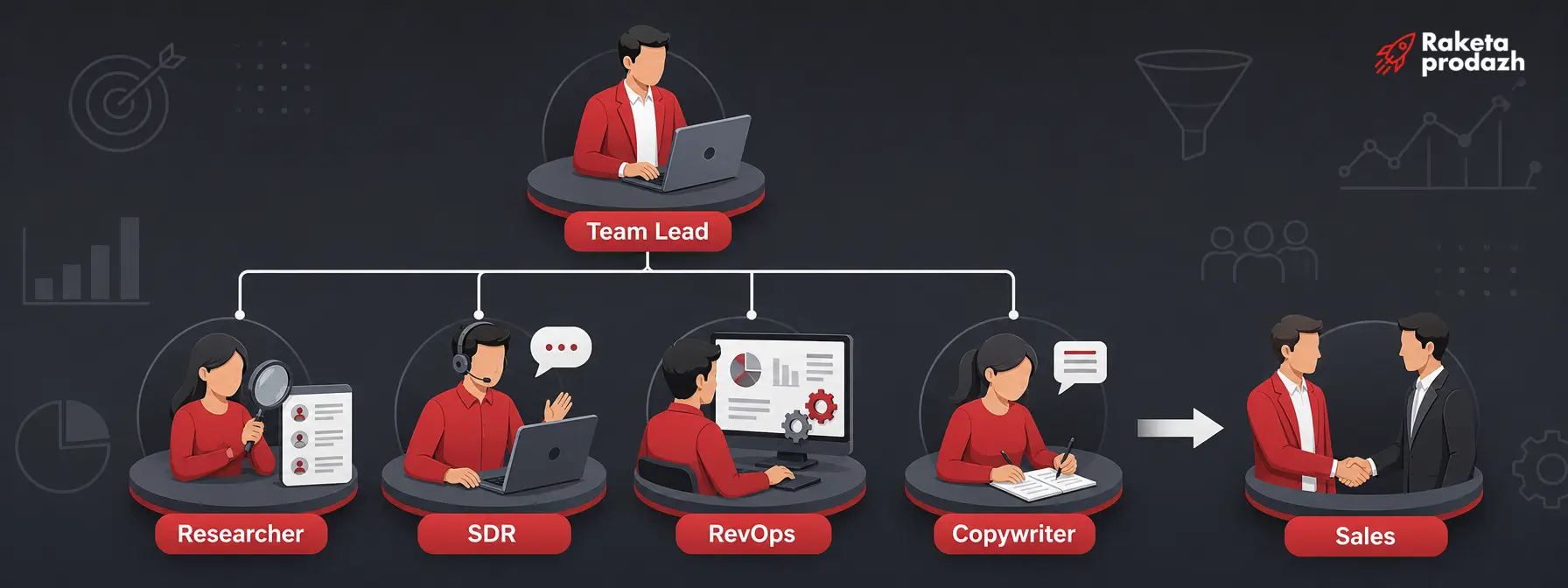
A mature SDR team usually has several key roles. The SDR or Lead Generation Specialist handles prospecting and lead processing, manages communications, and qualifies opportunities. The Researcher focuses on gathering companies and contacts, building databases, and analyzing target accounts. The SDR Team Lead manages the team’s processes, tracks KPIs, and trains specialists.
Sales Ops or RevOps is responsible for the CRM, setting up automation, and preparing reports. A copywriter or marketer helps develop messaging, outreach content, and offers. And, of course, you need account executives or sales managers who will take qualified meetings from SDRs.
The structure of the SDR team directly depends on company size, the channels used, lead volume, and product complexity. For simpler solutions, 2-3 universal SDRs might be enough, while complex enterprise products require deeper role specialization. This flexible structure of the SDR command allows companies to adapt as their sales processes mature. When planning how to build a sales development department, it’s important to consider the specifics of your industry and target audience.
How to Divide Responsibility Between SDR and Sales
Clearly defining zones of responsibility between SDR and sales is the foundation of a successful sales system. Without clear boundaries, conflicts, lost leads, and mutual complaints about work quality are inevitable.
SDR is responsible for prospecting potential clients, making the first touch through chosen channels, qualifying based on basic criteria, scheduling meetings, and handing off full context to the sales team. Their zone of responsibility ends the moment a qualified lead is passed to a sales manager with complete information about the company, the contact person, and identified needs.
The sales team takes over from the first meeting onward: conducting discovery, presenting the solution, preparing proposals, negotiating terms, finalizing contract details, and closing the deal. They’re also responsible for post-purchase customer development and upsell/cross-sell activities.
It’s critically important to document: qualified lead criteria, lead handoff rules, the SLA for sales accepting a meeting, and the feedback process on lead quality. Sales should provide clear feedback – why a lead was accepted or rejected – so SDRs can adjust their work accordingly. Without these agreements, teams will operate under different paradigms, and the effectiveness of the entire system will suffer.
SDR Processes: What the Work System Should Consist Of
An effective SDR team doesn’t operate on gut feeling – it follows clearly defined processes. Every stage, from finding a lead to handing it off to sales, should be standardized and measurable. Proper SDR processes are the foundation of a predictable lead generation department.
The process starts with selecting an ICP and segments to work with, followed by gathering target companies based on set criteria. Then SDRs find decision-maker contacts at these companies and verify the data to avoid bounced emails and disconnected phone numbers. The next step is preparing personalized messages and setting up a touchpoint sequence.
When a contact shows interest, the SDR conducts initial qualification, schedules a meeting, and hands off the lead to the sales team with full context. For those not yet ready, a follow-up process kicks in, or they’re moved into a nurture database. Leads that don’t fit the criteria are disqualified, with reasons documented.
All actions are logged in the CRM, and the team regularly analyzes results and adjusts approaches. It’s important that every SDR follows the same standards – this ensures predictable results and the ability to replicate successful practices.
Without documented processes, the team will operate chaotically, and you won’t be able to identify what’s actually driving results versus what needs improvement.
Which Channels to Use for an SDR Team
A successful SDR team rarely relies on just one communication channel. In modern B2B, a multi-channel strategy that combines different touchpoints for maximum reach and engagement is the most effective.
Core channels include email outreach, LinkedIn communications, cold calls, and handling feedback forms and inbound requests. SDRs can also work with ABM lists, use events for networking, partner intros, and webinar or demo invitations. Content leads from marketing also require prompt handling by the SDR team.
The best-performing sequence of touchpoints is: researching the account and persona, connecting on LinkedIn with a personalized message, sending an email with a value proposition, following up a few days later, calling for direct contact, and, if needed, sending relevant content or an event invitation.
Channel selection should be based not on team convenience, but on the behavior and preferences of your target audience. C-level executives at large companies may respond better to calls, while IT directors are often more active on LinkedIn, and CFOs prefer emails with concrete numbers and case studies.
How to Define ICP and Qualification Criteria for SDR
An SDR team can’t work effectively by targeting “any and every company.” They need a clear ideal customer profile (ICP) to help them focus on the right accounts and avoid wasting time on companies that aren’t a fit.
An ICP description should include specific parameters: industry or a few key industries, company size (revenue, headcount), geographic presence, and the DM’s role. It’s also important to specify potential deal size, specific business problems your product solves, the company’s tech stack, and process maturity level.
It’s equally important to describe signs of a poor-fit client – this helps SDRs quickly disqualify weak leads and avoid wasting time. For example, if your solution isn’t suitable for startups or companies in a certain industry, this should be clearly documented.
Qualification criteria help SDRs determine whether a lead is worth passing to the sales team. Key questions include: does the company fit the ICP, do they have a relevant need, is the contact person a decision-maker or someone who can influence the decision, does the client show interest in the solution, what are their timeline and budget, and what should the next step be.
Without a clear ICP and qualification criteria, SDRs will pass along many irrelevant leads to sales, which will erode trust between the teams and reduce the overall effectiveness of the sales system.
How to Build an SDR Process in Your CRM
The CRM should become the operational hub of your SDR team, where all information about leads, accounts, and activities is recorded. CRM implementation is critical for controlling processes and analyzing results.
In the CRM, you need to create lead statuses that reflect the entire journey from initial contact to sales handoff. Every lead should have a source, segment, assigned SDR, qualification stage, and dates of all touchpoints. Call, email, and meeting outcomes should be logged along with the next steps.
It’s important to set up fields for recording disqualification reasons, information about scheduled meetings, and feedback from the sales team on lead quality. The system should show how many leads each SDR is currently working, where leads might be “stuck,” and who hasn’t received a timely follow-up.
The CRM should also support analytics: which segments generate more meetings, which SDRs show better conversion rates, which lead sources are most effective. This data helps not only monitor the team, but also continuously improve processes.
Setting up your CRM correctly from the start saves a ton of time and hassle later, as the team grows and data volume increases.
SDR Team KPIs: What to Measure at the Start
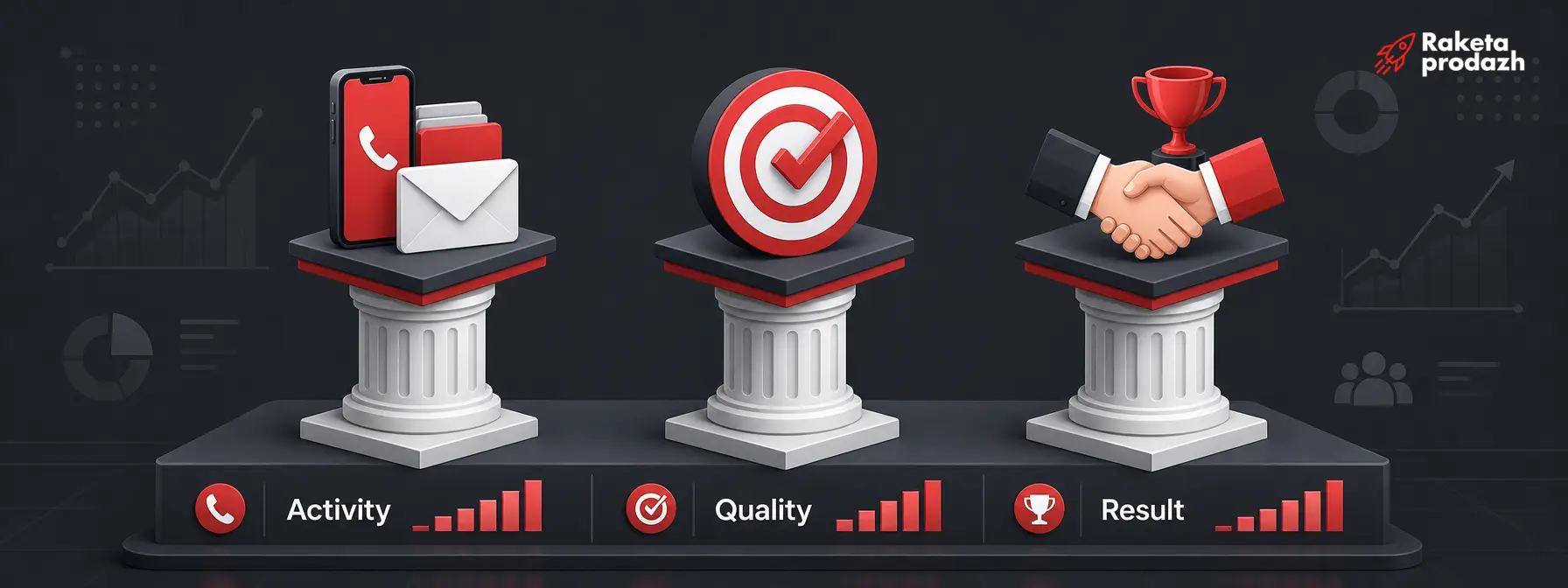
SDR team KPIs should be split into three groups: activity, quality, and results. This approach helps identify exactly where problems arise and adjust the team’s work in a timely manner.
Activity metrics include the number of companies found, valid contacts, messages sent, calls made, and follow-up activities. These indicators show how intensively the team is working, but on their own they don’t guarantee results.
Quality indicators include the ICP fit of found companies, reply rate and positive reply rate across email campaigns, the share of leads accepted by sales, CRM data completeness, and disqualification reason analysis. These metrics show how skillfully the team engages with the target audience.
Results-based KPIs include the number of scheduled meetings, show rate (how many clients actually attended), qualified opportunities in the CRM, pipeline volume generated, and conversion into actual deals.
It’s critically important not to evaluate SDRs solely based on activity volume or meeting count. If meetings turn out irrelevant and sales doesn’t accept them, the team is creating noise instead of pipeline. A balance of all three metric groups gives a full picture of SDR function effectiveness.
What Reports Does an SDR Team Leader Need
Running an SDR command effectively depends on quality reporting: an SDR team leader needs reports that help not just to monitor employees, but to continuously improve processes and overall lead generation system results.
Core reports include each SDR’s activity (calls, emails, meetings), results by segment (which industries or company sizes respond best), channel effectiveness (email vs. LinkedIn vs. calls), reply rate and show rate across all campaigns. You’ll also need reports on scheduled meetings, the share of leads accepted by sales, disqualification reasons, and conversion into opportunities.
Reports on CRM data quality are also important – how thoroughly lead cards are filled out, whether activity logging standards are being followed, and whether statuses are updated in a timely manner. And of course, you need pipeline analytics generated by the SDR team: volume, average deal size, conversion into closed contracts.
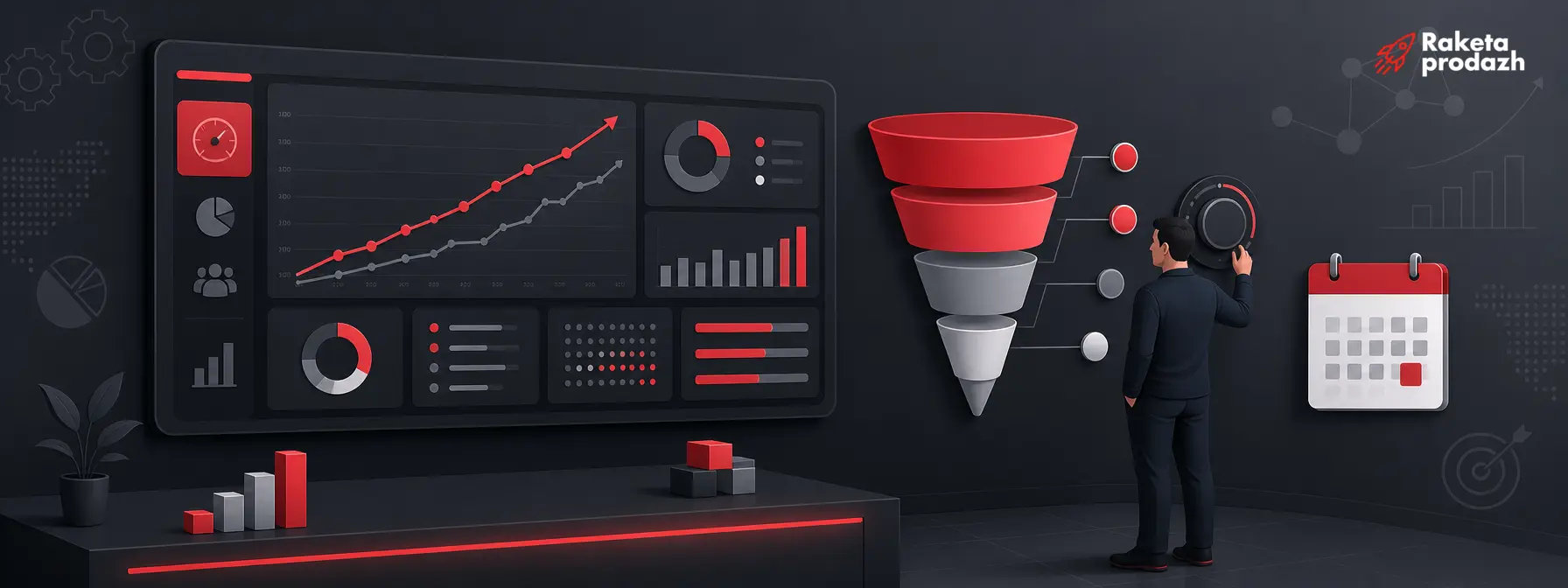
Monitoring sales KPIs and metrics allows you to quickly identify problems and adjust approaches at different stages. Weekly reports help quickly spot issues and adjust course. Monthly reports help analyze trends and plan SDR team development. Quarterly reports help assess overall SDR function effectiveness and make strategic decisions about scaling.
Proper reporting turns an SDR team from a “black box” into a transparent, manageable lead generation system.
The First 30 Days: Building the SDR Team's Foundation
If you’re wondering how to implement SDR, you shouldn’t start by hiring people – start by building the infrastructure: describing your ICP, setting up your CRM, developing qualification processes, and agreeing on the interaction between SDR and sales. Only after that can you launch your first campaigns.
The first month of an SDR team’s work is about building a foundation, not racing to rack up meetings. The main goal of this period is to set up all the systems and processes so the team can then work effectively and scale.
In the first 30 days, you need to clearly define the SDR team’s goals, describe the ICP in detail with specific criteria, choose priority segments to work on, and prepare compelling offers for each segment. It’s important to set up statuses and fields in the CRM, define qualified lead criteria, and align on them with the sales team.
You also need to prepare call scripts and email templates, define the main communication channels, train the first SDRs, and gather starting databases to work from. It’s critically important to align lead handoff rules, the SLA for accepting meetings, and the feedback process with the sales team.
During this period, you shouldn’t push for high activity volumes or meeting counts. It’s better to focus on process quality, team training, and setting up all systems. Effective onboarding of new SDRs is especially important for getting them up to speed quickly. Time spent building the foundation pays off many times over in the following months of work.
Days 31-60: Launching Outreach and Testing Hypotheses
The second month is when the first real campaigns launch and all the hypotheses laid out in the first month get tested. The team starts actively testing segments, messaging, channels, and qualification criteria.
During this period, it’s important to track open rate and reply rate for email campaigns, the number of positive replies, call effectiveness, the number of scheduled meetings, and, most importantly, lead quality according to the sales team’s assessment. Don’t jump to conclusions based on meeting count alone – it’s important to understand the bigger picture.
The team should analyze which audiences respond best, what objections clients raise most often, which messages generate more interest, and which leads are genuinely a good fit for sales to continue working. All of these insights should be recorded and used to adjust approaches.
The second month is a time of active team learning through real cases. Every client interaction provides valuable information for improving scripts, personalization, and market understanding. The key is not to panic over low numbers and to keep methodically gathering data for optimization.
Days 61-90: Stabilizing the Process and First Improvements
The third month is the transition from testing to stable work, with the first significant process improvements based on collected data.
By this point, the team already understands which segments perform best, which messages get the strongest response, and which channels are most effective. You need to refine the ICP description, remove weak segments from your workflow, and improve scripts and templates based on real client conversations.
It’s important to standardize all processes in the CRM, set up automatic generation of regular reports, provide additional SDR training on identified weak spots, and improve the handoff process to sales. If results allow, you can start planning to expand the team or add new channels.
By the end of the 90 days, the company should have its first working benchmarks: the average number of touchpoints needed to schedule a meeting, which segments deliver the best conversion, what percentage of meetings sales accepts, and how much pipeline a single SDR can generate.
This data becomes the foundation for further scaling and planning the development of the SDR team within the company.
How to Scale an SDR Team After the Pilot
Scaling an SDR team should only begin once the pilot version has shown stable results and you have a clear understanding of all key metrics and processes. How to scale SDR effectively is a key question for growing companies.
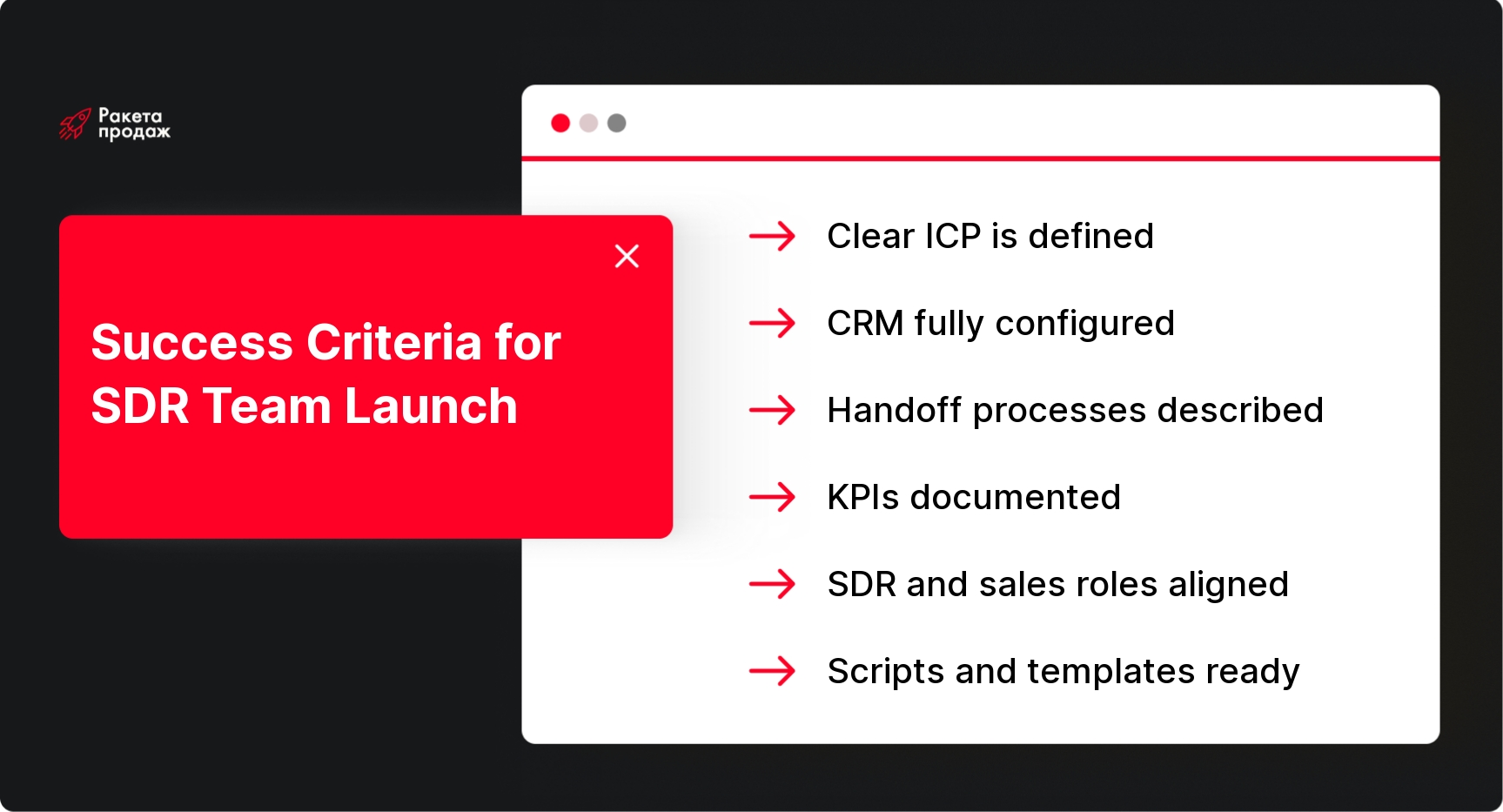
By the time you scale, you should have a validated and documented ICP, effective communication channels, working scripts and templates, clear qualification criteria, and a smooth lead handoff process to sales. Without this foundation, scaling will only increase the volume of low-quality touchpoints and lead to team frustration.
Scaling options can include hiring additional SDRs, splitting research and outreach functions between different people, and adding a team lead to manage the growing team. You can also strengthen RevOps support, expand into new segments, and adopt ABM approaches for enterprise clients.
For successful expansion, it’s also important to ensure quality professional hiring of sales department specialists so new hires integrate quickly into the organization. It’s useful to add more automation to repetitive processes, improve analytics and reporting, and incorporate AI tools for research and personalization. But it’s important to remember: technology should complement human work, not fully replace it.
The main rule of scaling: don’t rush. It’s better to grow the team and volume slowly but surely while maintaining high lead quality, than to quickly double team size and lose control over processes and results.
Checklist: How to Build an SDR Team from Scratch
Successfully creating an SDR team means sequentially going through all the key stages of preparation and implementation of SDR. This checklist will help you make sure you don’t miss anything as you learn how to build a lead generation department.
Start by defining the SDR team’s goals and describing your ICP in detail with specific criteria. Choose priority segments to work on and define the main communication channels. Clearly define the roles of SDR and sales teams, configure your CRM for your processes, and define lead qualification criteria.
Prepare call scripts and email templates for different situations, set up touchpoint sequences for each channel, and define KPIs for the team. Train your first SDRs on all processes and tools, and launch a pilot project for 30-60 days.
Don’t forget that team motivation plays an important role in achieving results and retaining top department talent. Be sure to gather feedback from the sales team on lead quality, analyze pilot results, and improve processes based on the data collected. Only after achieving stable results and clear benchmarks should you start scaling the team.
Every step in this checklist is critically important. Skipping any of them can lead to problems down the road and reduce the overall effectiveness of the SDR function in your company.
Building an SDR team isn’t an experiment with an uncertain outcome – it’s a clearly structured process that requires deep expertise in systematic sales and lead generation. Applying the principles outlined in this article will help you avoid the main mistakes, but for guaranteed results, it’s worth using a turnkey sales department building service. “Rocket Sales” specializes in creating highly effective lead generation systems: we conduct a deep audit, develop processes tailored to your niche, implement CRM and automation, train your team, and provide ongoing results monitoring. Our methodology includes a detailed ICP description, multi-channel campaign setup, script and qualification criteria development, and a complete KPI and reporting system. Over 8+ years, we’ve built 208 sales departments across 14+ industries, and our clients get not just an active team, but a system that consistently generates predictable results. Our partners include Mitsubishi, Yamaha, and Naftogaz. Don’t waste months on experiments with unpredictable results.
Create an SDR team that generates +35% revenue growth in just 90 days!
Launching an SDR team can’t be treated as a one-time action. It’s a sequential process that includes preparing workflows, training specialists, testing hypotheses, and subsequent data-driven optimization. This approach lets you build a sustainable lead generation system, rather than simply increasing activity volume.
Building an SDR team isn’t just about hiring a few people to make calls and send emails. It’s about creating a system that will ensure a predictable flow of quality leads for business growth. Success depends not on activity volume, but on process quality, criteria clarity, and the coordinated work of every element in the sales system. If you’ve decided to build an SDR team, first define a clear ICP, set up qualification and handoff processes, launch a pilot, and only then scale the proven model.


 Time to read: 10 min.
 20 July 2026